
 Grower Sheena Dalo Reyes has spent years perfecting her hydroponic lettuce farm. But nothing tested that experience quite like the season three batches in a row failed right before harvest.
At Fresh Greens Backyard Lettuce, a 1,152-head hydroponic operation, Ms. Sheena has been growing since 2021, starting with the Kratky method before expanding her setup in 2022. Over the years she worked through nearly every two seed brands on the market, eventually finding her strongest sellers in Olmetie Batavia and Lalique Crystal lettuce. The farm had its rhythm. Then, three batches in a row died right before harvest.
When Everything Went Wrong at Once
The damage wasn’t from one pest or one disease. It was three problems stacking on top of each other, such as thrips, whiteflies, and a fungal and root-rot issue that was quietly working through the system underneath.
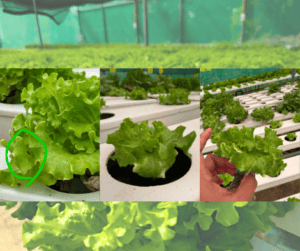 The first sign was on the leaves. Ms. Sheena noticed small silver spots appearing, a telltale mark of thrips feeding. Her greenhouse sits near banana plants, a common breeding ground for thrips, which she believes gave the pest an easy path in. Around the same time, new leaf growth started turning yellow with whitened tips, a pattern that pointed to whiteflies rather than thrips alone. Two different pests, two different symptoms, showing up together.
Underground, something else was going wrong. Instead of the thin, long roots she was used to seeing, her plants developed thicker, stubbier root systems. Foliage growth slowed. Leaves that should have stayed tender turned tough and coarse. The roots themselves were yellowing, a change she traced back to the Hydrogen Peroxide she had been dosing into her reservoir.
Then came the complication that made everything harder to fix: humidity. Her area was running so humid that foliar spraying, her first line of defense, became a liability. Spraying into that kind of moisture risked feeding the fungal problem rather than solving it. She was dealing with pests, a compromised root system, and a climate that fought her every time she reached for the usual tool.
For a working farm, three failed batches is both a bad season and a break in the supply chain. Ms. Sheena had commitments to clients that she couldn’t fill, and capital already spent on batches that never made it to harvest.
Rebuilding From the Root Zone Up
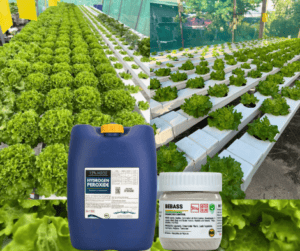 Ms. Sheena didn’t try to fix the outbreak with a single spray or a one-time cleanup. She followed a full protocol, guided by Nutrihydro’s Precision Method, that addressed the pests, the pathogens, and the system itself.
Sanitation came first. She soaked her channels overnight in a concentrated hydrogen peroxide solution. The result was immediate and visible: wherever algae had built up, the solution bubbled on contact, evidence that it was breaking down exactly what needed to go. After the soak, she rinsed the pipes thoroughly before introducing any new seedlings, and extended the same treatment to her nets and flooring.
Pest control had to work around the humidity problem, not against it. Since spraying was risky in wet conditions, she limited it to full-sun hours when moisture was lower. She brought in NH Bebass alongside yellow sticky traps, which she found genuinely effective. Whiteflies stuck to the traps in visible numbers. She also went through her plants by hand, removing leaves that were too damaged to recover. The pests bred fast enough that full disinfection took time, but she got there. “My greenhouse is pest-free,” she says now.
Ventilation addressed the humidity itself. Ms. Sheena installed two additional wall fans to improve airflow, giving her more room to spray safely and making the environment less hospitable to fungal growth in the first place.
The biggest decision was structural. Ms. Sheena converted her system from Deep Flow Technique (DFT) to full Nutrient Film Technique (NFT). It wasn’t a quick call. Losing three batches in a row was already a significant financial hit, and a full system conversion meant more risk on top of it. But the reasoning was sound: in DFT, water sits in the channels. That’s useful during a power outage, but in warmer weather, that standing water heats up, and the roots sitting in it take the damage. NFT removes the standing water entirely, keeping a thin, moving film of nutrient solution flowing past the roots instead.
What Changed
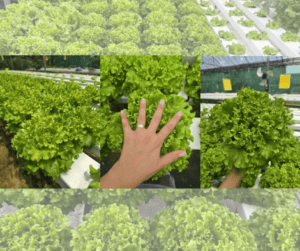 The difference showed up first in the roots. Once she switched to NFT, Ms. Sheena saw longer, whiter root systems, a direct result of roots no longer sitting in warm, stagnant water. Better aeration around the root zone meant the conditions that had invited root rot and pathogen buildup were no longer there.
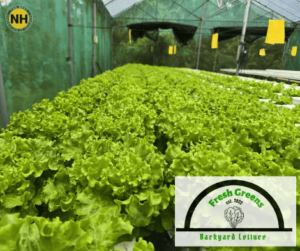
Above the surface, the leaves followed. Foliage grew broader and fuller, and the color shifted back from the sickly yellow of the outbreak to a healthy dark green. She’s holding off on claiming a full yield recovery just yet. Lower sunlight has been slowing growth, so she can’t say for certain how the weight compares to before. But looking at the plants filling her greenhouse now, dense, upright, and green from row to row, she’s confident in the call she made. Converting from DFT to NFT, she says, was the best decision she made through the entire ordeal.
Her Advice to Co-Growers
Ms. Sheena’s advice to fellow growers facing a pest and root disease outbreak at the same time is meaningful: disinfect properly, and follow the protocol all the way through. Just as important, don’t treat the symptom you can see without finding what’s causing it. When something looks off in the lettuce, tracing it back to the root cause is what saves growers from losing more time, effort, and capital chasing the wrong fix.
For Fresh Greens Backyard Lettuce, that meant looking past the leaves that were visibly suffering and recognizing that the real problem was underneath, in a system that no longer matched the conditions it was operating in. Fixing the root zone fixed everything that grew from it.