Reproductive-Stage Foliar Support
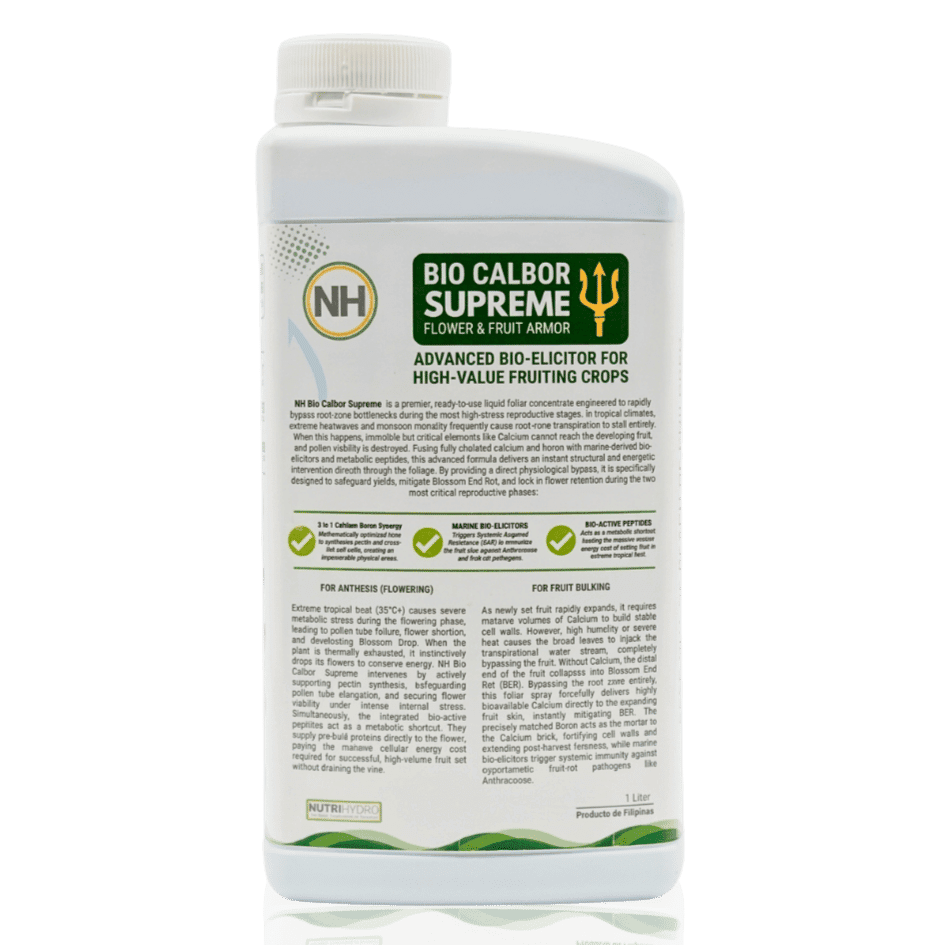
NH BIO CALBOR SUPREME

Support the Stages That Decide the Harvest.

Calcium, Boron and biological support for flowering, fruit set and developing fruit during critical reproductive stages.

Flowering & Fertilization Fruit Set & Expansion
2.85% Calcium 9,360 ppm Boron Strictly Foliar
THE REPRODUCTIVE BOTTLENECK

A Healthy Crop Can Still Lose Yield at the Reproductive Stage.

In tropical production, heat, unfavorable humidity/VPD conditions, water balance and root-zone dysfunction can disrupt reproductive performance and nutrient delivery just when flowers and young fruit are most vulnerable.

Not simply a fertilizer deficiency

The bottleneck is often transport and physiology—not simply how much Calcium or Boron is present in the fertilizer program. Environment, roots, water movement, crop demand and tissue development interact.

Flowering Environment

Reproductive performance can decline before the canopy looks unhealthy.

High temperature, unfavorable humidity/VPD, weak airflow and prolonged cloudy or low-light periods can alter reproductive performance and plant water relations.

These conditions may affect pollen performance, fertilization and fruit set.

The crop may still appear vegetatively healthy while reproductive efficiency is already being limited.

Possible field result: poor fruit set or increased flower loss.
Roots, Water & Transport

Nutrient presence does not guarantee nutrient delivery.

Root uptake and internal delivery depend on root function, water availability and transport through the plant.

Waterlogging, low oxygen, root disease and high root-zone temperatures can impair uptake and water relations.

Irregular irrigation, salinity and excessive EC can further disrupt water uptake and nutrient transport.

Possible field result: localized nutrient-delivery problems despite an apparently adequate fertilizer program.
Rapid Fruit Demand

After fruit set, rapidly developing tissues create intense local demand.

Developing fruit expands quickly. Calcium has limited redistribution within the plant, making timely local supply particularly important during early fruit development.

Expanding fruit tissues require continuous structural support during cell growth.

Local tissue demand may exceed the rate at which Calcium reaches vulnerable developing tissues.

Possible field result: greater risk of localized Calcium-related physiological disorders, including Blossom End Rot.
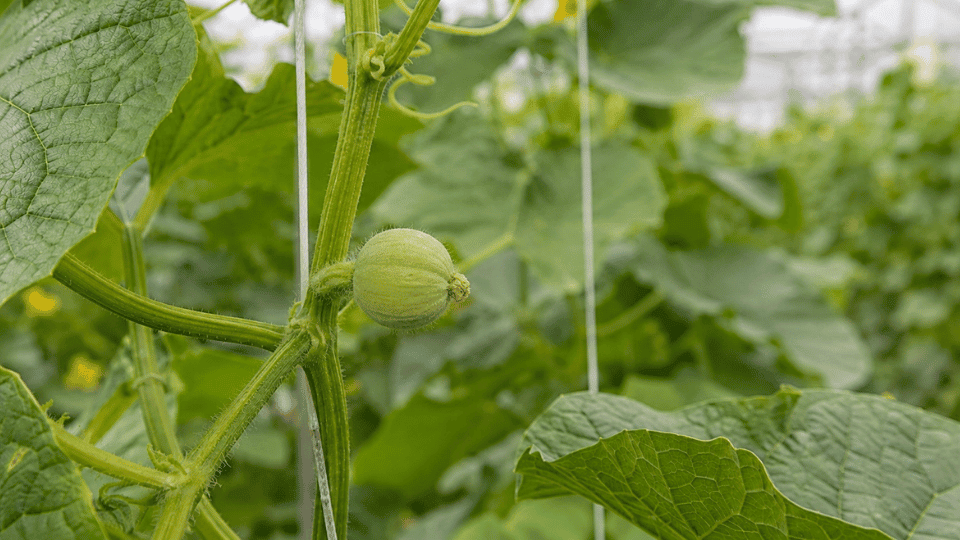
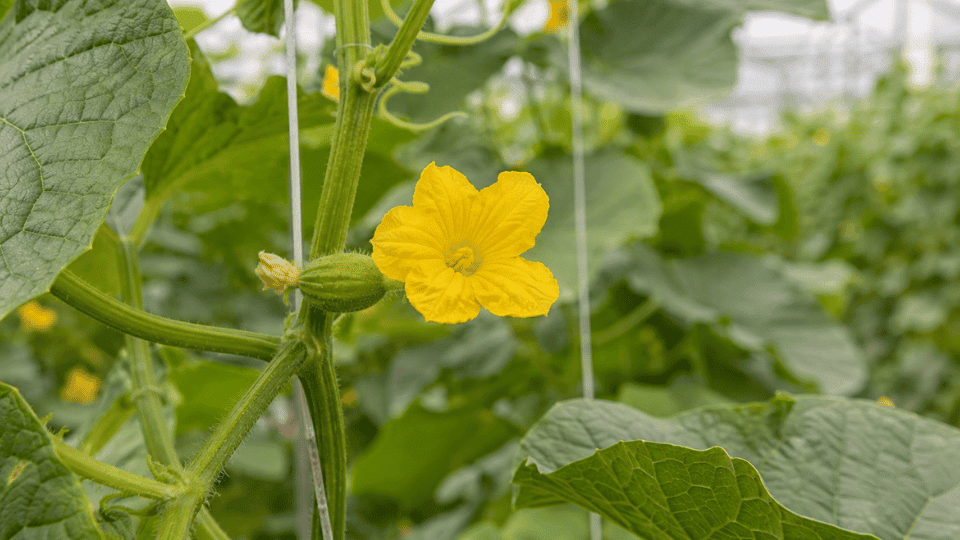
Greenhouse melon vines with flowers and developing supported fruit
What Is At Stake?
Fruit Set Successful reproductive development
Fruit Development Normal growth and structural formation
Tissue Integrity Firmness and structural integrity
Marketable Quality Harvest quality and postharvest potential
THE CRITICAL REPRODUCTIVE WINDOWS

From Flower to Fruit: Two Windows That Shape the Harvest.

NH Bio CalBor Supreme is designed around two overlapping reproductive windows: flowering and fertilization, followed by fruit set and early fruit expansion.

Flowering
Fertilization
Fruit Set
Early Expansion
Window 01 Flowering & Fertilization
Fruit Set & Early Expansion Window 02
Drag to move from flowering to early fruit development
Window 01 Boron-Centered Emphasis

Flowering & Fertilization

Boron supports reproductive development, including pollen germination and pollen-tube growth, while also contributing to cell-wall structure and function.

CalBor Role

Foliar Boron together with Calcium and biological support during the flowering window.

Window 02 Calcium-Centered Emphasis

Fruit Set & Early Expansion

Calcium contributes to cell-wall structure, membrane integrity and normal development of rapidly expanding fruit tissues. Its limited redistribution makes timely delivery especially important during early fruit development.

CalBor Role

Supplemental foliar Calcium and Boron directed toward developing reproductive tissues.

Physiological handoff

“Boron-centered” and “Calcium-centered” describe changing physiological emphasis—not an exclusive nutrient switch.

Foliar support complements—not replaces—root-zone Calcium nutrition, irrigation management and root health.

THE CALBOR BIOLOGICAL MATRIX

Four Functional Components. One Integrated Reproductive System.

NH Bio CalBor Supreme combines structural mineral nutrition with reproductive, biological and biostimulant support. Each component contributes a different physiological function within the same flowering-to-fruit-development strategy.

WHAT EACH COMPONENT CONTRIBUTES

Different physiological functions. One coordinated formulation.

Ca
Calcium 2.85%

Contributes to cell-wall structure, membrane integrity and normal development of rapidly growing tissues.

Structural nutrition
B
Boron 9,360 ppm

Supports reproductive development, including pollen germination and pollen-tube growth, while also contributing to cell-wall structure and function.

Reproductive + structural support
Bio
Marine-Derived Bio-Elicitor 25,000 ppm

Provides biological elicitor support associated with defense-related physiological responses within the plant.

Biological response support
P
Plant-Derived L-Isomers & Peptides 25,000 ppm

Provides biostimulant and metabolic support during active reproductive growth and tissue development.

Biostimulant support

The matrix represents complementary physiological contributions. It does not imply that the ingredients are molecularly bound, nor that any single component alone determines reproductive success.

The formulation matters—but so does how the spray reaches the target tissue.

Explore the Foliar Delivery System
FOLIAR DELIVERY SYSTEM

Good Foliar Nutrition Starts With Good Contact.

Foliar performance begins before absorption. The spray must first reach the intended tissue, wet the contacted surface and maintain sufficient contact under suitable application conditions.

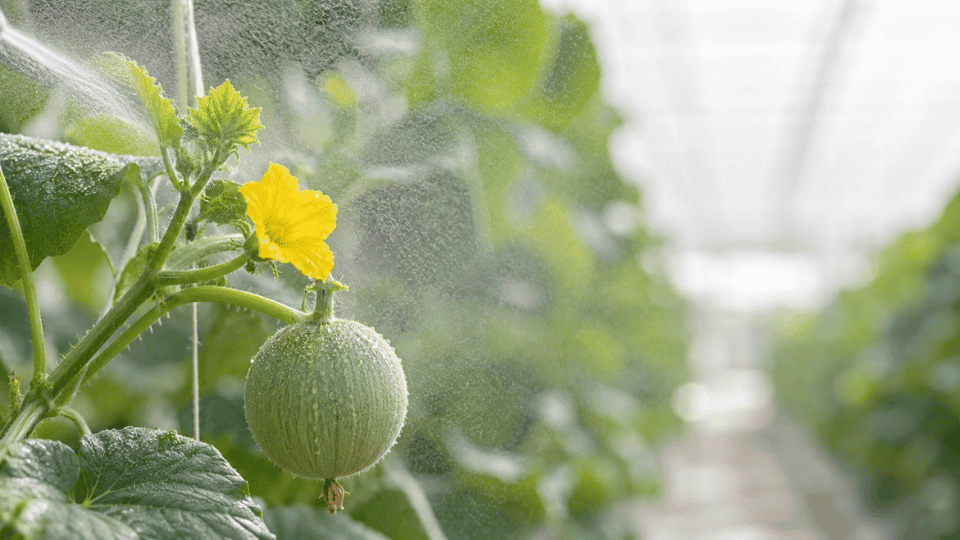
Fine foliar mist contacting the growing crown, open flower and developing young melon fruit in a greenhouse.
FROM SPRAY TO SURFACE

Delivery Is a Sequence — Not a Single Event.

The formulation and application technique work together. Effective foliar delivery begins with placing the spray where reproductive tissues can actually be contacted.

01
Reach the Target

Direct spray toward the growing crown, open flowers and developing fruit rather than treating the canopy as one uniform target.

02
Wet & Cover

The delivery system is designed to support surface wetting and more uniform coverage of contacted plant tissues.

03
Maintain Contact

Humectant and formulation properties are intended to support spray-film persistence and reduce excessively rapid drying under suitable application conditions.

Growing Crown Open Flowers Young Fruit

Targeted coverage of young reproductive tissues provides a supplemental local route for foliar Calcium, Boron and the accompanying formulation components.

Foliar delivery supplements—not replaces—root-zone Calcium nutrition, irrigation management and root health. Surface coverage also does not imply complete absorption or systemic redistribution of everything applied to the leaf, flower or fruit.

Different crops express these reproductive demands in different ways.

Explore Target Crops
TARGET CROPS

Reproductive Support Across High-Value Fruiting Crops.

CalBor is designed around the crop stages where flowering, fertilization, fruit set and early fruit development can strongly influence final marketable yield and quality.

PRIMARY CROP FIT

Fruiting Solanaceae

Flowering, fertilization and early fruit development are important reproductive windows in peppers, tomatoes and eggplants.

CORE GROUP
Tomato
Tomato
Pepper
Pepper
Eggplant
Eggplant
REPRODUCTIVE WINDOW
Flowering Fertilization Fruit Set Expansion
PRIMARY CROP FIT

Melons & Vine Crops

Pollination, fruit set and rapid early fruit growth occur in close succession across many commercial cucurbits.

CORE GROUP
Melon
Melon
Watermelon
Watermelon
Cucumber
Cucumber
Squash
Squash
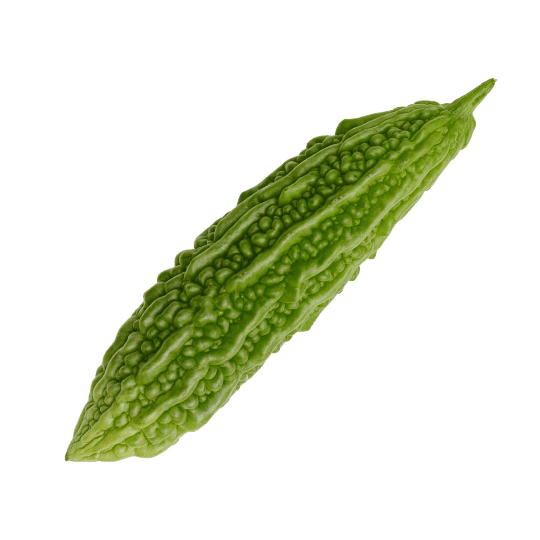
Bitter gourd
Bitter Gourd
REPRODUCTIVE WINDOW
Flowering Pollination Fruit Set Expansion
BROADER TROPICAL APPLICATIONS

High-Value Fruit Crops

The same reproductive framework can be relevant when foliar Calcium and Boron support is appropriately timed within the crop's flowering and early fruit-development program.

Papaya
Papaya
Mango
Mango
Cacao
Cacao
Durian
Durian
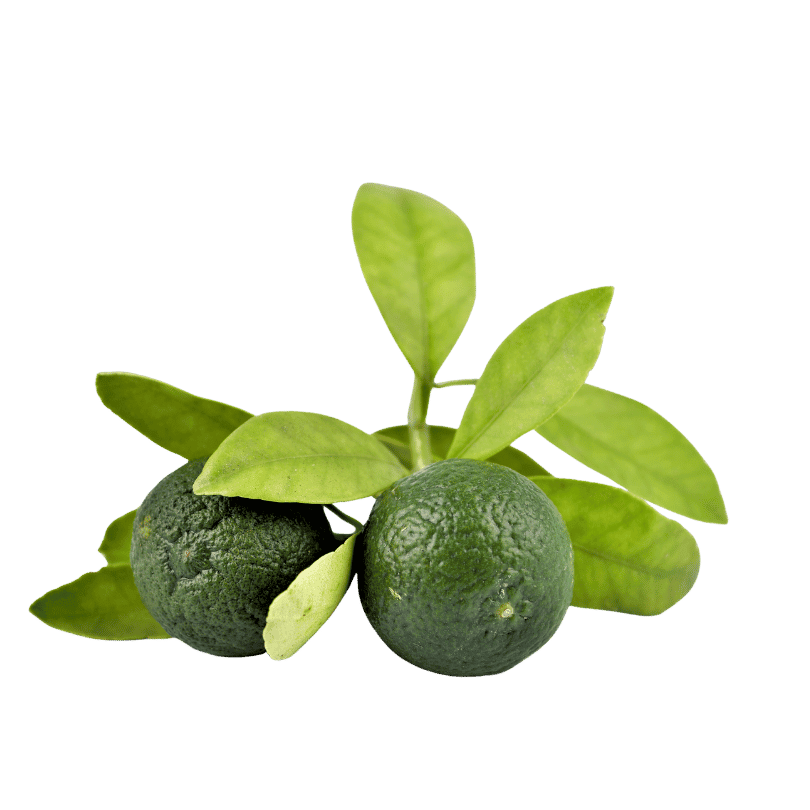
Calamansi
Calamansi
Pomelo
Pomelo
SHARED REPRODUCTIVE WINDOW
Flowering Fertilization Fruit Set Expansion
PRIMARY CROP FIT

Fruiting Vegetables

Flowering, fertilization and early fruit development are important reproductive windows in these crops.

Tomato
Tomato
Pepper
Pepper
Eggplant
Eggplant

Physiological emphasis: support during flowering through early fruit development.

PRIMARY CROP FIT

Melons & Vine Crops

Pollination, fruit set and rapid early fruit growth occur in close succession across many commercial cucurbits.

Melon
Melon
Watermelon
Watermelon
Cucumber
Cucumber
Squash
Squash
Bitter gourd
Bitter Gourd

Physiological emphasis: pollination, fruit set and rapidly developing young fruit.

BROADER TROPICAL APPLICATIONS

High-Value Fruit Crops

CalBor can be incorporated into appropriately timed flowering and early fruit-development programs for additional tropical fruit crops.

Papaya
Papaya
Mango
Mango
Cacao
Cacao
Durian
Durian
Calamansi
Calamansi
Pomelo
Pomelo

Timing matters: use within the reproductive program appropriate to the crop and its developmental stage.

Crop fit does not mean crop response is guaranteed. Reproductive performance also depends on environment, root health, irrigation, nutrition, pollination and crop physiological status.

Next: match CalBor to the correct rate, timing and spray target.

See Application Guide
APPLICATION GUIDE

The Right Rate. The Right Window. The Right Target.

Effective foliar application depends on more than concentration. Apply CalBor at the appropriate rate, direct the spray toward reproductive tissues, and choose environmental conditions that favor good coverage and spray-film contact.

TROPICAL SPRAY WINDOW

Choose the Better Application Window

Interactive
SELECT A TIME PERIOD
APPLICATION CONDITION RISK
PREFERRED WINDOW Early Morning Application

Cooler crop surfaces and lower evaporative demand generally favor better spray retention. Apply when foliage is not already saturated and rain is not imminent.

Crop Surface Cooler
Evaporation Generally lower
Practical Decision Good application window
Strictly Foliar

Application Program

Apply from flowering through fruit set and fruit bulking, with coverage directed toward the reproductive zone.

NH Bio CalBor Supreme side view
Maintenance
2.0 mL/L

Routine reproductive-stage foliar support during normal crop development.

Repeat every 7–10 days

Heavy Rescue
3.0–4.0 mL/L

Higher-rate reproductive and fruit-development support where stronger intervention is appropriate.

Repeat every 7–10 days

Spray Target Growing CrownOpen FlowersDeveloping Fruit
MIXING & COMPATIBILITY

Calculate the Rate. Test the Tank Mix.

Quick Mix Calculator

Enter your finished spray volume to calculate the required CalBor volume.

Maintenance 32 mL
Heavy Rescue 48–64 mL

Before Tank Mixing: Perform a Jar Test

What is a jar test — and why do it?

If you plan to put CalBor and another product into the same spray tank, first reproduce that mixture on a small scale in a transparent container. This lets you check for obvious physical incompatibility before committing an entire tank of spray solution.

Step 1

Use a clean transparent container with the same water source you intend to spray.

Step 2

Add CalBor and the intended tank-mix product in proportional amounts.

Step 3

Observe for separation, clumping, precipitation, excessive cloudiness or unusual heat.

A clear jar does not automatically mean the tank mix is safe. A jar test mainly screens for visible physical incompatibility. It does not prove crop safety, biological compatibility, microbial viability or efficacy of the mixed products.

Clock time is a practical guide—not a substitute for field conditions. Temperature, humidity, rainfall risk, canopy wetness, wind and crop condition should still be considered. Foliar CalBor supplements rather than replaces root-zone Calcium nutrition, irrigation management and healthy root function.

Comparative Performance Graph - CalBor Supreme

Interactive Performance Comparison

Select active metric to compare:
State 1: Unchelated Mineral Salts 25%
State 2: Standard Foliar Program 60%
State 3: CalBor Supreme Matrix 98%
Structural Analysis CalBor Supreme Synergy

Calculated synergistic structural response. Select any metrics above or click individual bars to analyze performance outcomes.

Marine-Derived SAR Elicitation

Our specialized marine macro-molecule triggers Systemic Acquired Resistance (SAR). The plant membrane receptor is alerted, upregulating phytoalexins and thickening walls to secure against fruit-rot pathogens like Anthracnose.

Advanced Trans-Cuticular Delivery (ATDS)

Viscous, waxy fruit skins naturally reject foliar feeds. ATDS technology utilizes non-ionic amphiphilic spreaders to break water tension, extending the cuticular absorption window from 60 seconds to over 2 hours.

Metabolic Funding Peptides

Pure organic L-isomer amino acids supply raw peptide complexes directly to reproductive sinks, bypasses synthesis pathways, and preserves cellular energy under thermal distress.

FREQUENTLY ASKED QUESTIONS

Practical Answers Before You Spray.

CalBor works within a complete crop-management system. These are the questions that matter most before incorporating it into a reproductive foliar program.

Is NH Bio CalBor Supreme foliar only?

Yes. CalBor is designed strictly for foliar application. Direct the spray toward appropriate above-ground target tissues rather than adding it to the root-zone nutrient solution.

What rate should I use?

The standard Maintenance rate is 2.0 mL per liter of spray water. The Heavy Rescue concentration is 3.0–4.0 mL/L. Application concentration should still be matched to crop condition and the intended foliar program.

When should CalBor be applied?

The principal application window is flowering through fruit development, normally repeated every 7–10 days. Preferred spray timing is approximately 5–7 AM or after 5 PM under suitable weather conditions.

Where should the spray be directed?

Target the growing crown, open flowers and developing fruit while still achieving appropriate canopy coverage. The objective is good surface contact—not excessive runoff or indiscriminate drenching.

Can CalBor help reduce the risk of Blossom End Rot?

CalBor is designed to support Calcium delivery to developing fruit and can be used as part of a broader strategy to help reduce the risk of Calcium-related physiological disorders such as Blossom End Rot.

However, BER is not caused simply by low Calcium in the fertilizer program. Irrigation consistency, root health, salinity, environmental conditions, fruit growth rate and root-zone Calcium nutrition can all influence Calcium delivery to rapidly developing fruit tissues.

Foliar CalBor should therefore complement—not replace—good root-zone nutrition, irrigation management and root health.

Can foliar CalBor replace root-zone Calcium?

No. Root uptake and xylem transport remain fundamental to crop Calcium nutrition. Foliar delivery provides a supplemental local route to contacted tissues; it does not replace irrigation, root health or an appropriate root-zone fertilizer program.

Is the marine bio-elicitor a fungicide?

No. The marine-derived component is positioned for biological signaling and defense-related response support. That should not be interpreted as a fungicide, pesticide or direct disease-control claim.

Can CalBor be tank-mixed with other products?

Compatibility should be evaluated case by case. Do not automatically assume compatibility with fertilizers, pesticides or biological products. A jar test can identify obvious physical incompatibility, but it does not prove biological compatibility, crop safety or efficacy.

The governing principle: CalBor supports reproductive physiology—it does not override environment, roots, water relations, nutrition, pollination, pest pressure or disease.

NH Bio CalBor Supreme
NH BIO CALBOR SUPREME

Build Reproductive Support Into the Crop Program.

For growers managing high-value fruiting crops, CalBor provides a targeted foliar approach to Calcium, Boron and biological support during critical reproductive and fruit-development stages.

Need help integrating CalBor into a crop program? Contact NutriHydro for product and application guidance.

REPRODUCTIVE-STAGE FOLIAR SUPPORT

Support the Stages That Decide the Harvest

NH Bio CalBor Supreme is a premium foliar bio-elicitor and structural fortifier developed to support flowering, fertilization, fruit set and early fruit development in high-value fruiting crops.

  • Boron supports pollen germination and pollen-tube function during the reproductive stage
  • Calcium supports cell-wall and membrane integrity in rapidly developing fruit tissues
  • Targeted foliar application provides supplemental Calcium and Boron to developing reproductive tissues
  • Marine bio-elicitor, peptides and L-isomers provide complementary biological and biostimulant support
FIELD TRIAL PRICE • 1 LITRE BOTTLE
₱960 current trial release
TRIAL ACCESS
STRICTLY FOR FOLIAR APPLICATION ONLY
FIELD TRIAL PARTICIPATION

Want to Join the CalBor Field Trials?

NH Bio CalBor Supreme is currently available for field trials. Submit your farm, crop and production information in the application form for review by the NutriHydro team. Participation may include periodic crop observations, trial data submission and farm access for evaluation.

Choose Where to Buy

NH Bio CalMag Field Trial Application Form
I would like to join the field trial in using NH Bio CalMag. I understand that at a minimum fee, I will receive the product for trial and instruction from a competent professional regarding field use in cultivation along with its safety instruction. I agree to participate in data gathering, compilation, and submission to the field tester of NutriHydro and further agree full transparency in the ways I use the product as prescribed or if I choose to deviate.
Farm Address
Let us know what's on your mind. Have a question for us? Ask away.
Scroll to Top