NH Hydrogen Peroxide 12% Concentration
An industrial-strength, agricultural food-grade liquid oxygenator and sanitizing chemical agent. Engineered strictly for modern closed-loop nutrient recirculation systems, aeroponic manifolds, and drip irrigation pipelines. Dissociates purely into highly oxygenated pure water (H2O) and dissolved oxygen (O2) without leaving persistent synthetic chemical residues, chlorinated compounds, or toxic heavy metals.
Zero Residue
Breaks down cleanly into safe water & oxygen.
Oxygen Catalyst
Releases dissolved oxygen inside hypoxia zones.
Sterilizer
Lyses pathogenic cell walls on raw contact.
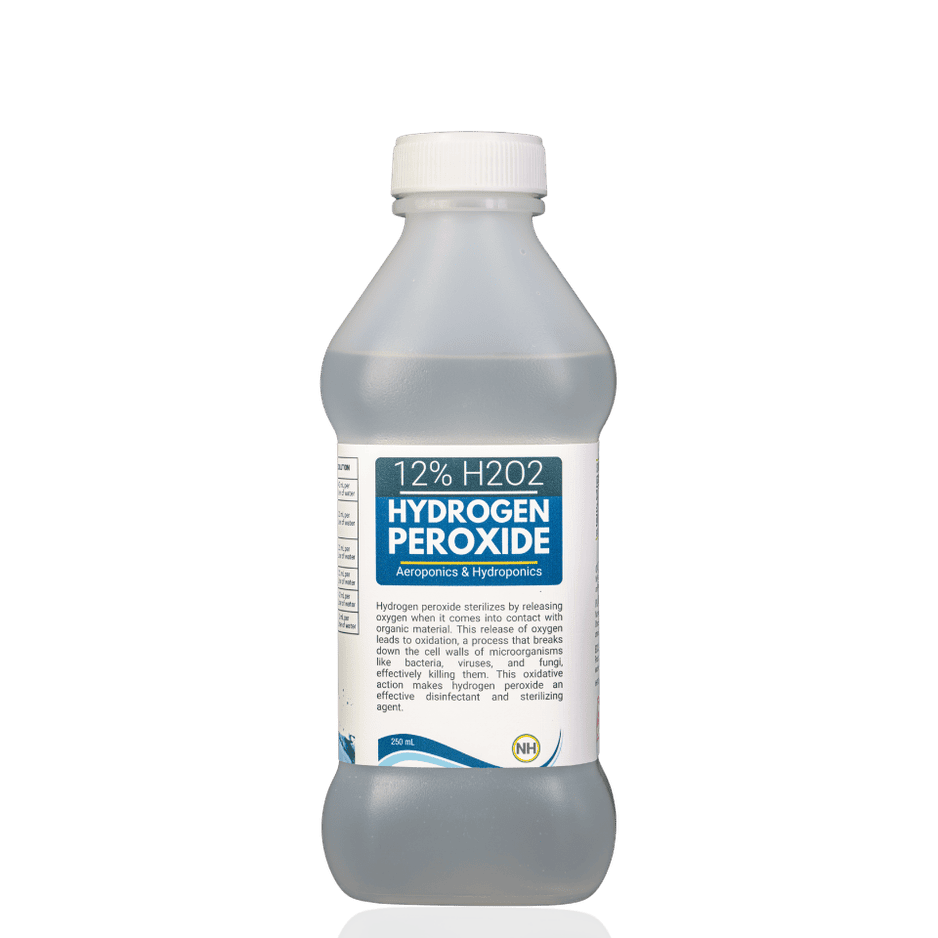
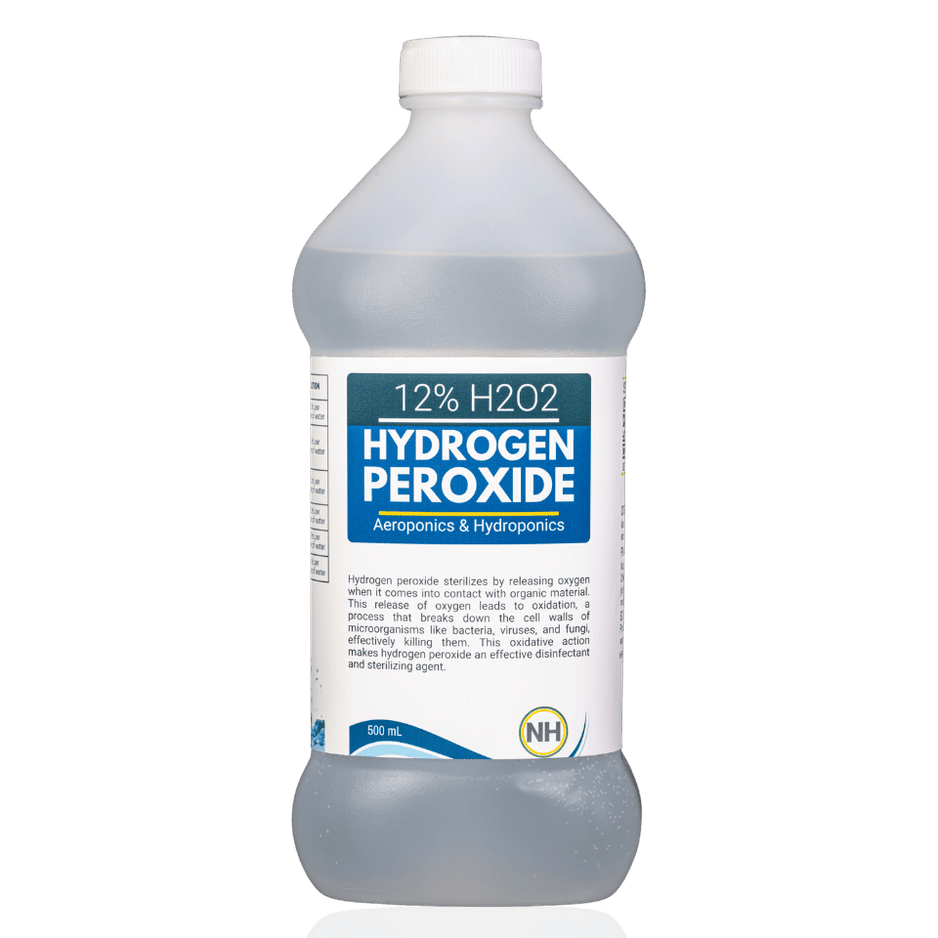
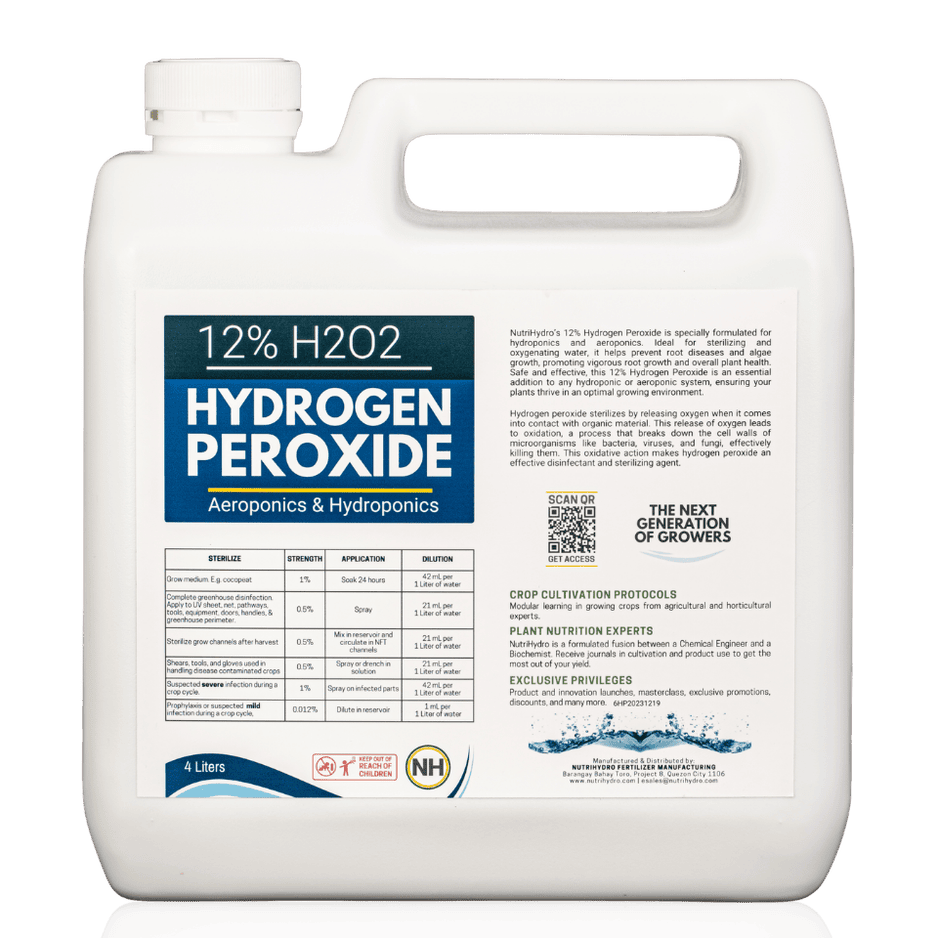
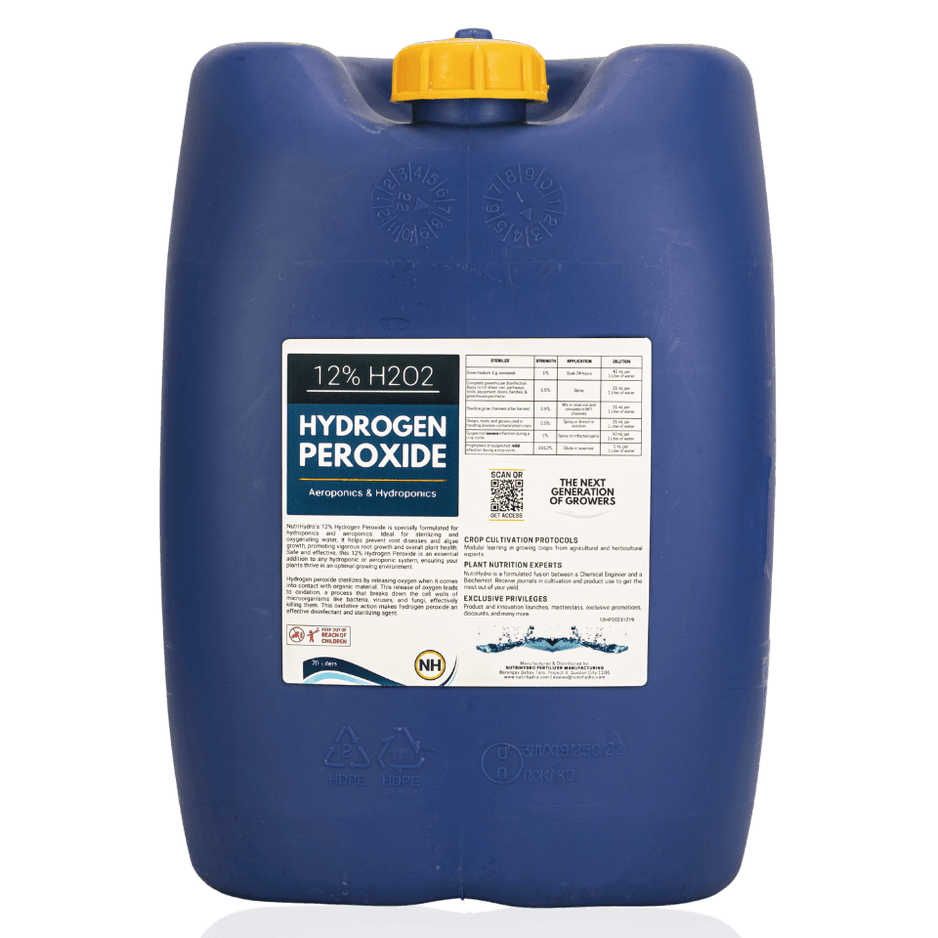
NH Hydrogen Peroxide 12%
500 mL Bottle
Commercial-grow benchmark size. Easy handling.
Product Overview
An industrial-strength, agricultural food-grade liquid oxygenator and sanitizing chemical agent. Engineered strictly for modern closed-loop nutrient recirculation systems, aeroponic manifolds, and drip irrigation pipelines. Dissociates purely into highly oxygenated pure water (H2O) and dissolved oxygen (O2) without leaving persistent synthetic chemical residues, chlorinated compounds, or toxic heavy metals.
Precision Volumetric Dosing Matrix
Eliminate mathematical rounding errors. Input your exact water volume below to compute precise dosing requirements based on the thermodynamic dilution standard: C1 × V1 = C2 × V2.
Therapeutic Exposure Limit Notice
At 150 ppm Active H2O2, this emergency treatment is safe on active crops for a MAXIMUM duration of 24 to 48 hours. Any simultaneous beneficial microbes in the root zone (like NH Amylis) will be neutralized. Re-inoculation is required 72 hours post-treatment. Refer to nutrihydro.com/biocontrol for biological management.
Strict Plant Toxicity Alert
Concentrations at or above 0.25% (2,500 ppm) are highly phytotoxic. If introduced to active loops, this solution will strip root hairs, melt root cortex membranes, and cause immediate crop collapse. Use strictly in post-harvest empty pipelines or transition states.
Mandatory Safety Guardrail
At 1.00% Concentration (10,000 ppm), this solution is extremely corrosive to biological tissue. Protect eyes and skin with chemical-resistant PPE. Strictly prohibited from entering active crop reservoirs or contacting active root systems. Ideal for raw coco-peat sterilization or spot soaking clogged mechanical parts.
Prophylaxis (0.012%): 1.0 mL/L (Continuous, safe with mineral salts)
Remediation (0.015%): 1.25 mL/L (Therapeutic, run max 24–48 hours)
Soft Greens (0.012%): 1.0 mL/L (Preventative, apply in dark cycles only)
Hardy Crops (0.25%): 20.8 mL/L (Curative ceiling, spot treatment only)
Biosecurity Dosing Matrix
Continuous preventative dosage. Perfectly safe to run with active, inorganic reservoir fertilizer circuits to stop algae and waterborne spore reproduction curves.
🚨 LIMIT: Safe on active crops for a MAXIMUM of 24–48 hours. Will neutralize beneficial inoculants (like NH Amylis). Re-inoculate post-treatment.
🚨 STRICT TOXICITY WARNING: 0.25% or 0.50% concentrations are highly phytotoxic. Will dissolve active root cortex cells instantly. Use in empty pipelines only.
🚨 CORROSIVE OUTLET: 1.00% is corrosive to organic tissue. Protect skin & eyes. Do not contact crop roots. Ideal for media sanitizing or soaking clogged fittings.
Prophylaxis: 1.0 mL/L (Continuous, mineral safe)
Remediation: 1.25 mL/L (Therapeutic, run max 24–48h)
Soft Greens: 1.0 mL/L (Preventative, dark cycle only)
Hardy Crops: 20.8 mL/L (Curative ceiling, spot only)
Active Oxygen Stabilization & Target Elimination
NutriHydro introduces a stabilized active-oxygen mechanism that targets waterborne crop threats at the exact point of system entry. When introduced into irrigation lines containing organic buildup or mineral scale, it rapidly releases active cleaning agents to break down hidden bio-films, neutralizing bacterial and fungal threats before they reach the root zone.
Phase 1: Contact & Biofilm Penetration
Stabilized active oxygen targets waterborne vectors at the point of system contact. Capillary pressures pull the active solution into microscopic surface build-ups, dissolving the organic protective layer hiding the targets.
Phase 2: Active Membrane Breakdown
The active compounds initiate structural protective barrier breakdown. This clean reaction splits the defensive shield open on contact, releasing localized sanitizing forces directly onto the exposed pathogen cells.
Phase 3: Immediate Target Elimination
Physical destruction of the cell outer walls induces rapid pathogen elimination, rendering the threat harmless. The entire solution then converts cleanly into pure water ($H_2O$) and dissolved oxygen ($O_2$), leaving zero toxic residues.
The Pathogen Destruction Profile
Cell Wall Breakdown & Elimination
Active oxygen strips away the outer defense layers of plant pathogens. The cell shield undergoes immediate physical rupture, inducing swift cellular destruction without structural recipe damage.
Organic Biofilm Deconstruction
The rapid physical release of microscopic oxygen bubbles creates localized scrubbing action. This pressure effectively lifts stubborn organic bio-films completely off PVC lines and irrigation paths.
Targeted Vector Suppression
High-risk waterborne root threats such as Pythium and Phytophthora lack protective defense enzymes against oxygen, leaving them completely vulnerable to targeted breakdown.
Active Oxygen Matrix
NutriHydro utilizes stabilized active oxygen to clear lines cleanly, targeting vectors at system entry and breaking down pathogen barriers safely without toxic chemical residue.
Contact & Biofilm Entry
Active compounds safely penetrate protective bio-films at the point of system contact:
Protective Wall Breakdown
Clean contact breaks apart outer defense layers via direct structural breakdown:
Elimination & Oxygen Release
Ruptures pathogen walls cleanly, leaving behind pure water and vital dissolved oxygen:
Pathogen Destruction Profile
1. Core Membrane Breakdown
Active sanitizing elements break open the outer cell walls of waterborne threats, triggering immediate targeted elimination.
2. Line Biofilm Clearance
Micro-oxygen bubble generation exerts physical pressure to scour pipelines, peeling heavy bio-films right off interior surfaces.
3. Targeted Oxygen Shield
Vulnerable root-rot vectors lack active defensive traits against oxygen, facilitating fast and efficient system sanitation.
Oxidation-Reduction Potential (ORP)
Commercial operations verify sanitizer efficacy in real time using Oxidation-Reduction Potential (ORP) sensors, measured in millivolts (mV). ORP metrics calculate the direct oxidative potential of the water column, offering an automated baseline for continuous pathogen suppression without risking crop damage.
Target range for active root zones to suppress waterborne pathogen colonization safely and continuously.
Target Calibration Scale
Insufficient oxidation. Pathogen replication active; early scaling possible.
Optimal biosecurity. Continuous pathogen suppression. Safe with live crop roots.
Active outbreak eradication. Emergency spike; safe on live roots max 24–48 hours.
Destroys all biological organic tissue. Strictly for empty flushes and tools.
ORP Target Metrics
Commercial greenhouse operators verify chemical sanitizer efficacy in real time using Oxidation-Reduction Potential (ORP) sensors, measured in millivolts (mV).
Target range for active root zones to suppress waterborne pathogen colonization safely.
1. Low Range
Insufficient oxidation. Pathogen replication active; early scaling possible.
2. Optimal Active
Optimal biosecurity. Continuous pathogen suppression. Safe with live crop roots.
3. Remediation Zone
Active outbreak eradication. Emergency spike; safe on live roots max 24–48 hours.
4. Sterilization
Destroys all biological organic tissue. Strictly for empty flushes and tools.
Structural Material Compatibility
Given the highly reactive oxidation potential of 12% concentrated Hydrogen Peroxide, selecting the correct pipeline, gasket, and pump components is critical to prevent spontaneous chemical degradation, system pressure buildup, or hazardous localized plumbing leaks.
Approved & Chemically Stable Materials
Excellent chemical resistance. Unaffected by concentrated stock solution; ideal for transport carboys and dosing lines.
No degradation. Perfect mechanical strength stability under continuous contact; highly recommended for pump bodies and impellers.
Superb elastomer resilience. Retains structural flexibility and sealing integrity; prevents critical gasket cracking under active pressures.
Highly corrosion resistant. Safe for high-pressure irrigation injection ports, fittings, and robust system manifolds.
* Recommended Standard: Ensure all primary lines, automated injection ports, and fittings are constructed exclusively from these approved materials to maintain system biosecurity.
Incompatible Materials (DO NOT USE)
Accelerates reaction breakdown. Triggers rapid exothermic decomposition, causing high localized loop gas pressure and toxic crop metal toxicity.
Rapid corrosion and oxidation. Promotes instant structural rust flake generation, causing micro-emitter blockages and catastrophic pipeline rupture.
Severe elastomer cracking. Causes standard pump gasket degradation and structural leaks within weeks, leading to system failure.
Localized surface pitting and deep chemical bleaching. Leads to gradual structural failure of greenhouse framing elements and custom tray structures.
* Critical Danger: Contact with incompatible materials degrades the stock solution and releases hazardous gases, compromising crop health and structural equipment.
Material Compatibility
Concentrated Hydrogen Peroxide is highly reactive. Selecting correct plumbing materials is vital to ensure zero chemical leaks and maintain crop safety.
1. HDPE Polyethylene
Excellent chemical resistance; perfect for stock containers and dosing lines.
2. Polypropylene (PP)
Stable structure under stress; perfect for pump impellers and plastic manifolds.
3. Teflon & Silicone
Durable elastomer sealing; prevents gasket cracking and high-pressure fluid leaks.
4. SS316 Stainless
No surface rust; safe for inline injection fittings and system manifolds.
* Recommended Standard: Ensure all primary lines, automated injection ports, and fittings are constructed exclusively from these approved materials.
1. Copper & Brass
Triggers fast decomposition, toxic heavy metal leaching, and line pressure spikes.
2. Mild Carbon Steel
Fast oxidation causes rust build-up, micro-emitter clogging, and ruptures.
3. Nitrile Gaskets
Causes gasket cracking and seal leaks, leading to quick dosing pump failure.
4. Anodized Aluminum
Severe pitting and surface bleaching; degrades tray frameworks and fixtures.
* Critical Danger: Contact with incompatible materials degrades the stock solution and releases hazardous gases, compromising crop health.
Crop Safety & Foliar Application Protocols
Understanding the physiological requirements, biophysical risks, and safe execution boundaries of direct canopy sanitation using food-grade chemical stabilizers.
Agronomic Objectives: Why Foliar?
Pathogens frequently colonize the above-ground canopy (the phyllosphere) where root-zone treatments cannot reach. Calibrated foliar application targets surface pathogens—such as powdery mildew, downy mildew, and surface bacteria—instantly lysing cell walls upon raw contact without leaving persistent chemical salts.
The Biophysics of Foliar Phototoxicity
Applying peroxide to canopies under intense light or high temperature triggers rapid, uncontrolled chemical cleavage, releasing high-energy oxygen free radicals. This process destabilizes chloroplast structures, bleaches active stomata cells, and causes systemic crop burn. **Foliar application must occur exclusively during nighttime (between sunset and sunrise) or twilight transition phases.**
Continuous preventative canopy sanitizing. Optimized for delicate herbs, lettuce, and basil.
Aggressive spot sanitation for active mildew outbreaks. **Strictly prohibited on leafy greens.**
Canopy Safety Diagnostic Terminal
ACTIVE ENGINESimulator calculating environmental variables...
Canopy Safety Protocols
Applying peroxide to leaf surfaces can cause severe cellular burn if applied under active light or high heat. Follow these guidelines to guarantee absolute crop safety.
Simulator processing variables...
Continuous preventative canopy sanitizing for delicate greens (lettuce/herbs).
Aggressive curative spot sanitizing for mature/woody crops. **Leafy greens toxic.**
Biological Asset Shielding
Managing chronological buffer windows to safeguard beneficial live inoculants from the high oxidation potential of food-grade chemical stabilizers.
The Chemical-Biological Antithesis
Because Hydrogen Peroxide is a highly reactive, non-selective oxidizer, it lyses biological cells indiscriminately. Applying NH Hydrogen Peroxide 12% in the same water column or canopy zone alongside beneficial microbial systems will instantly neutralize and destroy those beneficial biological populations.
To build an integrated, highly secure crop program, cultivators must use a chronological buffer window. This ensures that the active peroxide decays completely into harmless water (H2O) and dissolved oxygen (O2) before introducing live beneficial strains.
Note: Continuous low-dose prophylaxis coexists safely with the biofilm-forming representative NH Amylis, but all other active biologicals require the strict chronological buffer protocol.
Chronological Integration Timeline
LIVE PROTOCOLPhase 1: High-Potential Oxidative Flush
Introduce the therapeutic or maintenance dose of NH Hydrogen Peroxide 12% into the loop. This clears organic accumulation, breaks up pipeline biofilms, and eradicates active pathogenic spores (such as Pythium and Phytophthora).
Phase 2: The 48-to-72-Hour Molecular Decay
Leave the water column to rest. Peroxide molecules undergo natural homolytic cleavage, degrading cleanly into highly oxygenated pure water (H2O) and trace dissolved oxygen gas (O2). Do not apply active biological inoculants during this window.
Phase 3: Beneficial Colonization
Once active chemical stabilizers have completely degraded, the loop is completely safe for live beneficial strains. Inoculate the root zone with NH Harzanix, NH Bustil, and NH Hannah to establish a protective biological shield around root hairs.
Biological Shielding
Hydrogen peroxide is a broad-spectrum, non-selective chemical sanitizer. Cultivators must utilize a strict chronological buffer timeline to safeguard beneficial live inoculants from accidental oxidation.
Phase 1: High-Potential Oxidative Flush
Flush the pipelines with NH Hydrogen Peroxide 12%. This aggressively neutralizes biofilms, clears organic scale, and lyses pathogenic spore networks.
Phase 2: 48-to-72-Hour Decay Buffer
Allow the peroxide molecules to naturally decompose into safe water (H2O) and dissolved oxygen (O2). Keep this decay buffer active. Do not introduce biologicals.
Phase 3: Beneficial Colonization
Once active peroxide has completely decayed, inoculate the loop with NH Harzanix, NH Bustil, and NH Hannah to establish a protective microbial shield around root hairs.
Note: Low-dose continuous prophylaxis coexists safely with the biofilm-forming NH Amylis, but all other active biologicals require the strict chronological buffer protocol.
Commercial Farm Scale-Up & UN SDG 12 Alignment
Balancing greenhouse production scaling with environmental biosecurity, clean water preservation, and wastewater safety protocols.
Closed-Loop Agricultural Integration
As large-scale commercial greenhouses scale up production, water stewardship becomes critical. Traditional synthetic chemical sterilizers, such as chlorine, bromine, or copper-based compounds, accumulate persistent residues in agricultural wastewater, causing heavy soil salinity and contaminating surrounding groundwater channels.
By utilizing NH Hydrogen Peroxide 12% as a primary biosecurity tool, facilities align directly with United Nations Sustainable Development Goal 12: Responsible Consumption and Production. The clean degradation of hydrogen peroxide ensures agricultural wastewater carries zero persistent toxins, enabling safe, continuous recycling of the water column in closed NFT or aeroponic loops.
Wastewater & Effluent Impact Profile
VERIFIED DATALegacy Halogen & Quat Disinfectants
Chlorine-based agents generate harmful disinfectant byproducts (DBPs) like trihalomethanes inside water columns. These persistent chemicals accumulate within crop roots, raise baseline electrical conductivity (EC), and pose heavy environmental pollution risks during municipal drainage flushes.
Heavy Metal & Copper Ion Sterilizers
Copper-based algaecides leave persistent trace mineral accumulations inside closed hydroponic networks. Over time, this heavy metal build-up induces copper toxicity, blocks iron absorption within root hairs, and requires costly chemical filtration before wastewater can be safely discharged.
NH Pure Liquid Oxygenator Standard
Dissociates cleanly into highly oxygenated pure water (H2O) and dissolved oxygen (O2) gas. Leaves zero toxic chemical salts, persistent organic halogens, or metallic residuals inside the loop, allowing safe, indefinite recycling of the nutrient water column.
UN SDG 12 Compliance
Wastewater stewardship is key to commercial scaling. Learn how clean oxygen-based oxidation protects crop lines and surrounding groundwater pathways from heavy chemical accumulation.
Legacy Halogen & Quat Disinfectants
Chlorine forms toxic disinfectant byproducts inside nutrient circuits, forcing high-salinity discharges that damage local ecosystems.
Heavy Metal & Copper Ion Sterilizers
Copper build-up induces copper toxicity, limits iron uptake at root hairs, and requires costly chemical filtration before wastewater flushes.
NH Pure Liquid Oxygenator Standard
Dissociates cleanly to form safe water (H2O) and dissolved oxygen (O2), leaving zero toxic salts or metallic residuals in the loop.
1. Zero Residuals
Breaks down cleanly into safe water and oxygen, protecting effluent lines.
2. Closed-Loop Recycling
Allows endless nutrient column recycling without salt accumulation.
3. Salinity Suppression
No chlorine byproducts or salt complexes to damage soil microbiology.
* NH Hydrogen Peroxide 12% is approved for continuous run cycles inside active closed-loop loops under SDG 12 standards.
Technical Reference & FAQ Database
Agronomic operational guidelines and deep product compatibility parameters for facility managers and supervisors.
While Hydrogen Peroxide is chemically classified as a very weak acid, its introduction into heavily buffered hydroponic nutrient solutions at recommended preventative concentrations (0.012% or 1.0 mL per Liter) has a negligible effect on active pH.
However, when running high-dose curative sanitation flushes (0.25% to 0.50% system flushes), the rapid oxidation of organic matter can temporarily displace the reservoir buffer curve. We highly recommend verifying pH levels after any corrective treatment to ensure values remain within the target crop comfort zone.
At continuous prophylaxis concentrations (0.012%), the solution actively protects your testing hardware by preventing organic biofilms and algae scales from colonizing the reference bulb surfaces.
However, during high-strength sanitizing flushes (0.50% or 1.00%), pH glass membranes and ORP reference junctions must be completely isolated or physically removed from the pipeline loop. Direct contact with high-concentration oxidizers can accelerate reference electrolyte drift, dehydrate glass membranes, or cause sensor inaccuracies.
Concentrated Hydrogen Peroxide naturally decomposes over time. Under ideal conditions (stored in sealed, original packaging below 30 degrees Celsius), the compound experiences an extremely low degradation curve of approximately 1% per year.
To maintain maximum potency, store containers in an upright position inside a cool, well-ventilated, secure dry chemical locker. Avoid exposure to direct sunlight, volatile organic compounds, or concentrated liquid fertilizer stocks. Never pour unused, drawn chemical back into the original UV-shielded bottle, as trace dust particles will trigger premature container breakdown.
Because Hydrogen Peroxide is a non-selective, broad-spectrum chemical oxidizer, it lyses biological cells indiscriminately. Applying NH Hydrogen Peroxide 12% in the same reservoir or foliar mix alongside live beneficial organisms will instantly destroy those biological populations.
To safely run both, you must use a chronological buffer window. Apply your chemical flush first, allow 48 to 72 hours for the peroxide molecules to decompose cleanly into pure water (H2O) and dissolved oxygen (O2), and then inoculate your root zones with live bioprotectants like NH Harzanix, NH Bustil, and NH Hannah.
Exception: Low-dose continuous prophylaxis (0.012%) coexists safely with the biofilm-forming representative NH Amylis.
Order the Precision Biosecurity Line
Acquire professional, food-grade chemical stabilizers directly from our verified marketplace outlets.
NH Hydrogen Peroxide 12%
Loading packaging specifications...
Request Commercial Biosecurity Integration
Optimizing biosecurity and water sanitation is key to maximizing yield. Our team of Chemical Engineers, Biochemists, and Agronomists is available to help design automated dosing schedules and integrated biosecurity protocols tailored to your facility dimensions, reservoir capacity, and crop profiles.
Direct integration consultation is optimized for professional facilities operating 10,000+ crop sites.