Sanitizing Reservoirs and Bio-Activation
A clean and stable reservoir is one of the most important foundations of healthy crop growth in hydroponics. The reservoir is not only a container for water and nutrients, but also the active root-zone environment where plants uptake dissolved oxygen for respiration, and hydrogen atoms for photosynthesis.
At the same time, the reservoir can also become a favorable environment for unwanted fungi, waterborne pathogens, and organic buildup when sanitation and monitoring are neglected. Once these biological pressures begin to develop, they can contribute to foul odor, slime formation, root stress, reduced nutrient uptake, and overall decline in crop performance.
In many cases, reservoir-related problems do not begin with a dramatic symptom, but with gradual instability that becomes more serious over time if left unmanaged.
SANITATION DISCIPLINE
"Reservoir management should be treated not only as a nutrient-management practice, but also as a sanitation discipline. This protocol presents a step-by-step approach to preparation, sanitation discipline, bio-activation, routine monitoring, and corrective action."
Preparation Phase
The preparation phase establishes the initial physical and water-quality conditions of the reservoir before nutrient introduction.
At this stage, the objective is to minimize residual contamination, account for water source characteristics, and ensure that the system begins operation under a more controlled and stable baseline. Proper preparation reduces the likelihood of early microbial pressure, chemical interference, and root-zone instability later in the crop cycle.
All reservoir surfaces, including the tank body, pipes, fittings, and other water-contact components, should be thoroughly cleaned before each production cycle to remove residues, sediments, biofilm, and other contaminants that may compromise solution quality.
After cleaning, fill the reservoir with clean water and identify the source type. If the water is chlorinated, it must be aerated before introduction to prevent interference with conditioning and early solution preparation.
SURFACE SANITATION
Thoroughly clean all surfaces—tank body, pipes, and fittings—to remove residues and biofilm before each cycle.
SOURCE CONDITIONING
Identify water type. Chlorinated water requires aeration to remove residual chlorine before conditioning.

Sanitation Phase
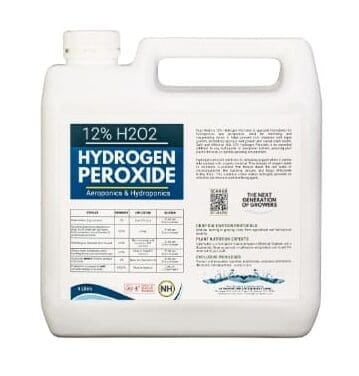
Once the reservoir has been filled, the system proceeds to the initial sanitation step using NH Hydrogen Peroxide 12% to apply an oxidative reset.
The purpose of this phase is to help reduce organic load, suppress unwanted microbial pressure, and improve the hygienic condition of the water and the system. This step is particularly important in minimizing conditions that may later contribute to solution instability, odor development, slime formation, or root-zone stress.
NH Hydrogen Peroxide 12% should be applied at the prescribed rate of 21 mL per liter of water. After dosing, the reservoir should remain undisturbed for 24 hours to allow the oxidizing action to proceed and the sanitation interval to complete before any subsequent reservoir input is introduced.
This waiting period is necessary to ensure that the sanitation step is not prematurely interrupted and that the reservoir is given time to stabilize before moving into the bio-activation phase.
DOSING RATE
Apply NH Hydrogen Peroxide 12% at exactly 21 mL per liter of water to achieve the required oxidative potential.
SANITATION INTERVAL
The reservoir must remain undisturbed for 24 hours. Do not introduce nutrients or bio-activators during this period.



Bio-Activation Phase
After the sanitation interval has been completed, the reservoir may proceed to the bio-activation phase.
At this stage, NH Amylis is introduced into the system, and should be applied at the required rate of 5 mL per liter of water, following label guidance and maintaining consistent dosing discipline.
The objective of this phase is to support a cleaner and more stable reservoir environment by assisting in the breakdown of residual organic matter that may contribute to buildup, instability, and microbial pressure over time. By helping reduce organic residues in the system, this phase also helps create conditions that are less favorable for the growth of unwanted or harmful bacteria.
Once inoculation is completed, the system may return to routine operation, but not to passive neglect. Bio-activation is not the endpoint of reservoir management; it must be followed by structured monitoring.
INOCULATION RATE
Apply NH Amylis at 5 mL per liter. Ensure thorough mixing to distribute the bio-activator across the entire reservoir volume.
POST-ACTIVATION
Return the system to operation. Shift focus immediately to structured monitoring of pH, EC, and oxygen levels.

Monitoring and Corrective Action Phase
Monitoring
Once the reservoir has been filled, the system proceeds to the initial sanitation step using NH Hydrogen Peroxide 12% to apply an oxidative reset.
The purpose of this phase is to help reduce organic load, suppress unwanted microbial pressure, and improve the hygienic condition of the water and the system. This step is particularly important in minimizing conditions that may later contribute to solution instability, odor development, slime formation, or root-zone stress.
NH Hydrogen Peroxide 12% should be applied at the prescribed rate of 21 mL per liter of water. After dosing, the reservoir should remain undisturbed for 24 hours to allow the oxidizing action to proceed and the sanitation interval to complete before any subsequent reservoir input is introduced.
This waiting period is necessary to ensure that the sanitation step is not prematurely interrupted and that the reservoir is given time to stabilize before moving into the bio-activation phase.
CRITICAL INDICATORS
Rising temperatures reduce oxygen capacity, while erratic pH drift is often the earliest warning sign of biological imbalance.
Corrective Action
Required when monitoring to detect warming solution, unusual pH fluctuation, odors, or slime. The objective is to interrupt deterioration before it progresses into broader system failure.
This consists of pulse sanitizing with NH Hydrogen Peroxide 12% at a lower-dose intervention of 2 mL per liter
CORRECTION SEQUENCE
Full System Reset
Indicated at approximately 45 days, or when instability persists despite corrective action. A full reset prevents the preservation of a reservoir condition that is no longer efficient, stable, or biologically safe.
STANDARD LIFECYCLE
45 DAYS

Important Notes
A guide to reservoir excellence: sanitation and nutrient monitoring.
Reservoir
Management
Dual-action practice: sanitation and nutrient-management. Performance requires consistent monitoring discipline.
Chemical Separation
Never mix H₂O₂ and NH Amylis. Separation ensures maximum biological efficacy.
Holistic Monitoring
Combine EC, pH, and water temperature data with physical inspections. Sensory checks like odor are vital.
Early Action
Don't wait for stress. Treat foul odors or buildup as early warning signs for correction.
Full Reset Intervals
Schedule resets to prevent residue buildup and restores a clean baseline.
Why Consistent Reservoir Discipline Matter?
Effective reservoir management is a controlled operating discipline that integrates preparation, sanitation, bio-activation, parameter monitoring, corrective intervention, and full reset into a repeatable system. When each phase is executed in the proper sequence and maintained with consistent monitoring, the reservoir is better able to resist instability, limit unwanted microbial pressure, and maintain a cleaner and more functional root-zone environment. In operational terms, this improves the system’s ability to support nutrient balance, root health, and more consistent crop performance over the full production cycle. A well-managed reservoir is therefore not only a maintenance objective, but a core component of production stability and growing efficiency.

Author

Catherine Joy Bartolome
Catherine Joy Bartolome
NutriHydro is a manufacturer of plant nutrients based in the Philippines. They are known to grow the healthiest, heaviest, and largest lettuce in the country. NutriHydro products are available to purchase from the following e-commerce platforms.
Lazada: bit.ly/3asMYXN
Shopee: bit.ly/3nRJX6Z
Basilyard: bit.ly/346Kklw
NutriHdyro Website: bit.ly/434MoY6