
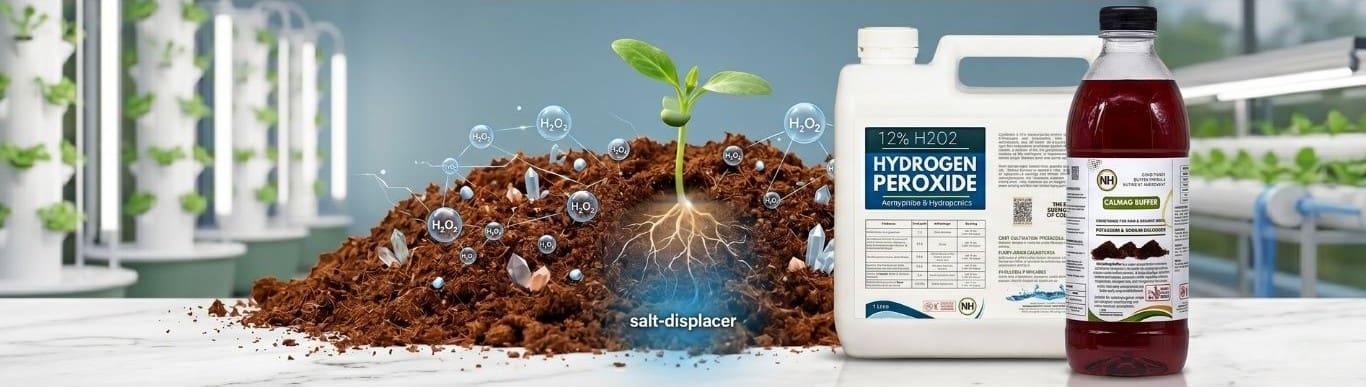
Cocopeat Preparation
Professional Protocols: Sterilization, Buffering, and Bio-control Inoculation
For growers using cocopeat as a substrate, proper preparation is essential to prevent nutrient lockouts and pathogen buildup. This guide follows the specific workflow of leaching sterilization followed by buffering, and bio-loading.
Cocopeat Bio-Processor
Cocopeat Preparation: Leaching, Buffering, and Bio-control Inoculation.
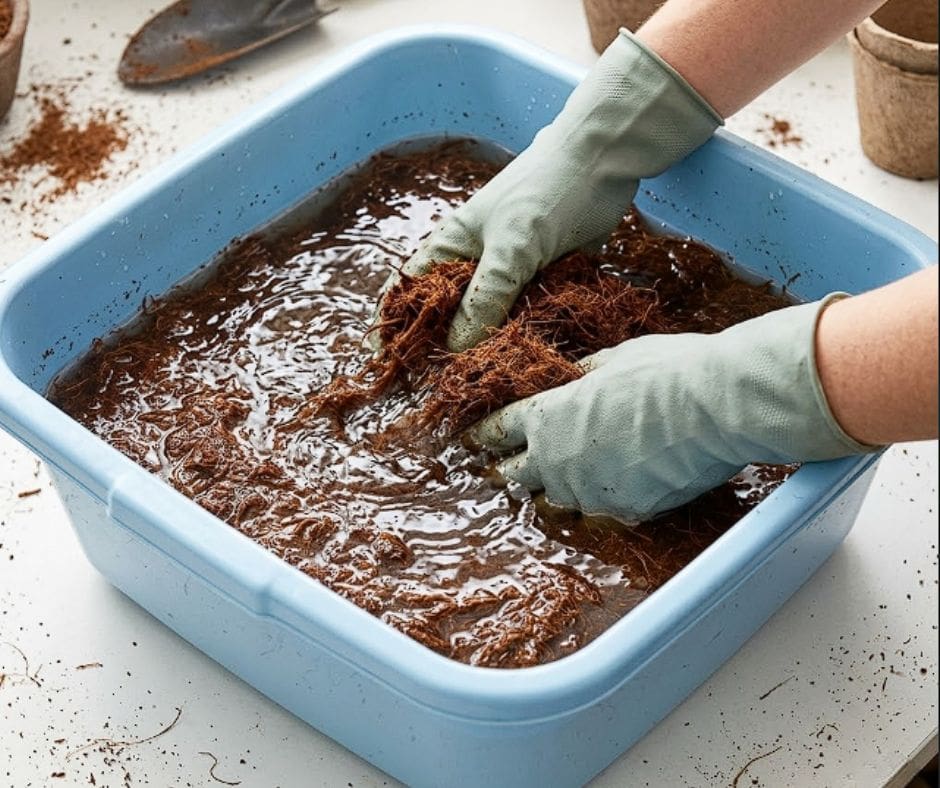
First Rinse
Washing raw coco peat with clean water.
Cocopeat buffering is critical to prepare coco-coir fibers for high-yield horticulture.
Cation Exchange Capacity (CEC) balanced
Preparation
Procedure:
-
1
Fill the container with water and place the cocopeat.
-
2
Rinse the cocopeat thoroughly. While rinsing, mix the cocopeat well using your hands or a stirrer. This action as it has been customarily practiced is essential to release impurities, trapped dust (pith), and tannins.
-
3
After rinsing, squeeze the excess water out of the cocopeat. Squeeze in small batches to ensure you have consistent control over the liquid being dislodged.
✨Sterilization
Procedure:
-
1
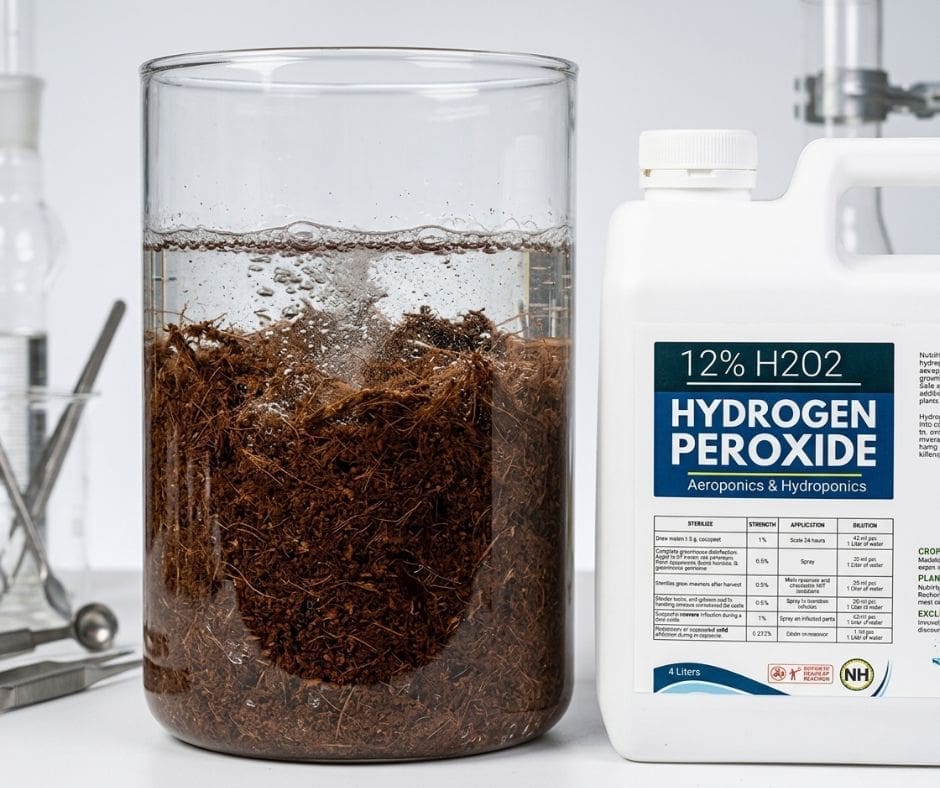
Mix 21mL of NH 12% Hydrogen Peroxide per liter of water.
-
2
Soak the cocopeat evenly with the diluted hydrogen peroxide solution.
-
3
Allow the solution to react for 30 minutes to 24 hours, or until the bubbles fade, to oxidize organic matter and help eliminate pathogens.
-
4
Perform a thorough rinsing to remove any residual peroxide.
🧪Buffering
Procedure:
-
1
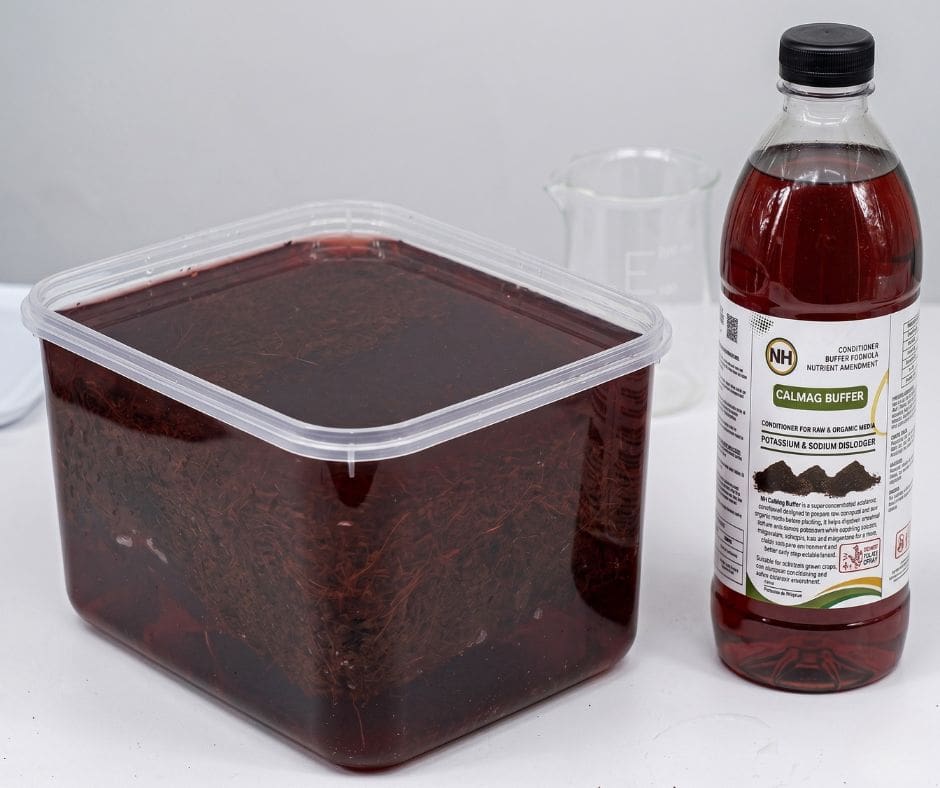
Mix 2mL of NH CalMag Buffer per liter of water.
-
2
Drench the cocopeat thoroughly with the solution until at least 30% run-off is achieved to ensure complete saturation.
-
3
Allow the cocopeat to sit undisturbed for 24 to 48 hours to allow the ion exchange reaction to take place.
-
4
After 48 hours, perform a thorough final rinse with clean water.
🦠bio-control inoculation
Procedure:
-
1
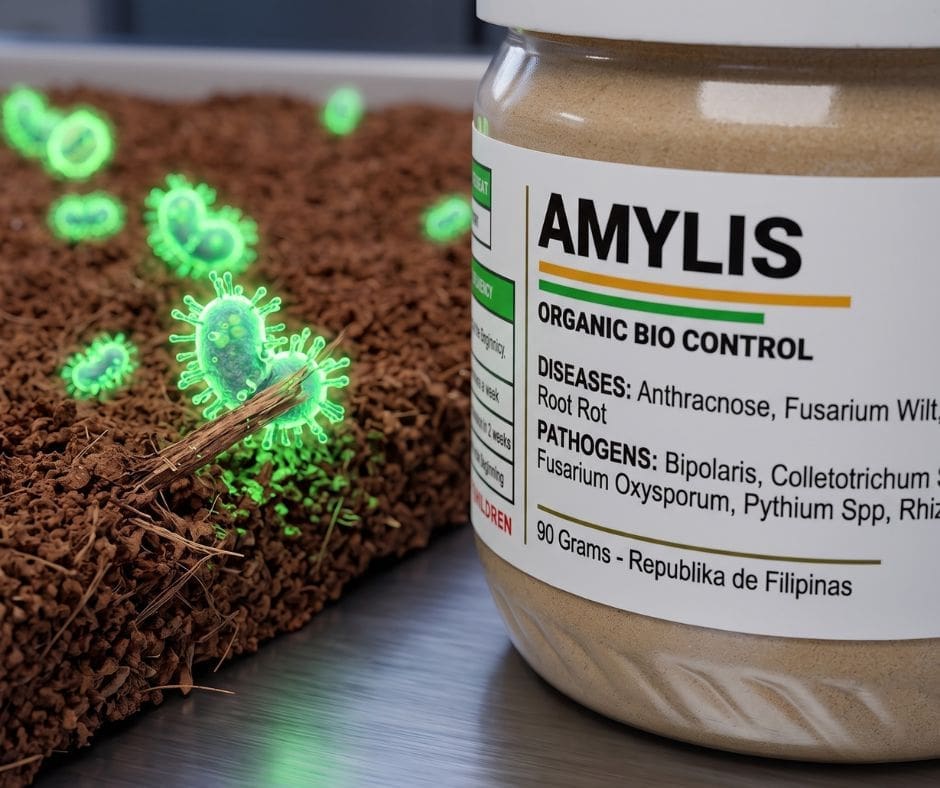
Activation: Mix 1/2 tsp molasses/sugar and 1 tsp NH Amylis per 1L water. Sit for 2 hours for the transition of beneficial bacteria in NH Amylis from their dormant, shelf-stable state into an active, metabolically aggressive state.
-
2
Inoculate: Add 50 mL of the activated NH Amylis mixture per 1 liter of clean water into the cocopeat and allow it to sit undisturbed for maximum of 4 hour. It introduce the "bio-loading" of the substrate by turning a passive support material into an active participant in your plant's defense and nutrition.
-
3
After the inoculation is done, squeeze the excess liquid before using it for sowing.
Note: Use the mixture within 4 hours. If left longer, the bacteria will consume all the sugar and begin to starve.
Triple-Focus Substrate Protocol
Achieving High-Yield Foundation
1. Biological Safety
Sterilization via NH 12% Hydrogen Peroxide eliminates pathogens, creating a pristine environment for growth.
2. Chemical Stability
Buffering using NH CalMag Buffer manages mineral balance, ensuring the coir does not lock out essential fertilizers.
3. Bio-Loading
NH Amylis inoculation populates the rhizosphere with an active "bio-shield" for long-term immune protection.
The Bottom Line: If you only sterilize, you risk pathogen re-entry. If you only buffer, you risk nutrient deficiency. Neglecting bio-loading leaves your roots vulnerable. Performing all three ensures a perfectly balanced, stable, and self-defending foundation.

Author

Catherine Joy Bartolome
Catherine Joy Bartolome
NutriHydro is a manufacturer of plant nutrients based in the Philippines. They are known to grow the healthiest, heaviest, and largest lettuce in the country. NutriHydro products are available to purchase from the following e-commerce platforms.
Lazada: bit.ly/3asMYXN
Shopee: bit.ly/3nRJX6Z
Basilyard: bit.ly/346Kklw
NutriHdyro Website: bit.ly/434MoY6