
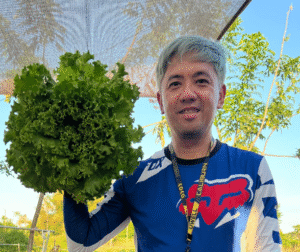
 “When I like doing something, I see to it that I study it well. Not just do it. It can’t be just like this. The product I produce needs to be good.” — Jason Sarmiento
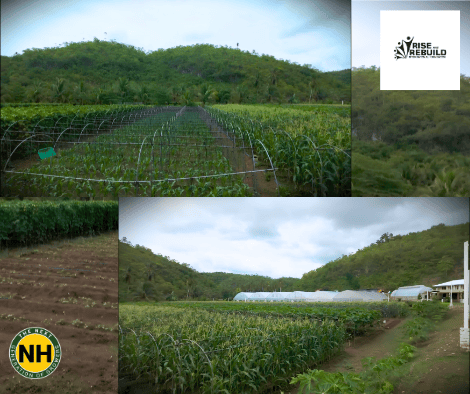
In the shadow of Mount Banahaw, where corn fields stretch across the landscape of Candelaria, Quezon, Jason Sarmiento is rewriting the rules of hydroponic farming. The former telecommunications engineer turned hydroponic grower has become something of a local legend—not just for his daily vlogs that inspire thousands, but for his almost obsessive commitment to excellence.
“It can’t be just like this,” Sarmiento explains, standing amid rows of pristine Maritima lettuce. “The product I produce needs to be good. It needs to be presentable, something that can be sold properly.”
The Unlikely Journey
 Sarmiento’s path to farming was neither planned nor conventional. A computer engineering graduate, he spent six years with Huawei Philippines as a data communications engineer before heading to Bahrain as an OFW. The corporate grind eventually wore him down.
“I got tired of corporate life,” he admits. When his mother fell ill in 2022, he returned home with plans to trade cryptocurrency. But staring at screens all day left him feeling hollow. “There’s no physical activity. It’s like I’ll die soon because I have no exercise.”
So he tried planting. What began as a hobby quickly evolved into something more serious—much more serious.
The Perfectionist’s Approach
 What sets Sarmiento apart isn’t just his engineering background—it’s his refusal to accept mediocrity. When he started in December 2022, he didn’t sell a single head of lettuce for three to four months.
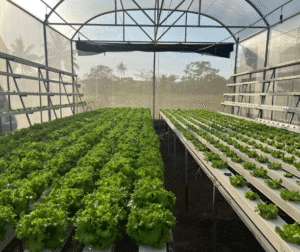
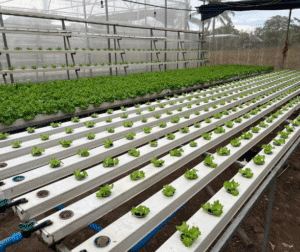
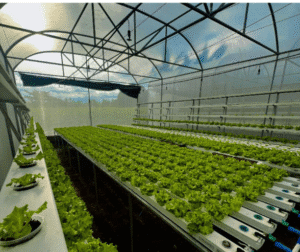
This philosophy extends to every aspect of his operation. When his first bamboo greenhouse—standing only eight feet tall—proved too hot for optimal growth, he didn’t make excuses. He rebuilt it at sixteen feet. When the standard greenhouse setup didn’t maximize his space, he designed a moving NFT channel system that produces 960 heads in just 48 square meters—yielding 20 heads per square meter.
“When they grow, I adjust them to the right space,” Sarmiento explains. “Because what lettuce really needs is space. They won’t grow if they’re really stuck together.” It’s labor-intensive work, moving channels one by one as plants mature. But for Sarmiento, the results justify the effort.
When Variety Selection Changes Everything
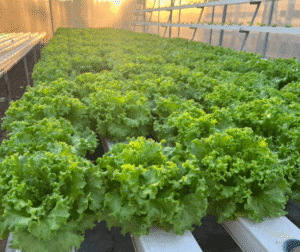 Jason’s most significant cultivation decision involved switching from Olmetie to Maritima lettuce variety in October of the previous year. This change resulted from careful observation of performance differences and customer feedback analysis.
Since implementing Maritima, pest pressure has virtually disappeared from his operation. Previous summers with Olmetie brought significant white fly infestations and subsequent plant stunting. The same conditions with Maritima produced no comparable pest issues.
Performance metrics demonstrate Maritima’s advantages: consistent harvests at 36-37 days from seed, with individual heads weighing 120-150 grams. The variety shows resilience across varying weather conditions, maintaining quality during both sunny and rainy periods.
The Science of Success
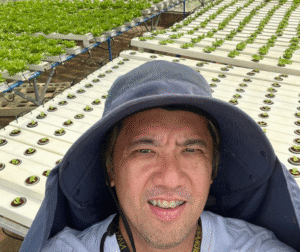 Ask Sarmiento about his secret, and his answer is refreshingly straightforward: “Regularly check your EC and pH.“
It’s the engineer in him speaking—measure, measure, measure. While some growers rely on intuition or luck, Sarmiento treats farming as the science it is.
“Hydroponics is science-based, so in science, there are meters, so let’s use them if you want your plant growth to become competitive,” he insists. “If it’s not in the right range, no matter what you do, it won’t grow like this.”
The proof is in his greenhouse. His Maritima lettuce—uniform, vibrant, and no yellow patches. No stunted growth. Just row after row of picture-perfect lettuce.
The Daily Discipline of Observation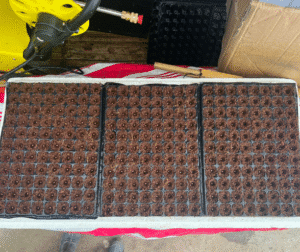
Sarmiento’s greenhouse management operates on a different frequency—one tuned not to rigid schedules but to the subtle language of temperature, humidity, and plant behavior. Where conventional wisdom dictates deploying shade nets at 10 AM sharp, Jason steps into his greenhouse and feels. Some mornings, the heat builds with unusual aggression, and shade goes up at 8 AM. Other days, the standard timing holds. His misting system embodies the same intuitive precision: a mere 10 to 15 seconds of activation, triggered not by timer but by the first whisper of plant stress.
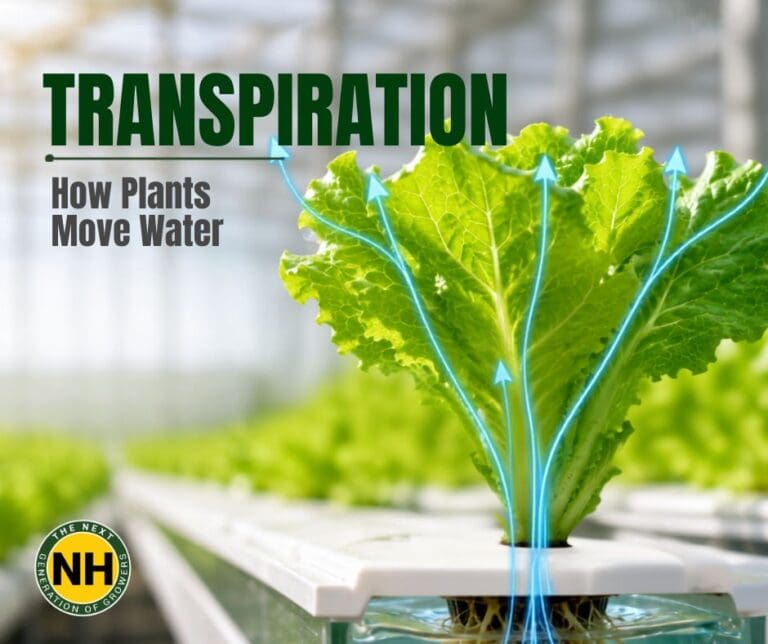
But don’t mistake intuition for guesswork. Jason’s irrigation timing dances with the seasons—thirty minutes on, fifteen off during daylight in cooler weather, then inverted at night to forty-five minutes off, fifteen on. It’s a rhythm that defies the common practice of shutting down pumps after dark. “I want to prevent the roots from drying out at night,” he explains, understanding what many miss: that respiration doesn’t sleep, that growth happens in darkness, that roots need oxygen even when photosynthesis pauses. The engineer in him measures everything twice. The farmer in him knows when to trust what can’t be measured at all.
Space as Strategy
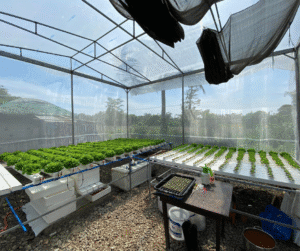 “The inside of a greenhouse is for planting, not for touring,” Jason declares, unapologetic. Every centimeter surrendered to comfort is a centimeter stolen from production. This ruthless space allocation delivers 20 heads per square meter—nearly double what conventional layouts achieve. The real genius reveals itself in motion: as lettuce matures, Jason physically shifts entire NFT channels, choreographing a slow dance of spacing adjustments. It’s backbreaking work, moving 960 plants incrementally through their life cycle. But this mobile system achieves the impossible—maximum density without sacrificing individual plant development.
Even waste becomes a strategy. Those three-ounce plastic cups holding his seedlings? They cost 20 centavos and never come back. The expensive net pots he tried first? “They’d say they’ll bring them back, but only return a few,” he recalls with a rueful smile. The disposable cups win on three fronts: cheaper upfront, use less coco peat, and let roots emerge faster into the nutrient solution. The channels themselves slope precisely—one inch drop per forty inches—engineered for perfect nutrient film flow. It’s the engineer’s mind finding elegance in disposability, turning every constraint into calculated advantage.
The Customer-First Philosophy
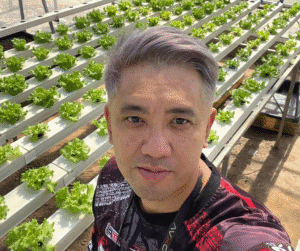 When clients call, any hour, any circumstance, Jason moves. Not because he’s desperate for sales, but because he’s built something rarer than perfect lettuce: perfect reliability. “When I earn, and the person I sold to uses it in their business and earns too,” he says, articulating an economics of mutual prosperity that sounds almost naive until you see it working. Jason doesn’t just deliver lettuce—he learns businesses. He asks about menu changes, foot traffic, weekend rushes. Some might call it being tsismoso, a gossip. Jason calls it relationship-building. His customers become advocates not because his lettuce is cheaper, but because he’s become invested in their success.
The quality obsession feeds everything else. From his first harvest, Jason refused to sell anything less than pristine—no yellow patches, no stunting, just relentless consistency. “First impressions last with clients,” he notes. Two hundred heads every other day, without fail. Standards that never slip. Flexibility when timing matters but never at quality’s expense. It’s a business model built on the radical idea that excellence plus reliability creates its own demand. In Jason’s world, the product opens doors. The service keeps them open.
Building A Community
Despite running what he modestly calls a “backyard farm,” Sarmiento has become a hub in the hydroponic community. His daily vlogs draw devoted followers who wait for his updates. He’s created a group where growers help each other, share knowledge, and troubleshoot problems together.
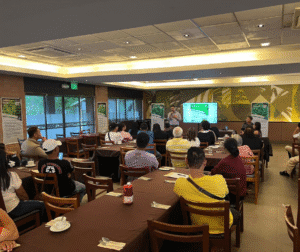 His greenhouse installations, done in collaboration with Silver Greenhouse and Virgilio Montes, have become models of practical design. And his willingness to share both successes and failures has made him a trusted voice in the industry.
Apart from that, his relationship-building approach extends beyond simple delivery transactions. Jason invests time understanding each customer’s business requirements, operational challenges, and quality expectations. This deeper engagement creates trust-based partnerships that generate referrals and expand his customer network.
Customer loyalty manifests in their preference for his Maritima variety over the previously supplied Almette. The clients appreciate both the improved flavor profile and the complete leaf utilization possible with Maritima’s structure.
Measuring Success Beyond Profit
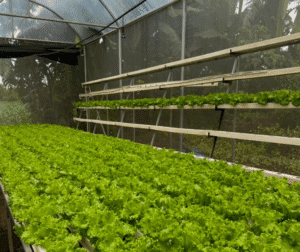 Jason’s operation maintains production of 200 heads every other day, meeting consistent customer demand while preserving quality standards that differentiate his product in the marketplace. His success metrics encompass customer retention, variety performance, and operational efficiency.
The business operates with just Jason and Marivic, proving that well-designed systems can achieve significant productivity without large labor forces. Their partnership handles all aspects from seedling production through customer delivery, maintaining direct quality control throughout the value chain.
Customer relationships enable operational flexibility, including schedule adjustments for special circumstances. The trust developed through consistent quality delivery allows for accommodation of timing variations while maintaining service reliability.
The View from Mount Banahaw
Standing in his greenhouse with Mount Banahaw visible in the distance, Sarmiento embodies a particular kind of Filipino excellence—one built not on shortcuts or hype, but on discipline, curiosity, and an uncompromising commitment to quality.
 “What I learned in business is you’ll earn, and the person you sold to, if they use it in their business, they’ll earn too,” he reflects. It’s a philosophy of abundance rather than scarcity, of building rather than extracting.
From sixty heads to hundreds, from a bamboo structure to multiple greenhouses, from corporate engineer to master grower—Jason Sarmiento’s journey is still unfolding. But one thing is certain: wherever he goes, he’ll measure twice and cut once, ensuring that every plant, every system, every decision meets his exacting standards.
Because for Jason Sarmiento, it can’t be just like this. It has to be perfect.