
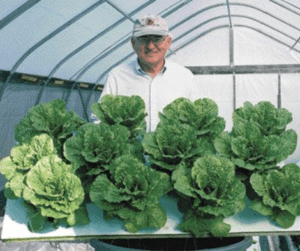
“If someone else in the world like the growers in the Philippines would benefit from this research, that would be a bonus—a big bonus!” – said Dr. Bernard Kratky in a written interview.
In gardens and farms across the Philippines, a quiet revolution is taking place. Nutrihydro, a plant nutrient manufacturing company dedicated to supporting Filipino growers, has witnessed firsthand the growing adoption of simple, accessible hydroponic techniques across the country. As more Filipinos turn to hydroponics for food security and sustainable agriculture, understanding the methods and the minds behind them becomes essential. That’s why, as a writer for Nutrihydro, I had the unique opportunity to conduct a written interview with Dr. Bernard Kratky—the man whose deceptively simple hydroponic technique has sparked a quiet revolution in our country.
From rooftops in Metro Manila to small plots in the Visayas, Filipino growers are discovering the power of the Kratky Method, which requires no electricity, no pumps, and no complicated equipment—just water, nutrients, and a willingness to grow. The Kratky Method, named after this University of Hawaii researcher, has become a game-changer for Philippine agriculture, offering solutions to challenges that have long plagued local farmers and home growers alike.
A Modest Beginning with Global Impact

As Dr. Kratky explained in his responses, he never set out to create a global phenomenon. When he began documenting his suspended pot, non-circulating hydroponic method in scientific publications, his primary goal was modest and practical. He simply wanted to share research results with Hawaii growers and academic institutions, as was encouraged at the University of Hawaii’s College of Tropical Agriculture and Human Resources. His intention was to develop a method suited to Hawaii’s unique conditions, one that could sidestep the island’s persistent agricultural challenges including weeds, nematodes, soil diseases, nutrient leaching from heavy rains, and the difficulty of managing tropical soil fertility.
The Hawaii researcher also sought efficiency in water use without requiring irrigation systems, and a method that wouldn’t demand much land, since prime farmland in Hawaii’s ideal growing regions was both scarce and expensive. As I read his description of these concerns, I realized they mirror challenges faced by Filipino farmers today, from the rocky volcanic soils of certain regions to the intense rainfall that can wash away precious nutrients, and the increasing scarcity of affordable agricultural land near urban centers.
What struck me most was Dr. Kratky’s genuine surprise at how his work spread to the Philippines. The possibility that growers in other parts of the world, particularly in countries like ours, would benefit from his research was not part of his original vision. Yet in his written responses, he expressed genuine delight at this unexpected outcome, calling it “a bonus—a big bonus!” He told me he has watched YouTube videos showcasing Philippine hydroponics operations and has been amazed at the level of interest his method has generated throughout the archipelago. The technique’s spread to the Philippines represents an organic convergence of agricultural need and accessible innovation, perfectly suited to a tropical climate with challenges remarkably similar to those Dr. Kratky originally sought to address in Hawaii.
The Key to Widespread Adoption Through Accessibility
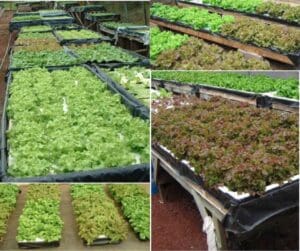
As Dr. Kratky wrote in his response, the beauty of his method lies in its accessibility. A grower can start at an incredibly small scale, with just one plant in a bottle or three plants in a bucket. The setup is quick and inexpensive, with no safety concerns about electrical power and no worry over power failures or equipment breakdowns. This simplicity is particularly valuable in the Philippine context, where electricity costs can be prohibitive and power reliability varies greatly across regions. The method eliminates the need for expensive pumps and aerators that characterize traditional hydroponic systems, making it financially accessible to smallholder farmers and urban gardeners working with limited resources.
Dr. Kratky emphasized in his written response that less experience is needed with this method compared to conventional growing techniques. He proudly shared that he has successfully taught the system to elementary school students who completed their projects with remarkable success. This democratization of agricultural knowledge is particularly significant in the Philippines, where many aspiring growers may lack formal training but possess enthusiasm and determination. The low barrier to entry means that even those with minimal agricultural background can begin producing their own food.
When I asked Dr. Kratky for advice for Filipino growers just beginning their hydroponic journey, his response was straightforward and encouraging. Start small with one plant in a container or three plants in a bucket, protect the growing container from rain, secure a source of hydroponic fertilizer that has proven successful for other growers, and understand the proper fertilizer measurements for the container size. He stressed that regular field fertilizer will not yield good results in hydroponics, making this one of the few non-negotiable requirements. Once growers achieve success with a small planting, they gain the confidence to expand to larger operations, scaling up at their own pace and comfort level.
Understanding the Simple Yet Effective Process

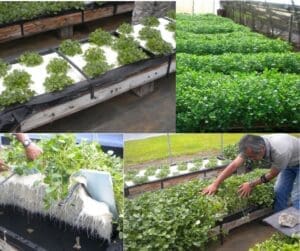
The method itself is elegantly simple. Tanks are filled nearly to the top with nutrient solution, and a cover with holes is placed over the tank. At transplanting time, individual net pots containing growing medium and seedlings are inserted into the holes, with the lower portion of each net pot immersed in the nutrient solution. The entire growing medium moistens through capillary action, automatically providing plants with water and nutrients. This passive system requires no pumps, timers, or electricity to function, making it ideal for areas in the Philippines where power supply may be unreliable or costly.
As the plants grow, the nutrient solution level drops below the net pots, but by this time, roots have emerged. The roots in the solution continue absorbing water and nutrients, while roots above the solution line become oxygen roots, taking up air from the humid layer between the tank cover and nutrient solution surface. This natural division of labor between water-nutrient roots and oxygen roots is the genius of the system, providing plants with everything they need without mechanical aeration. For short-term crops like lettuce, the entire growth cycle can be completed with a single application of water and nutrients, requiring no intervention from transplanting until harvest.
The hands-off nature of the method during the growing period is particularly appealing to Filipino home growers who may have other responsibilities. Once the system is set up correctly, the plants essentially tend themselves, making it possible for busy urban professionals, students, or families to maintain productive gardens without daily maintenance. This set-it-and-forget-it approach removes one of the major barriers to home food production: time commitment.
Common Mistakes and How to Avoid Them

When I asked Dr. Kratky about common pitfalls, he warned me that beginners often make predictable mistakes. The most common error is using the wrong fertilizer or incorrect amounts. Many new growers assume that regular garden fertilizer will work in hydroponic systems, but as he emphatically told me, this is not the case. Hydroponic fertilizers are specially formulated to provide all the nutrients plants need in the proper ratios for soilless growing. Using the wrong type of fertilizer is one of the quickest ways to experience failure with the method, leading to nutrient deficiencies, stunted growth, or plant death.
Dr. Kratky also described another mistake: some overzealous growers keep refilling their containers to the top multiple times throughout the growing season, inadvertently drowning their plants rather than allowing the solution to naturally recede. This mistake stems from good intentions but reflects a misunderstanding of how the system works. He explained that the receding water level is not a problem to be fixed but rather an essential feature that creates the air space necessary for oxygen root development. When growers continuously top up their containers, they submerge the oxygen roots, which can quickly become non-functional and cause plants to wilt or die.
He also cautioned against another temptation: lifting the covers holding the plants to show off the impressive root systems to friends and family. While the urge to peek is understandable, especially when first experiencing the method’s success, this handling can break delicate root structures and stress the plants. For the Philippine climate specifically, Dr. Kratky told me that protecting containers from heavy rainfall is particularly crucial. Tropical downpours can quickly flood hydroponic containers, submerging oxygen roots and potentially diluting the nutrient solution to ineffective concentrations. A simple rain shelter or strategic placement under eaves can prevent these weather-related complications.
Making Space for Filipino Creativity and Innovation
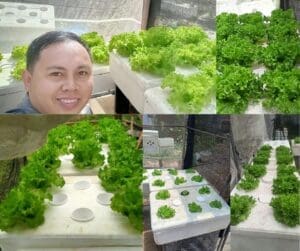
The method’s adaptability has led to creative innovations worldwide, and Dr. Kratky told me he is not surprised by this evolution. He notes that growers bring diverse backgrounds and experiences, leading to adaptations he could never have imagined. The system naturally lends itself to experimentation and modification, allowing Filipino ingenuity to flourish. From vertical tower systems to floating raft adaptations, local growers are finding ways to maximize productivity in limited spaces, a crucial consideration in densely populated Philippine urban areas where every square meter counts.
When I asked about more challenging crops, Dr. Kratky’s enthusiasm was evident. He finds longer-term crops like cucumbers, tomatoes, peppers, and eggplants particularly exciting yet challenging. These crops require additions of large amounts of nutrient solution during their growing period, necessitating optimally sized growing containers and efficient delivery systems such as float valves, with nutrient solutions modified based on the changing needs of the crop. Successfully growing these fruiting vegetables can provide substantial nutritional value and even income opportunities for small-scale commercial growers.
Dr. Kratky encouraged me to pass along this message to Filipino growers: experiment to improve their current systems and venture beyond with new crops they haven’t tried before. This spirit of innovation and adaptation is essential for the method’s continued evolution in the Philippine context. Local conditions, available materials, and crop preferences all differ from Hawaii, and these differences create opportunities for Filipino growers to develop their own best practices and share them with the growing community.
Food Security in the Philippine Context
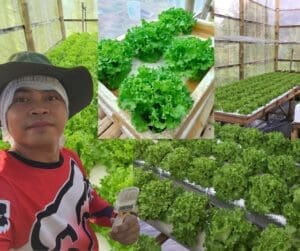
During our conversation, I realized how the Kratky Method addresses a critical need in Philippine food security. While Dr. Kratky acknowledges that hydroponics plays a relatively small part in overall global food production, he recognizes its unique value. Hydroponics provides food security because small parcels of land scattered throughout large populations can be used to grow nutritious vegetables. In the Philippine context, where urbanization continues to consume agricultural land and supply chain disruptions can impact food availability, this distributed approach to food production offers resilience.
Dr. Kratky explained that even if there is a breakdown in the overall food supply chain where urban stores cannot receive vegetables from rural farmers or food shipments from other regions are interrupted, hydroponic systems in backyards, rooftops, and community spaces can continue providing fresh produce. This became particularly evident during recent global events that disrupted transportation and distribution networks. Families with established hydroponic gardens found themselves with a reliable source of fresh vegetables while others faced shortages and price increases.
He also pointed out the method’s water efficiency, which is particularly significant in a nation where some regions face seasonal water scarcity while others experience flooding. The closed system of Kratky hydroponics uses significantly less water than traditional soil farming, and water is not wasted through runoff or deep percolation. For Filipino growers, this efficiency translates to lower water bills and reduced environmental impact, making food production more sustainable at the household level.
How the “Kratky Method” Name Came to Be
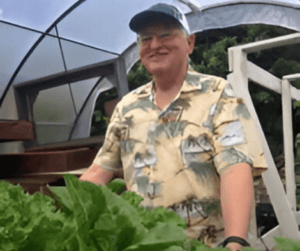
The method arrived in the Philippines through an unexpected path. About five years before Dr. Kratky’s historical account, a YouTuber known as MHP Gardener discovered the technique through Dr. Kratky’s academic publications. MHP Gardener built a hydroponic setup exactly as described in the publication and, wanting to give proper credit to the author, referred to it as the Kratky Method in his videos. Those initial videos garnered over 800,000 views, and MHP Gardener went on to produce at least five excellent tutorials describing the technique, accumulating over two million total views.
The name stuck, much to Dr. Kratky’s modest embarrassment, as he believes the method should more properly be called the Sachs Method, the Gericke Method, or certainly the Imai Method, in recognition of the historical figures whose work laid the foundation for his innovations. Dr. Kratky’s humility reflects his understanding that scientific progress builds upon the work of predecessors. From Robert Boyle’s 1666 proof that rainwater alone cannot nourish plants, to Sachs and Knop’s elimination of sand as plant support in the 1860s, to Dr. Hideo Imai’s crucial work on oxygen roots and water-nutrient roots that directly inspired Kratky’s refinements, the method represents centuries of accumulated knowledge.
Nevertheless, the “Kratky Method” designation has become the globally recognized term, largely due to the viral spread of information through social media platforms. This organic naming process demonstrates how digital communication has transformed agricultural knowledge transfer, allowing techniques to spread across oceans and language barriers with unprecedented speed. Filipino growers encountering the method through social media groups almost universally know it by this name, creating a shared vocabulary within the growing community.
Freely Shared Knowledge for All
Dr. Kratky’s intellectual generosity extends to making his work freely available. The two hydroponic patents he once held have now expired, and the technology may be used freely for any legal purpose. This open-source approach aligns perfectly with his vision of community service, ensuring that cost is never a barrier to accessing the knowledge needed to implement the method. Filipino entrepreneurs, educators, and home growers can all use, adapt, and even commercialize systems based on the Kratky Method without licensing fees or legal restrictions.
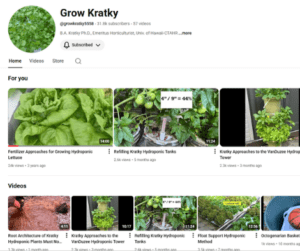
Even in retirement, producing occasional YouTube videos provides him with a creative outlet that keeps his mind active while allowing him to share information with a worldwide community of plant enthusiasts. His YouTube channel “Grow Kratky” has become a valuable resource for Filipino growers seeking guidance directly from the method’s originator. The videos offer troubleshooting advice, crop-specific tips, and demonstrations of various adaptations, all delivered in Dr. Kratky’s clear, straightforward teaching style that makes complex concepts accessible to viewers regardless of their educational background.
In a world where proprietary agricultural technologies often remain inaccessible to small-scale farmers due to patent restrictions and licensing costs, Dr. Kratky’s approach stands as a refreshing alternative. Filipino growers benefit directly from this generosity, able to implement and improve the method without legal or financial obstacles beyond the modest cost of basic materials.
Addressing Future Challenges and Opportunities
Looking to the future, Dr. Kratky acknowledges uncertainty about the role of non-circulating hydroponics in agriculture’s evolution. He expresses a desire to see the method studied more extensively by researchers to help it attain its full potential. Academic institutions in the Philippines have an opportunity to contribute to this body of research, examining how the method performs with local crop varieties, tropical climate conditions, and indigenous growing practices. Such research could optimize the method specifically for Philippine conditions, potentially improving yields and expanding the range of crops that can be successfully grown.
Emerging concerns about nanoplastics and microplastics may affect hydroponic growing’s future, though currently there is no quick, affordable way to measure these contaminants. Once measurement methods are developed, researchers can devise strategies to minimize their impact on hydroponic plants. This concern is relevant worldwide, but particularly in countries like the Philippines where plastic waste management remains a significant environmental challenge. Future iterations of the method may need to consider alternative materials or protective measures to address these emerging concerns.
Despite these considerations, the fundamental advantages remain compelling. Hydroponics offers growers methods of cultivating plants without dealing with soil, heavy machinery, or large farmland parcels, and in the case of Kratky hydroponics, without significant investment in pumps or electrical power. For Filipino growers facing challenges of land scarcity, unreliable electricity, and the need for climate-resilient agriculture, these advantages are not merely conveniences but potential solutions to pressing problems that affect food security and livelihood sustainability.
A Message of Encouragement for Filipino Growers
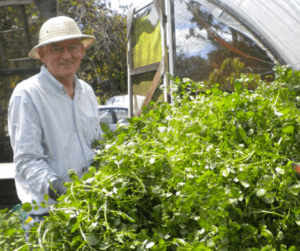
For the growing community of hydroponic enthusiasts in the Philippines, Dr. Kratky’s message is one of encouragement and optimism. He urges growers to experiment to improve their current systems and to venture beyond with new crops they haven’t tried before. This invitation to innovate recognizes that Filipino growers, with their unique environmental conditions, available resources, and cultural food preferences, are best positioned to adapt the method to their specific needs. The diversity of Philippine geography, from coastal lowlands to highland regions, presents opportunities for discovering how the method performs across different microclimates.
His parting words to Filipino growers are simple but heartfelt: Good Luck and Happy Growing! These words carry the warmth of someone who has spent a lifetime in agriculture and understands both its challenges and its profound satisfactions. They reflect an elder statesman’s blessing on a new generation of growers who are taking his work in directions he never anticipated but deeply appreciates. The sentiment encapsulates the spirit of generosity and mutual support that characterizes the global Kratky Method community.
In a nation where innovative approaches to food production are increasingly necessary, where land is precious and climate challenges are mounting, the Kratky Method offers not just a technique but a philosophy of accessible, sustainable agriculture that empowers individuals to take food production into their own hands, one bucket at a time. For Filipinos seeking food security, supplemental income, or simply the satisfaction of growing their own vegetables, Dr. Kratky’s method provides a proven path forward, backed by decades of research yet simple enough for anyone to begin today. The revolution is quiet, green, and growing in containers across the archipelago.