

When growers discover mold, slime, or unusual particles floating in their nutrient solutions, it naturally raises concerns about product quality. It is easy to suspect that something is wrong with the nutrient itself. In almost all cases, however, the problem does not begin in the factory. Contamination almost always happens after the bottle is opened or the solution is mixed, when environmental microbes gain access to ideal growth conditions: moisture, warmth, oxygen, nutrients, and time.
Understanding why this happens and how to prevent it can save you from system contamination and crop loss. Whether you are using commercial liquid concentrates or preparing your own stock solutions from dry fertilizers, the scientific principles behind mold prevention are the same.
UNDERSTANDING YOUR NUTRIENT SOLUTIONS
In hydroponic growing, most growers work with two forms of concentrated nutrients. They function similarly in the system, but they behave differently during storage and handling.
Commercial liquid concentrates are nutrient products that arrive already in liquid form. They are manufactured at high strength, sealed in bottles or containers, and are designed to be diluted with water before feeding plants. Because they are opened and used repeatedly over time, they are frequently exposed to air, dust, and tools.
Stock solutions, on the other hand, are strong nutrient mixtures that the grower prepares from dry, water-soluble fertilizers. Powders are dissolved into water, usually in pails, jugs, or drums, and the resulting concentrate is then used over several days or weeks before further dilution. Stock solutions are mixed on-site, so their cleanliness depends almost entirely on the quality of water, containers, tools, and the work area.
Both commercial liquid concentrates and grower-prepared stock solutions are forms of concentrated nutrition that are later diluted for plant use. Both can remain clean and stable when handled correctly, and both can develop contamination if storage, hygiene, or environment break down.
THE SCIENCE BEHIND MOLD GROWTH

Properly sealed nutrient products do not grow mold inside the blending facility. Mold appears only when several conditions come together after opening. Water is already present in any liquid solution. Warm temperature is common in tropical and greenhouse environments. Microbial contamination can enter on dust, air currents, or unsanitized tools such as scoops, stirrers, funnels, syringes, or measuring cups. If the solution is then stored for a prolonged period, microbes have enough time to multiply.
At NutriHydro, we design our production process to address these risks before products leave the factory. Our dry nutrient powders contain no free water and undergo ozone-based sanitizing before packaging. Our liquid concentrates are built from heat-conditioned components and then ozone-sanitized before bottling. Bottles, caps, liners, and dry-form bags are likewise sanitized before filling.
From a microbiological perspective, these steps target both active microbial cells and spores. Heat treatment denatures critical proteins and enzymes that cells require for life, while ozone (O₃), a powerful oxidizing agent, attacks cell membranes, spore coats, and genetic material. Together, heat conditioning and ozone sanitizing dramatically lower the viable microbial and spore load before any product is sealed. In other words, our nutrient products do not leave the factory with mold present; contamination occurs only after opening or mixing, during storage and use at the grower level.
Once a container is opened or a stock solution is prepared, however, the protection from the factory is replaced by the protection given by your own practices. At that point, microbes in the environment can access moisture, nutrients, oxygen, warmth, and time. That combination is what allows fungi, bacteria, and algae to multiply if they manage to enter the solution.
HOW AND WHY PATHOGENS FORM SPORES

Many fungi (molds) and some bacteria respond to stressful conditions—such as drying, lack of nutrients, heat, or exposure to chemicals—by forming highly resistant structures called spores. Sporulation is a survival strategy. The organism packages its genetic material into a tiny, dormant structure with very low water content. The spore forms a thick, protective wall, and metabolism slows to a minimum.
In this dormant state, spores can survive for long periods on dry surfaces, dust, clothing, and tools. They tolerate temperature changes and UV light better than actively growing cells and can travel long distances on air currents before settling on containers, lids, and mixing equipment. They “wait” in this protected form until they encounter favourable conditions—sufficient moisture, available nutrients, and a suitable temperature. When those conditions exist inside a contaminated nutrient concentrate or stock solution, spores can germinate back into active fungal hyphae or bacterial cells and begin to multiply.
Because spores are so resistant, our production process at NutriHydro deliberately combines heat conditioning and ozone sanitizing on components, solutions, and packaging to disrupt and inactivate both active cells and spores before sealing. Once the product leaves our facility, maintaining that level of cleanliness depends entirely on how it is handled, mixed, and stored in your farm or workspace.
HIGH-RISK STORAGE AND WORK ENVIRONMENTS

Where and how you store and prepare nutrient solutions has a strong influence on whether mold appears. Mold thrives in places with poor ventilation and stagnant, humid air. Many of the isolated cases reported to us came from growers who stored or prepared their solutions in basements with limited airflow, enclosed storage rooms without ventilation, crowded corners or spaces under staircases, sealed cabinets, or open areas beside dense vegetation and trees.
Areas near vegetation are naturally rich in fungal spores because fungi act as ecological decomposers. They break down fallen leaves, wood, and other organic matter, constantly recycling nutrients back into the ecosystem. This decomposition process releases spores into the air all the time. When airflow is stagnant, these spores settle on surfaces and can eventually find their way into nutrient containers.
Workrooms and preparation tables that are dusty, cluttered, or rarely disinfected behave in a similar way. Dust, dried splashes, and bits of organic debris on benches and shelves can accumulate spores and bacteria. When you measure, pour, or mix nutrients in such a space, those spores can easily fall or be brushed into open bottles, jugs, and stock drums.
A simple but effective step is to treat your nutrient preparation area the way you would treat a clean food preparation area. Periodically wiping down benches, tools, and nearby surfaces with an appropriate disinfectant—such as a properly diluted hydrogen peroxide solution—reduces the number of viable spores and bacteria present. Solutions that are stored and prepared in clean, well-ventilated, dry locations that are regularly wiped down and kept free of dust and organic debris rarely experience mold problems, even though spores are always present in the wider environment.
WHAT CONTAMINATION LOOKS LIKE IN PRACTICE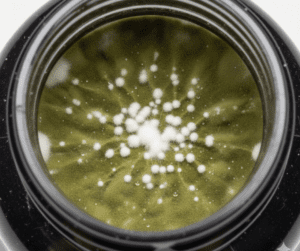
Contamination does not always present itself in the same way. It can appear differently in commercial liquid concentrates, in stock solutions, and in tanks that are exposed to light.
In liquid concentrates, repeated opening and closing, combined with contaminated tools or unfavourable storage conditions, may eventually lead to visible changes. Growers sometimes notice white or gray fuzzy patches clinging to the surface or walls of the bottle, which are typical of fungal growth. Others observe stringy, slippery films that behave like bacterial biofilm when disturbed. Brown or orange flakes may also appear, but these are often oxidized minerals or precipitated salts rather than living mold.
In stock solutions prepared from dry fertilizers, problems often develop more quickly than in sealed concentrates. Stock solutions are nutrient-dense, frequently opened, often stored in warm areas, and may remain stagnant for long periods. Dirty or previously used containers, unwashed scoops, stirrers and funnels, hands or gloves that have handled growing media, dust and organic matter from nearby vegetation, and residual biofilm from previous batches can all act as sources of contamination.
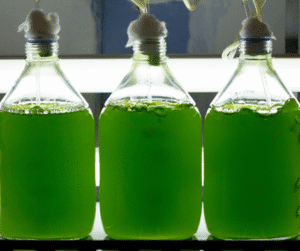
Light-exposed tanks and translucent containers introduce a different issue: algae. When nutrient solutions are exposed to direct sunlight or strong indoor lighting, green films or discolouration may develop on the sides and on floating surfaces. Unlike mold, algae require light for photosynthesis, so blocking light or switching to opaque containers is usually enough to prevent their growth.
 WHY CONTAMINATION MATTERS
It is tempting to think of mold as simply an aesthetic problem, but contaminated solutions affect the entire growing system. Microbial growth consumes oxygen and can reduce dissolved oxygen (DO) levels in the final working solution, leaving roots under oxygen stress. Fungi and bacteria can also introduce plant pathogens into the system, or create biofilms that cling to pipes, pumps, emitters, and drippers, reducing flow or causing blockages.
As contamination progresses, the chemistry of the nutrient solution can change. Some nutrients may precipitate or become less available, and metabolic by-products from microbes can alter pH and redox balance. Plants exposed to these conditions often respond with uneven growth, weaker and more fragile root systems, and lower yields. Stressed plants are also generally more susceptible to other diseases and environmental stressors such as heat, cold, or salinity.
BUILDING A PREVENTION MINDSET
Effective prevention is not one single action; it is a chain of small, consistent habits that begin with container choice and extend all the way to how you store, mix, and handle solutions day to day.
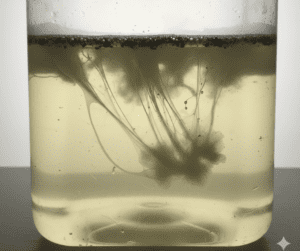 It starts with the containers you use. Choosing food-grade plastic containers and avoiding drums or jugs that have previously held organic materials immediately reduces the number of places where biofilm can hide. Scratched or rough interior surfaces tend to hold onto films and residues, making thorough cleaning difficult. Washing and sanitizing bottles, jugs, and drums before preparing stock solutions, and giving the sanitizer proper contact time before any required rinsing, establishes a clean baseline.
How much you mix at once also influences risk. In warm climates, it is safer to prepare only what you can comfortably use within about one to two weeks. Smaller systems often benefit from mixing just a few days’ supply at a time. Shorter storage windows give microbes less time to multiply and help ensure that your plants receive relatively fresh nutrients.
Tools deserve as much attention as containers. Every scoop, funnel, stirrer, pipette, syringe, or measuring cup that touches your concentrates or stock solutions becomes a potential vehicle for spores and bacteria if it is not clean. Tools that have been in contact with cocopeat, soil, leaves, or other organic materials should never be dipped back into nutrient containers without proper cleaning and sanitation. Maintaining a dedicated set of clean, dry, sanitized tools used only for nutrient work is one of the simplest and most effective defences against contamination.
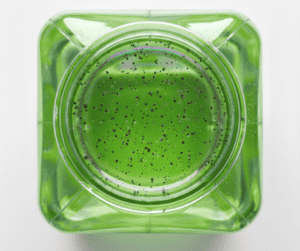 Where you store and mix nutrients is equally important. Solutions kept in cool, shaded areas, away from direct sun, tin roofs that heat up during the day, hot vehicle interiors, or enclosed airless corners, are less likely to support explosive microbial growth. Lids should be kept closed whenever containers are not in use. Open bottles are essentially invitations for dust and spores to enter. Paying attention to the cleanliness of your work area—wiping benches, keeping shelves free of debris, and periodically disinfecting surfaces—further reduces the microbial load that can fall into open containers while you work.
For growers operating in especially difficult environments, such as very hot, humid regions or locations near dense vegetation, refrigeration adds another layer of protection. Cold temperatures slow microbial reproduction, enzyme activity, and spoilage. From a microbiological perspective, refrigeration lowers temperature to a level where most microbes become functionally inactive or greatly slowed. In this context, “inactivate” means that cells and spores are no longer actively growing, dividing, or producing metabolites at a meaningful rate while the solution is cold. Some sensitive microorganisms may die during chilled storage, but the main benefit of refrigeration is that it prevents surviving microbes from multiplying and forming visible growth as quickly.
When refrigeration is available, it is best reserved for nutrient concentrates and stock solutions stored in smaller, sealed, food-grade bottles rather than large drums, which cool unevenly and may still harbour contamination in warm pockets. Bottles should be labelled, dated, kept away from food storage, and kept tightly sealed and dry on the outside before refrigeration. For growers working in basements, near vegetation, or in areas with stagnant air and high microbial loads, this combination of cleanliness and cold storage can make a noticeable difference in how long a solution stays clear.
WHAT TO DO IF YOU ALREADY SEE MOLD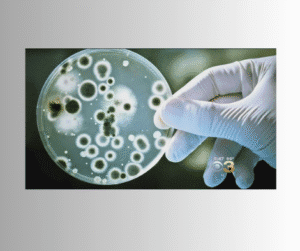
Despite best efforts, there will be times when contamination still appears. If you notice fuzzy growth, slime, green films, or increasing floating particles in a concentrate or stock solution, it should not be ignored. The earlier you address the problem, the more options you have.
For early, mild contamination—where there is only a light film, a few small clumps, and no foul or rotten odour—you have two realistic paths. The first is simply to discard the affected solution and prepare a fresh batch. This is the gold standard for critical crops and high-value systems because it removes uncertainty about both microbiology and chemistry.
The second path, used more cautiously, is to attempt to salvage a mildly contaminated solution using filtration and heat treatment on a small scale. This is not a routine practice, but a controlled option for growers who wish to recover a small batch rather than discard it immediately.
A sensible salvage sequence looks like this:
- Filter the solution. Pass it through a fine filter or clean cloth to remove visible particles and mold clumps. Filtration does not remove all microbes, but it reduces the bulk of the biomass.
- Apply heat treatment. Heat the filtered solution, while stirring, to about 70–80 °C (158–176 °F). For lighter contamination, maintaining this temperature range for around five minutes may be sufficient; for more obvious growth without bad odour, heating for up to ten minutes offers a higher margin of reduction.
- Cool and transfer. Allow the solution to cool completely to room temperature and transfer it into a clean, thoroughly sterilized container.
- Refrigerate after treatment. Store the treated solution in the refrigerator, in small sealed bottles, to further slow any surviving microbes and extend its usable life.
At these temperatures and times, most active fungi and bacteria, and many spores, will be significantly reduced, although extremely resistant forms may still survive, and the heating process can alter the nutrient chemistry.
Even with this salvage option, freshly prepared solution remains the most reliable standard, especially for sensitive or high-value crops. Salvage should be viewed as a controlled, last-resort measure for early, mild contamination rather than a routine practice.
There are also clear cases where salvaging is no longer advisable. Certain signs indicate that contamination and decomposition have progressed too far for recovery to be sensible.
 You should plan to discard rather than salvage when you notice:
- A strong, unpleasant or rotten odour coming from the solution
- Heavy, visible growth throughout the container rather than a few small clumps
- Thick biofilm coating the walls, fittings, or lid
- Significant, unexplained colour changes that suggest chemical breakdown
When these signs are present, the solution has likely undergone both biological and chemical changes. In these situations, it is safer to discard the solution, but even discarding should be done with care.
Before disposal, the concentrated nutrient can be diluted heavily with clean water and then applied to outdoor soil around established trees or ornamental plants, well away from waterways, ponds, or drainage lines. This prevents unnecessary discharge of concentrated nutrients into drains while still putting some of the mineral content to use in the soil. Once the solution has been discarded, the container should be thoroughly scrubbed to remove biofilm, sanitized, rinsed, and then refilled only with fresh solution prepared under cleaner conditions.
FREQUENTLY ASKED QUESTIONS
Is the nutrient product itself moldy from the factory?
No. Our nutrient products do not leave our facility with mold present. Dry components are ozone‑sanitized and contain no free water, liquid concentrates are built from heat‑conditioned and ozone‑treated components, and packaging is sanitized before filling. Mold appears only after opening or mixing, when environmental microbes enter and conditions allow them to grow.
Can I filter out mold and continue using the solution?
Filtration on its own is not enough, because it removes only what you can see. For early, mild contamination, filtration combined with controlled heat treatment and transfer into a clean, sterilized container can significantly reduce microbial load, especially if the treated solution is then refrigerated. Even so, freshly prepared solution is always the safest option, particularly for sensitive crops.
What are those brown flakes in my solution?
Brown or orange flakes are often oxidized minerals, such as iron, or precipitated salts rather than living mold. However, heavy precipitation or very old solutions suggest that the chemistry has shifted away from the intended balance. When in doubt, it is wiser to replace the solution with a fresh mix.
How long can I safely store stock solutions?
In warm climates, a sensible guideline is to use stock solutions within about one to two weeks when they are prepared in clean containers and stored sealed in cool, shaded places. In very hot or microbe-rich environments, shorter storage times and smaller batch sizes are safer and easier to manage.
Should I add disinfectant directly to my concentrate?
We do not recommend adding strong oxidizing disinfectants directly into concentrated nutrient solutions because they can attack chelates and damage sensitive nutrient components. A better approach is to sanitize containers and water before mixing, and to use sanitation products in the system water according to their label directions rather than in the concentrated stocks.
Can refrigeration help prevent mold?
Yes. Refrigerating nutrient concentrates after opening, and refrigerating stock solutions prepared in small, sealed containers, can significantly slow microbial growth by lowering temperature. Cold conditions cause most microbes to become metabolically inactive or to grow extremely slowly, which means they cannot quickly form colonies or visible mold. Some sensitive organisms may die in the cold, but many spores and hardy cells simply “pause” until conditions become warmer again. Keeping containers tightly sealed and dry on the outside, and avoiding the use of very large drums that cool unevenly, improves the effectiveness of refrigeration.
Are fungal spores everywhere, and is contamination inevitable?
Spores are naturally present in air, dust, and on surfaces—especially near vegetation and organic matter—so it is realistic to assume that they are always in the background. Contamination, however, is not inevitable. Spores still need the right combination of moisture, nutrients, warmth, and time before they can germinate and grow. By maintaining good hygiene, managing temperature, protecting solutions from dust, and following sound storage and preparation practices, you make it much harder for spores to activate and proliferate in your nutrient solutions.
 MOVING FORWARD WITH CONFIDENCE
Mold in nutrient solutions is not a signal of poor product quality; it is a reflection of what happens to the solution after opening. The same nutrients that nourish your plants also provide excellent conditions for microbial growth when contamination is introduced.
The good news is that prevention is simpler and more cost‑effective than dealing with an established problem. The extra care invested in proper handling and storage protects both your nutrient investment and the potential of your crop. By choosing appropriate containers, maintaining dedicated clean tools, working in a tidy and disinfected preparation area, batching solutions sensibly, managing airflow and temperature, and using refrigeration and carefully controlled heat treatment where appropriate, you can keep your solutions clear and your plants in optimal condition.
Success in hydroponic growing depends on attention to detail, and nutrient management is one of the most important details you control. With sound practices in place, your nutrients will do exactly what they were designed to do: support healthy, vigorous plants rather than unwanted microorganisms.