
 Come to think of it. You’re using premium nutrients, following the mixing instructions perfectly, maintaining the correct TDS—yet your lettuce is still yellowing, stunted, or developing thick, brown roots. The grower assumes it’s a nutrient problem. It almost never is.
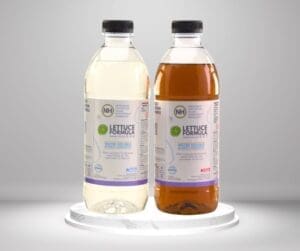
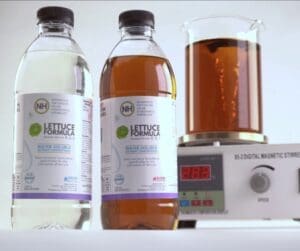
When you choose the right nutrient formula, you set the stage for success. Nutrihydro’s Lettuce Formula is soluble, pure, and represents the best nutrients in lettuce cultivation money can buy. It comes as a two-part system—Stock A and Stock B—designed to deliver complete nutrition when mixed properly. That is why growers who use NH Lettuce Formula are able to grow the biggest, the healthiest, and the heaviest lettuce across the country from Luzon to Mindanao.
However, while nutrients deliver yield and remain the biggest factor when it comes to productivity, proper results begin with correct nutrient preparation. Everything else—from dissolved oxygen to pH management—builds on this foundation. The first step to maximizing NH Lettuce Formula is following the proper mixing protocol.
HOW TO USE NH LETTUCE NUTRIENT SOLUTION
The table below outlines the step-by-step mixing procedure to ensure proper nutrient preparation and availability.
Step | What to Do | Notes |
1 | Fill tank with clean water to operating level | Cooler water (18–22 °C) holds more oxygen |
2 | Add Grow (A) stock, mix thoroughly | Dose gradually. Never combine A & B undiluted outside the tank |
3 | Add Bloom (B) stock, mix thoroughly | Always add A first, then B—combining them undiluted causes nutrient lockout |
4 | Measure EC/TDS; fine‑tune with small additions of A then B | Log readings using a TDS or EC meter |
5 | Set pH 5.5–6.0 (aim 5.8) using pre‑diluted NH Phosphoric Acid 85% | Pre‑dilute acid 1:10; add in small amounts with circulation |
6 | Verify surface ripple/airflow; cover tank from light | Helps DO; suppresses algae |
Following this proper mixing protocol is essential to prevent nutrient lockout and ensure that Stock A and Stock B work together as designed. Each step builds on the previous one, from preparing clean water to setting the correct pH, creating a complete nutrient solution that your lettuce can fully utilize.
Meanwhile, the following table shows the recommended nutrient concentration and pH ranges for each growth stage of lettuce.
Stage Targets (Dose‑to‑EC + TDS + pH)
Stage | EC (mS/cm) | TDS 500‑scale (ppm) | TDS 700‑scale (ppm) | pH |
Seedling (half‑strength) | 0.6–0.7 | 300–350 | 420–490 | 5.5–6.0 |
Vegetative bulk‑up | 1.2–1.4 | 600–700 | 840–980 | 5.5–6.0 |
Final stretch | 1.4–1.6 | 700–800 | 980–1,120 | 5.5–6.0 |
 Adhering to these stage-specific targets ensures that your lettuce receives the right nutrition at the right time. NH Lettuce Formula is exactly the solution to this challenge.
NH Lettuce Nutrient Solutions available here:
- Shopee: https://nutrihydro.com/lettuce-nutsol
- Lazada: https://nutrihydro.com/laz-lettuce-nutsol
- Tiktok: https://nutrihydro.com/lettuce-nutrientsol
- Website: https://nutrihydro.com/lettuce-concentrate
Meanwhile, even with perfect nutrient preparation, several environmental and system parameters must also be managed to achieve optimal growth. The sections below address the most critical factors that growers often overlook.
DISSOLVED OXYGEN AND ROOT HEALTH
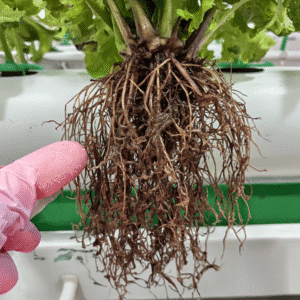 Lettuce roots should be long, hair-like, and white in color. However, during our visits to various farms, we consistently observed short and thick roots. When we measured the dissolved oxygen levels in these systems, we found hypoxic conditions with readings below 4 g/L.
Lettuce grown in these hypoxic solutions exhibit yellowing and become stunted, even when pH and TDS levels are correct. Low dissolved oxygen is directly responsible for root shortening and thickening, a condition that severely impacts plant health and productivity.
Oxygen is the most overlooked nutrient in hydroponics, yet it’s just as critical as nitrogen or phosphorus. While growers meticulously monitor EC and pH, dissolved oxygen often goes unmeasured until problems become severe. Healthy lettuce requires at least minimum 4 mg/L of dissolved oxygen to maintain vigorous root growth and nutrient uptake—levels that are rarely achieved in passive or poorly aerated systems.
The solution is to increase dissolved oxygen by introducing aerators into your hydroponic system. This improvement enhances plant respiration—the process where plants convert sugars into growth functions, overall health, and the ability to defend against pests and abiotic stress. The symptoms of low dissolved oxygen are immediately visible in the roots themselves.
Parameters (Root Health / DO)
The table below summarizes the target dissolved oxygen levels, visual indicators of root health, and corrective actions when problems arise.
Parameter | Target/Range | Visual Indicator | Action When Problem Occurs |
Dissolved Oxygen | 4 g/L and above (okay) | Long, hair-like, white roots | Install aerators; cool water to 18–22 °C; ensure lively surface ripple |
Problem Signs | below 4 g/L (hypoxic) | Short, thick, off-white/brown roots; yellowing leaves; stunted growth | Boost aeration immediately; check for biofilm |
 Why It Matters: Plant roots need oxygen to perform cellular respiration, converting stored sugars into energy (ATP) for growth and nutrient uptake. In low-oxygen conditions, roots cannot respirate efficiently and begin to die back, prompting the plant to produce thicker, shorter roots to maximize surface area for limited oxygen. Meanwhile, beneficial aerobic bacteria die off and are replaced by anaerobic organisms that produce toxins and compete for remaining oxygen.
To prevent this, keep your nutrient solution cool because cold water holds more dissolved oxygen than warm water, and use air stones, waterfalls, or venturi systems to create continuous surface agitation with a lively ripple. Check roots weekly: healthy roots are bright white and fine like hair, while oxygen-starved roots are thick, brownish, and often slimy—if you see problem roots, increase aeration immediately and consider light sanitation with hydrogen peroxide to remove biofilm that consumes oxygen.
Healthy, well-oxygenated roots are essential for nutrient uptake, but even the best root system cannot absorb nutrients effectively if the solution pH is incorrect. This brings us to the next critical parameter that many growers overlook.
pH MANAGEMENT & NUTRIENT ABSORPTION
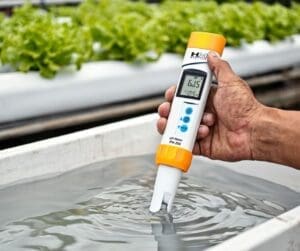 Many growers maintain the correct TDS but skip pH management because it adds extra work and cost. In some cases, we’ve encountered growers with failing or broken pH meters that don’t read correctly, severely affecting nutrient absorption. Proper pH management is crucial in cultivation, especially in hydroponics. Without correct pH levels, even perfectly formulated nutrient solutions cannot be properly absorbed by plants, leading to deficiencies despite adequate nutrient availability. Investing in reliable pH meters and maintaining them properly is essential.
To make pH management more practical and cost-effective for growers, NutriHydro offers a concentrated phosphoric acid solution for precise pH adjustment. NHPhosphoric Acid 85% is a high‑strength, industrial‑grade concentrate. Instead of buying expensive ready‑to‑use “pH down,” you can make your own working solution on site and cut your cost per liter. It’s clean, predictable, and pairs perfectly with NH stock nutrients.
How to Use NH Phosphoric Acid 85%
Step | Action | Details |
1 | Safety precautions | Always wear gloves and eye protection when handling concentrated acid |
2 | Prepare working solution | Mix 1:10 (e.g., 100 mL acid + 900 mL water) for general use, or 1:20 for extra-fine control. Always add acid to water, never water to acid. |
3 | Dose into tank | With circulation on, add small amounts of working solution into the tank, wait 2–3 minutes, then retest pH |
4 | Target pH range | Aim for pH 5.5–6.0 (optimal 5.8). Hard/alkaline water needs more; soft/RO water needs less |
5 | Storage | Store capped, upright, in a cool area away from metals and organics |
By following these steps carefully, you can maintain precise pH control throughout your cultivation cycle. NH Phosphoric Acid 85% provides a cost-effective, reliable solution to pH management challenges, ensuring that nutrients remain available for uptake even in the variable water conditions common across Philippine farms.
Understanding what different pH readings mean and how to respond to them is essential for effective pH management. The table below provides a quick reference guide for interpreting your pH readings and taking appropriate corrective action.
pH Reading → Action Table
pH Reading | Status | Action | Expected Result |
5.5–6.0 (aim 5.8) | Optimal | Maintain; recheck daily | All nutrients available for uptake |
> 6.2 | Too high | Lower pH with pre-diluted acid (1:10); add small amounts with circulation; wait 2–3 min; retest | Restore Fe, Mn, Zn availability |
< 5.5 | Too low | Let it drift up naturally; top up with clean water; avoid more acid; recheck after 1–2 h | Reduce root stress; prevent metal toxicity |
Why It Matters: pH measures hydrogen ion concentration in solution, which directly affects the electrical charge and chemical form of nutrient ions—each nutrient has an optimal pH range where it remains soluble and can pass through root cell membranes. At pH above 6.2, micronutrients like iron, manganese, and zinc bind with hydroxide ions and precipitate out of solution, becoming unavailable despite being present in adequate amounts, while below pH 5.5 these metals become overly soluble and can reach toxic concentrations as phosphorus availability decreases. The sweet spot of 5.5–6.0 keeps all essential nutrients in their most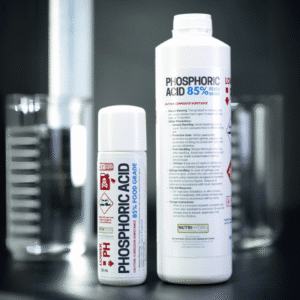 available ionic forms. Calibrate your pH meter weekly using standard buffer solutions, pre-dilute your acid 1:10 before adding to avoid concentrated acid burns, and add in small amounts with circulation for 2–3 minutes before retesting—pH adjustments should be gradual nudges, not big swings. If you see pale new leaves but EC is correct, your pH has likely crept above 6.2 and iron is locked out; bring it back to 5.8 and the problem will resolve within 3–5 days as new growth emerges healthy.
For perfect pH control, NH Phosphoric Acid 85% available here:
- Website: https://nutrihydro.com/wphosphoricacid
- Tiktok: https://nutrihydro.com/phosphoricacidtk
- Lazada: https://nutrihydro.com/phosphoricacidlz
With dissolved oxygen ensuring healthy roots and pH keeping nutrients available for uptake, the next challenge is getting those nutrients from the roots to where they’re needed most—the growing leaves. This is where the Philippine climate presents its greatest obstacle: high humidity that slows the plant’s internal transport system.
HUMIDITY, TRANSPIRATION, & NUTRIENT TRANSPORT
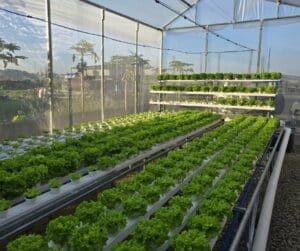 In the Philippines, air is humid most of the year. High humidity slows transpiration—the plant’s internal “flow rate” that moves water and the nutrients dissolved in it from roots to leaf tips. When transpiration is slow, the delivery speed of nutrients drops, so growth slows even if EC and pH are correct. Lettuce is a cool‑season crop that naturally performs better in colder, drier climates; in our hot‑and‑humid conditions, you must actively manage airflow and leaf cooling to keep transpiration moving.
How This Affects Your Lettuce
In practical terms, when air is very humid, transpiration slows. With less pull through the xylem, the delivery of water and dissolved nutrients to young leaves also slows, so you’ll see pale new growth, tip burn, and generally sluggish development even when EC and pH are correct. Restoring gentle, continuous air movement re‑establishes the pressure difference that drives transpiration. During humidity spikes, a targeted foliar feed can temporarily bypass the root‑to‑shoot pipeline and deliver nutrients directly to leaves.
 Foliar Feeding During High Humidity
Foliar feeding works in high humidity because droplets deliver ions through the cuticle and stomata into leaf tissues, allowing nutrients to reach the site of use without waiting for root‑driven flow. Treat this as a temporary workaround; long‑term stability still depends on improving ventilation and keeping VPD within range.
Apply foliar sprays early morning or late afternoon when stomata are open, using diluted solutions at 25-50% strength to avoid leaf burn. While effective for quick micronutrient corrections, foliar feeding cannot replace root uptake for macronutrients and may promote fungal growth if overused in humid conditions.
To effectively manage transpiration and humidity challenges, growers must monitor specific environmental parameters and recognize when conditions are affecting their crop. The table below outlines the key targets and warning signs to watch for.
Environment Parameters (Transpiration / VPD)
Parameter | Target/Range | Problem Signs | Action |
Humidity | 55–70% RH | Nutrient deficiencies despite correct EC/pH; tip burn; slow growth | Increase air circulation; install fans |
VPD (Vapor Pressure Deficit) | 0.8–1.2 kPa for lettuce | Wet leaves (VPD too low); wilting/edge scorch (VPD too high) | Adjust temperature and humidity together |
Air Movement | Gentle, continuous across canopy | Dead air pockets; moisture on leaves | Position fans to eliminate still zones |
Temperature | 18–24 °C (ideal or at least close to) | Above 28 °C: increased tip burn risk and stress | Improve cooling; increase airflow |
Maintaining these environmental parameters is critical because they directly control transpiration—the driving force that moves water and nutrients from roots to leaves. When humidity is too high or air movement is insufficient, transpiration slows down, and nutrient transport becomes the bottleneck even when your solution chemistry is perfect.
While improving ventilation and VPD control provides long-term solutions, there are times when humidity spikes suddenly or environmental controls cannot be adjusted immediately. In these situations, emergency foliar feeding offers a rapid response to bypass the slowed transpiration system and deliver nutrients directly to the leaves.
Emergency Foliar Spray Protocol
Application | Dilution/Strength | Frequency | Components |
Nutrient Foliar Spray | 400 PPM (TDS 700 scale) = half strength | When high humidity observed | NH Lettuce Formula at half strength |
NH Biocalmag Addition | As directed on label | Baseline: once weekly; adjust as needed (use every foliar spray during humidity spikes) | Provides Ca, Mg, and biostimulants |
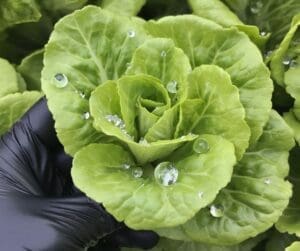 Lettuce is particularly vulnerable to transpiration problems because calcium moves only with the water stream and cannot be remobilized once deposited in tissue. When humidity slows transpiration, leaf tips—the end of the pipeline—are the first to experience calcium deficiency, resulting in tip burn even when the nutrient solution contains adequate calcium.
This explains why tip burn appears so frequently in enclosed or poorly ventilated greenhouses where relative humidity exceeds 80%. The calcium is present in your system, but it simply cannot reach the growing points fast enough. Growers often respond by increasing calcium concentration in the nutrient solution, but this rarely solves the problem—the issue is transportation, not availability.
To address this critical calcium transport challenge and provide comprehensive support during humidity stress, NH has developed a specialized biostimulant-fortified calcium and magnesium supplement designed specifically for conditions like those found in Philippine farms.
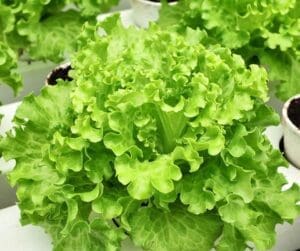 NH Bio-CalMag for Stress Management and Calcium Delivery
NH Bio‑CalMag is a biostimulant‑fortified Ca/Mg solution. Its biostimulant fraction supports plants under abiotic stress (heat, humidity, light swings) by improving osmotic balance, antioxidant capacity, and stomatal behavior—helping the plant keep functioning when the environment is not ideal. Unlike standalone biostimulants that aid stress tolerance but supply no minerals, NH Bio‑CalMag delivers both stress support and the structural ions most impacted by slow transpiration.
Calcium cross‑links pectins in cell walls, strengthening young tissues and sealing leaf margins; it also participates in cell signaling for stress responses. Adequate Ca reduces tip burn and improves leaf integrity. Magnesium is the central atom of chlorophyll and a cofactor for enzymes that traffic phosphorus compounds and build carbohydrates; adequate Mg supports green color and energy production, which is especially valuable when cloudy, humid weather limits light.
NH Bio‑CalMag Proper Application
The table below outlines the preparation and application protocols for different growing conditions and stress levels.
Step | Application Method | Rate & Frequency | Details |
1 | Prepare concentrate | As needed | The product comes in dry, water-soluble form. Add distilled water; shake well until fully dissolved. Store refrigerated at all times—contains beneficial microbes |
2 | Baseline maintenance (foliar) | 1 mL per liter, once per week | Standard preventive application; increase during heat/humidity or when symptoms appear; reduce when conditions stabilize |
3 | Emergency foliar (humidity spikes) | 1–2 mL per liter, as needed | Combine with 400-ppm half-strength nutrient spray; apply early morning or late afternoon; avoid direct sun; repeat until airflow issues resolved |
4 | Root-zone support | Per label, weekly during stress | Add directly to tank during heat/humidity periods to bolster Ca/Mg availability while correcting airflow and VPD |
 In essence, NH Bio-CalMag delivers essential calcium and magnesium along with biostimulant compounds that enhance stress tolerance, directly targeting the tip burn and deficiency symptoms that emerge when high Philippine humidity disrupts transpiration and nutrient transport.
It serves as both an emergency intervention when conditions spike and a preventive tool when applied consistently, ensuring your lettuce receives adequate calcium and magnesium regardless of environmental challenges.
Combined with proper airflow management, NH Bio-CalMag keeps your crop on track to produce market-grade heads even in less-than-ideal conditions.
NH Bio CalMag available here:
- Shopee:https://nutrihydro.com/shopee-calmag
- Lazada:https://nutrihydro.com/lazada-calmag
- Tiktok: https://nutrihydro.com/tiktok-calmag
- Website: https://nutrihydro.com/website-calmag
QUICK REFERENCE GUIDE: ALL PARAMETERS AT A GLANCE
The table below consolidates all critical parameters for successful lettuce cultivation using NH Lettuce Formula, providing quick reference ranges and problem indicators to help you troubleshoot issues efficiently.
Category | Parameter | Optimal Range | Problem Indicator | Immediate Action |
Nutrient Solution | EC | Seedling: 0.6–0.7 mS/cm Vegetative: 1.2–1.4 mS/cm Final: 1.4–1.6 mS/cm | Slow growth despite healthy environment | Adjust with Stock A then Stock B |
TDS (700-scale) | Seedling: 420–490 ppm Vegetative: 840–980 ppm Final: 980–1,120 ppm | Same as EC | Use EC as primary guide | |
pH | 5.5–6.0 (aim 5.8) | Pale new leaves (>6.2) Root stress (<5.5) | Adjust with pre-diluted phosphoric acid (1:10) | |
Water Temperature | 18–22 °C (Ideal) | Warm water, low DO, thick brown roots | Cool water; increase aeration | |
Root Health | Dissolved Oxygen | ≥4 g/L | Short, thick, brown roots; yellowing; stunted growth | Install aerators; ensure surface ripple |
Root Appearance | Long, hair-like, white | Brown, thick, slimy roots | Boost aeration; check biofilm; H₂O₂ sanitation | |
Environment | Humidity | 55–70% RH | Tip burn; pale growth despite correct EC/pH | Increase fans; foliar spray at 400 ppm |
VPD | 0.8–1.2 kPa | Wet leaves (too low) Wilting (too high) | Adjust temperature and humidity together | |
Air Movement | Gentle, continuous | Dead air pockets; moisture on leaves | Reposition fans to cover all zones | |
Temperature | 18–24 °C (ideal) | >26 °C: tip burn and stress increase | Improve cooling; increase airflow | |
Supplements | NH Bio-CalMag (foliar) | 1 mL/L, weekly baseline 1–2 mL/L during stress | Tip burn; marginal necrosis | Increase frequency; combine with nutrient spray |
| Foliar Nutrient Spray | 400 ppm (half-strength) | High humidity events | Apply early AM or late PM; repeat as needed |
This consolidated reference allows you to quickly diagnose problems by matching observed symptoms with parameter ranges across all critical areas—nutrient chemistry, root health, environmental conditions, and supplement protocols. When troubleshooting, always check parameters in order: first verify dissolved oxygen and root appearance, then confirm pH and EC are within range, and finally assess environmental factors like humidity and airflow. Most lettuce problems stem from multiple interacting factors rather than a single cause, so systematic evaluation using this guide will help you identify the true limiting factor and take targeted corrective action to restore optimal growing conditions.
CHRIS SUMMARY
Premium nutrients alone do not guarantee premium results. NH Lettuce Formula provides the foundation—complete, balanced nutrition that has proven itself across farms from Luzon to Mindanao—but the harvest you pull from your system depends entirely on how well you manage the environment surrounding those nutrients. Dissolved oxygen, pH stability, transpiration-driven nutrient transport, and calcium delivery must all work in concert. When any one parameter falls outside its optimal range, the entire system suffers, and your lettuce shows symptoms that no amount of additional fertilizer can fix.
The Philippine climate challenges lettuce growers every single day with heat, humidity, and conditions far removed from this crop’s cool-season origins. Success in these conditions requires vigilance, measurement, and the willingness to intervene quickly when parameters drift. Check your roots weekly, calibrate your pH meter religiously, monitor your dissolved oxygen, and never assume that “good enough” environmental control will suffice during humidity spikes or heat waves. The growers who consistently produce market-grade heads are those who treat each parameter as equally important and who understand that optimization is not a one-time setup but an ongoing process of observation, measurement, and adjustment.
Master the fundamentals outlined in this guide—proper mixing protocol, stage-appropriate EC targets, adequate dissolved oxygen, precise pH management, active transpiration support, and strategic use of NH Phosphoric Acid and NH Bio-CalMag—and you position yourself to achieve the productivity and consistency that separates profitable operations from struggling ones. Your investment in NH Lettuce Formula deserves the full system optimization that allows it to perform as designed. Follow these protocols, measure consistently, and respond decisively to problems, and you will grow lettuce that reflects the true potential of both your nutrients and your skill as a grower.
To improve and learn more about system optimization, join the NH Mentorship Program. Register here: https://nutrihydro.com/mentorship-program