

“If there is no light, there is no photosynthesis. If there is no photosynthesis, there is no food source for plants. “ – This simple truth cuts through all the marketing hype and social media confusion. Plants don’t eat from bottles. They manufacture their own food using light energy, and no amount of mineral salts can change that fundamental reality.
If a fertilizer company could bottle sunlight, they would already be billionaires. Yet across social media platforms, a peculiar claim keeps resurfacing: that photosynthesis becomes optional when using the right nutrient solution.
It is a seductive promise that defies basic biology, suggesting that expensive bottles can replace the free energy pouring down from the sky. For growers who believe it, the consequences are cruel. They are watching their crops fail, their customers complain, and their profits evaporate.
The question isn’t whether this claim sounds too good to be true. The question is why anyone in agriculture would think mineral salts could ever replace the power of the sun.
 The Myth That’s Costing Growers Money
In the world of hydroponic farming and controlled agriculture, this dangerous piece of misinformation has been circulating across social media platforms: the claim that photosynthesis becomes less important when using special nutrient solutions. This myth suggests that the right fertilizer formulation can somehow compensate for inadequate light, a notion that contradicts fundamental plant biology and has led to crop failures for unsuspecting growers.
The NutriHydro Team, along with guest physicist Honey Daz, recently addressed this misconception in a science-focused educational series. Their mission is clear: to combat agricultural misinformation with rigorous science and help growers understand the irreplaceable role of light in plant cultivation.
Nutrients Are Not Energy
 At the heart of the issue lies a fundamental misunderstanding of what nutrients actually do. As professionals explain, fertilizers are not energy sources. They are collections of mineral ions that plants use as building blocks for proteins, chlorophyll, and cellular structures.
The actual energy that drives plant growth comes from an entirely different source: photons of light. Without adequate light energy, even the most perfectly formulated nutrient solution cannot sustain healthy plant growth. The photosynthesis equation that every biology student learns tells the complete story: six molecules of carbon dioxide plus six molecules of water, combined with light energy, produce one molecule of glucose and six molecules of oxygen.
Light is not an optional component in this equation; it is the essential catalyst that makes the entire process possible. No matter how perfectly balanced your nutrient solution may be, without sufficient light, plants simply cannot produce the sugars they need to survive and thrive.
The Science of Light Requirements
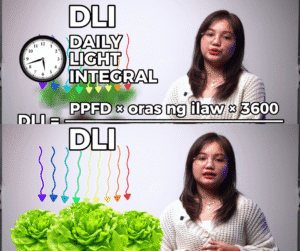
 Honey Daz, a physicist brought in to explain the science, breaks down the specifics of plant lighting requirements. Plants utilize photons in the wavelength range between 400 and 700 nanometers, known as the Photosynthetically Active Radiation or PAR band. The intensity of this light is measured as Photosynthetic Photon Flux Density, expressed in micromoles per square meter per second.
This measurement tells growers exactly how many photons are striking each square meter of their crop every second. Over the course of a day, these photon measurements accumulate into what scientists call the Daily Light Integral or DLI, measured in moles per square meter per day. The formula is straightforward: DLI equals PPFD multiplied by hours of light, multiplied by 3600, then divided by 1,000,000.
For lettuce cultivation, stable quality typically requires a DLI between 12 and 17 moles per square meter per day, though this varies by variety and climate conditions. When the DLI falls below these thresholds, no amount of nutrient manipulation can compensate for the energy deficit.
How Plants Actually Make Food
 The mechanism of photosynthesis itself reveals why light cannot be substituted. When light strikes a leaf, it activates the plant’s internal energy production systems. Think of it this way: light functions as the stove, while water and carbon dioxide serve as the ingredients.
Without the stove, there is no way to combine the ingredients into edible food, regardless of their quality or quantity.
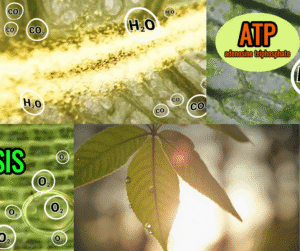
The plant creates small energy packets in the form of ATP and NADPH through a process that includes the splitting of water molecules, called photolysis. This process releases oxygen as a byproduct, the very oxygen that humans and other animals breathe. The electrons and hydrogen extracted from water are loaded onto carrier molecules, specifically NADP⁺ to form NADPH.
Using ATP and NADPH, the plant then powers the conversion of atmospheric carbon dioxide into sugars. These sugars are the plant’s actual food and energy source. Without adequate light, plants cannot manufacture the sugars they need for growth, structural integrity, and metabolic function.
A Costly Real-World Example
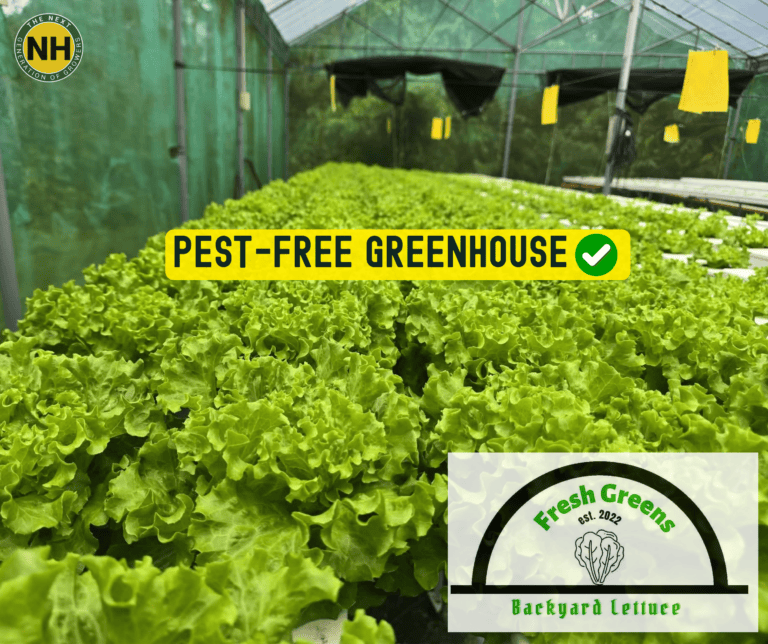
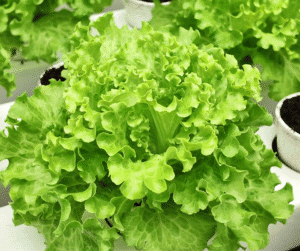 The real-world consequences of believing this myth can be severe. The NutriHydro team documented an actual case where a grower produced lettuce heads that appeared beautiful in photographs but proved to have weak, fragile leaves. After harvest and washing, the lettuce essentially fell apart.
The problem stemmed from insufficient lighting combined with misguided advice to increase the electrical conductivity of the nutrient solution. When the grower raised the EC in an attempt to compensate for poor growth, the high concentration of nutrients created competition among different mineral ions, a phenomenon known as nutrient antagonism or osmotic lockout.
While the plants showed no visible color deficiencies, their leaves lacked structural strength and tore easily. The customer returned the crop, and the grower suffered significant financial losses. This is what happens when someone believes that nutrients can replace the function of photosynthesis.
When Quality Nutrition Meets Adequate Light
 Properly grown lettuce, especially when cultivated with balanced nutrition like NH Bio CalMag, typically develops strong leaf structure that maintains integrity even after refrigeration and processing.
The calcium and magnesium in properly formulated solutions contribute to cell wall strength and membrane stability.
However, these structural benefits only manifest when plants receive adequate light to drive photosynthesis. Without sufficient light energy, even the best nutrient formulation cannot compensate for the fundamental lack of sugar production and energy metabolism that builds robust plant tissue.
The lettuce that fails after washing reveals a fundamental weakness in its cellular architecture, a weakness that originates from insufficient photosynthetic activity during growth. Strong nutrition amplifies the benefits of adequate light, but it can never replace it.
The Foundation of Precision Agriculture
 This case illustrates a critical principle in modern agriculture: precision cultivation requires both the right inputs and the right knowledge. Plants that receive adequate light through proper greenhouse design or supplemental lighting, combined with balanced nutrition, develop strong cellular structures and maintain quality even after harvest and refrigeration.
The educational initiative emphasizes that precision agriculture must be grounded in science, not marketing claims or social media trends. When anonymous brands suggest that their special formulations can bypass the need for adequate lighting, they are either ignorant of plant physiology or deliberately misleading their customers.
Every legitimate agronomy textbook prioritizes light management before discussing nutrient formulation, because the science is unambiguous: without photons, there is no photosynthesis, and without photosynthesis, there is no plant growth. This is not opinion or marketing—it is fundamental biology.
Light First, Nutrients Second
 The message from the NutriHydro team is both simple and urgent. Growers who want to achieve consistent results must first ensure their crops receive sufficient light in the PAR spectrum, measured and verified through proper PPFD and DLI calculations. Only after meeting this fundamental requirement does nutrient optimization become meaningful.
No bottle, no formula, and no special ingredient can create the energy that only light provides. If insufficient light is causing slow growth, weak leaves, or poor quality, raising your EC will only make the problem worse through nutrient antagonism.
Precision cultivation demands both determination and adherence to scientific principles, a mindset that separates successful growers from those who fall victim to agricultural myths. If you want to become a precision cultivator, the first step is understanding that light is non-negotiable.