
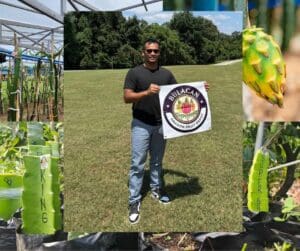
 “The quality of our dragon fruits here in the Philippines has yet to be seen in other countries.” – Kevin Eliscupides
It’s a bold claim, but Kevin Eliscupides has the numbers to back it up. With Brix scores ranging from 18 to 22—far exceeding international standards—the dragon fruits growing in the rolling hills of Bulacan represent more than just agricultural success.
They represent a revolution in cultivation techniques, a family’s triumph over adversity, and the Philippines’ emergence as a global leader in high-value farming.
But this agricultural revolution began not in a laboratory or business plan, but in a family’s most difficult moment
The Personal Story Behind the Dragon Fruit Breakthrough
 In the rolling hills of Bulacan, where morning fog blankets the landscape and the air carries the promise of innovation, Kevin Eliscupides has built something remarkable. At just 33 years old, he established the Bulacan Dragon Fruit Depot as a global leader in dragon fruit cultivation, earning him the unofficial title of the “king of dragon fruits in the Philippines.”
What began as a family’s desperate search for healthier alternatives during his mother’s cancer treatment has blossomed into an international enterprise that ships planting materials worldwide and houses over 200 varieties of dragon fruit. The farm stands as a testament to innovation, perseverance, and the power of turning personal adversity into purpose-driven entrepreneurship.
Kevin’s journey started in the early 2010s when his family was searching for natural health remedies. Dragon fruit, with its high antioxidant content and anti-inflammatory properties, became a cornerstone of their approach. His mother’s positive response to incorporating dragon fruit into her diet sparked something deeper than hope—it ignited a mission. Today, she remains healthy and continues to enjoy the fruits that Kevin credits with helping her recovery.
The Science Behind Superior Yields
 Operating as a full-time online farmer from St. Louis, Missouri, Kevin manages the Bulacan operation remotely with the help of his cousin Jen Punzalan, the farm manager. Despite the 13-hour time difference between the Philippines and Missouri, he maintains constant oversight through sophisticated camera systems that allow him to zoom in on individual plants and monitor for disease from halfway around the world. His visits to the Philippines, typically every three to four months, are strategic check-ins that blend family time with business development.
The farm’s success lies not just in its scale but in its revolutionary approach to dragon fruit cultivation. Kevin has developed a semi-greenhouse trellis system that multiplies productivity by up to five times compared to traditional post-by-post farming methods. Where conventional farms might fit 4,000 cuttings per hectare, Kevin’s innovative system accommodates 8,000 to 10,000. This efficiency breakthrough has attracted farmers from around the world who visit for benchmarking and learning.
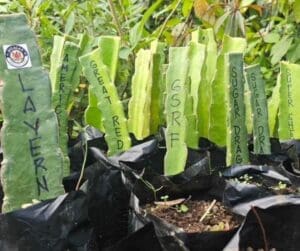
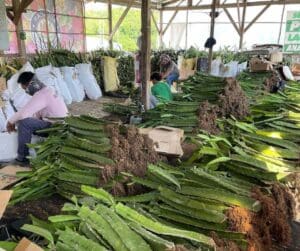
The innovation extends beyond layout optimization. Kevin’s team has perfected a rooting process that produces planting materials capable of bearing fruit within four to six months—a remarkable timeline in dragon fruit cultivation. These robust cuttings, developed through years of trial and error, are shipped globally via FedEx, reaching destinations as far as Cape Town, South Africa, and Texas. The frequency of their shipments even prompted the local FedEx manager to visit the farm, leading to a feature in the company’s international business showcase.
 Two Hundred Varieties and Counting
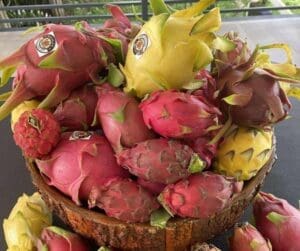
Dragon fruit varieties at the depot range from standard commercial types to rare ornamental specimens that sell for thousands of pesos per cutting. Kevin has successfully cultivated variegated dragon fruits—plants with genetic mutations that create unique coloring patterns—and has made history by being among the first to successfully fruit these typically ornamental varieties. One particularly striking variety called Chimera features red striping and coiled growth that resembles dragon eggs from fantasy television series.
The farm’s commitment to quality is evident in every detail. All plants at the Dragon Fruit Depot are hybrid varieties selected specifically for sweetness, with Brix scores ranging from 18 to 22—significantly higher than the Philippine mango’s average of 12 to 14. Kevin emphasizes that this superior sweetness, combined with the fruit’s health benefits, positions Philippine dragon fruit as unmatched in quality compared to international competitors.
Natural Disease Management and Smart Growing Practices
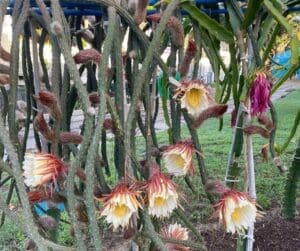 Disease management at the farm relies on proactive monitoring and natural solutions. Workers carry hydrogen peroxide in repurposed fertilizer bottles on their belts, ready to treat any signs of fungal infection immediately. The 12-percent concentration hydrogen peroxide, supplied by NutriHydro, has proven highly effective when combined with the farm’s cut-and-burn approach to infected plant material. The elevated planting beds, raised between five to ten inches depending on terrain, ensure proper drainage and prevent the root rot that dragon fruit cacti are susceptible to in waterlogged conditions.
Water management reflects the plant’s cactus heritage. While some growers in cooler regions like Tagaytay water as infrequently as once every three months, the Bulacan farm maintains a schedule of every two to three days during the warmer months. Each plant receives approximately one sardine can’s worth of water—a charmingly local measurement unit that perfectly captures the modest hydration needs of these CAM plants, which open their stomata at night to conserve moisture.
The farm’s soil mixture combines vermicast and chicken manure with supplemental magnesium, a crucial element as the central atom in chlorophyll molecules. This simple but effective formula, combined with the 20-inch spacing between plants that promotes airflow and disease prevention, creates optimal growing conditions. The relatively shallow root system, extending only about two inches deep, makes dragon fruit surprisingly adaptable to various growing conditions throughout the Philippines.
 Breaking Into Premium Markets
Kevin’s business model extends beyond selling cuttings. The Dragon Fruit Depot operates on a farm partnership principle, maintaining relationships with buyers long after the initial sale. New growers receive technical support throughout the cultivation process, with dedicated communication channels for troubleshooting. While Kevin doesn’t engage in traditional contract growing, he offers to purchase excess fruit from his plant customers, ensuring that growers have market access without being locked into rigid agreements.
The farm currently supplies premium retailers including S&R and is finalizing a groundbreaking deal with Dole, which would make dragon fruit the company’s fifth fruit offering and the first addition to their product line in 17 years. Additionally, Kevin has partnered with Chef Francis Tarrega, one of the first Filipino Michelin-starred chefs, and celebrity chef Marvin Agustin to supply their restaurant ventures.
Developing a Health Drink That Doesn’t Compromise on Taste
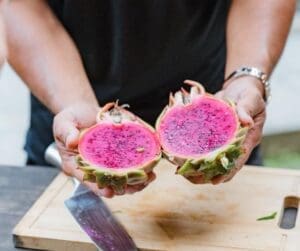 Perhaps the most exciting development at the Dragon Fruit Depot is a health drink currently in development. After years of perfecting the formulation in a laboratory in Nueva Ecija, Kevin and his food technologist team have created a beverage that preserves the dragon fruit’s natural properties while achieving a premium texture and deep, rich flavor. The drink, which testers describe as far more satisfying than commercial sodas, maintains the fruit’s high antioxidant and anti-inflammatory content. Kevin uses the beverage himself and credits it with speeding his recovery after tennis matches and runs.
The drink targets a growing market of health-conscious consumers seeking alternatives to sugar-laden beverages. Kevin recognizes that his target demographic—people willing to pay premium prices for genuinely healthy options—has reached a life stage where wellness takes precedence over convenience. With Filipinos increasingly seeking healthier beverage choices beyond soda and milk tea, the timing appears ideal for market introduction.
The Economics of Dragon Fruit Farming
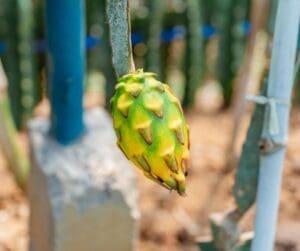 Kevin’s vision extends far beyond personal success. He actively encourages more farmers to enter dragon fruit cultivation, recognizing that domestic supply cannot yet meet export demand. Exporters have approached him with orders he cannot fill due to insufficient national production. This supply shortage prevents the Philippines from fully capitalizing on the superior quality of its dragon fruit, which commands prices of $7 to $10 per pound internationally and even higher rates locally due to superior sweetness.
The economic case for dragon fruit cultivation is compelling. A single post supporting four plants can produce 10 to 15 kilos in the first fruiting season, with production doubling annually until reaching a maximum of 50 to 60 kilos per season. The fruiting season runs from May through early November, with plants producing every 30 days during this period. At local market prices ranging from 500 to 1,200 pesos per kilo, the return on investment becomes attractive quickly, especially considering the plants’ longevity—Kevin emphasizes that properly established dragon fruit plants can produce for a lifetime.
The farm’s location in upper Bulacan, near Doña Remedios Trinidad, provides natural advantages. The elevated position ensures good drainage and exposes the farm to morning fog and strong winds that haven’t compromised the structural integrity of Kevin’s posts. Through trial and error, he discovered that concrete posts buried six and a half feet deep with minimal cement footing can withstand typhoons—a design innovation that reduces setup costs while maintaining stability.
An Open-Door Philosophy
 Kevin’s personal story adds depth to his professional achievements. Splitting his time between Missouri and the Philippines, he navigates the complexities of international business while maintaining family priorities. His wife Kriza and their children Kino and Clio recently attended their first agribusiness event together, marking a new chapter in the family’s connection to the Philippine operation. Kevin remains committed to eventually relocating full-time to the Philippines, driven by the untapped market opportunities and despite Manila’s notorious traffic challenges.
The entrepreneur attributes much of his success to problem-solving ability rather than academic achievement. He constantly seeks ways to improve efficiency and reduce costs while maximizing output—a mindset that led to the trellis system innovation and the shortened post design that accelerates time to first harvest. His willingness to experiment, combined with careful observation of results, has created systems that other farmers now travel to study.
Kevin’s openness extends to his contact information, which he freely shares with potential customers and collaborators worldwide. He encourages visits to the farm, believing that in-person consultation leads to better outcomes for new growers. This accessibility, combined with comprehensive technical support, has built a network of farm partners who benefit from his years of accumulated knowledge and continue to refine dragon fruit cultivation practices.
A Mission Beyond Profit 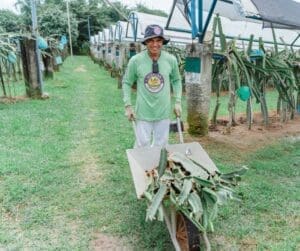
The Bulacan Dragon Fruit Depot represents more than agricultural innovation—it embodies the transformation of the personal health crisis into a mission to improve nutrition globally. Kevin’s mother’s recovery journey planted seeds that have grown into an international enterprise touching lives across continents. The high antioxidant content that potentially benefited his mother now reaches consumers worldwide, while his planting materials help farmers from Texas to South Africa establish their own dragon fruit operations.
As Kevin continues refining his health drink formulation and expanding cultivation partnerships, his broader vision remains clear: to share dragon fruit’s health benefits with the world while supporting the next generation of growers. The farm welcomes visitors eager to learn, offers starter packages for beginners, and maintains relationships that span the entire journey from root to fruit. In an industry where success often means guarding trade secrets, Kevin’s collaborative approach stands out as both unusual and refreshing.
The Future Grows in Bulacan
 The semi-greenhouse system Kevin developed is spreading. Farmers from other regions visit to study his methods, and some are already replicating the high-density trellis design that fits twice as many plants per hectare. If the approach scales nationally, the Philippines could finally meet the export demand that Kevin can’t currently fill alone.
Looking ahead, Kevin envisions a Philippines where dragon fruit cultivation becomes a viable livelihood for many more farmers, where export markets finally access the superior quality fruit that domestic supply cannot currently support, and where his health drink offers consumers a delicious path to better wellness. With characteristic optimism tempered by practical experience, he continues experimenting, refining, and sharing knowledge that elevates an entire industry.
The morning fog will rise tomorrow over the Bulacan hills, revealing neat rows of dragon fruit plants heavy with promise. Kevin still insists the quality here beats anything overseas—those Brix scores of 18 to 22 compared to the standard 12 to 14. It started with finding something to help his mother. Now it’s becoming proof that Philippine agriculture can compete at the highest level, not through volume, but through fruit that’s genuinely better.