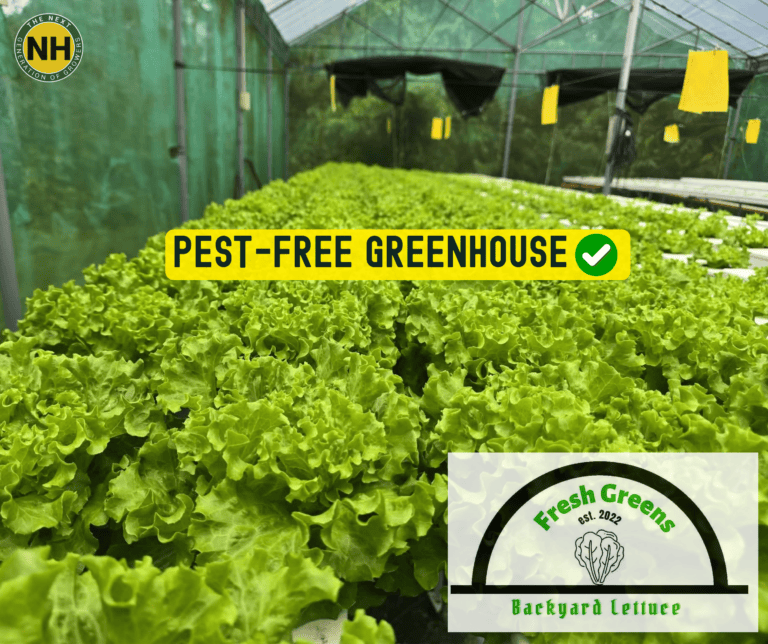

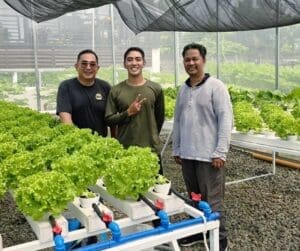
 “This hydroponics is more of a hobby or a part-time job,” says Aldrin Castro, gesturing toward two substantial greenhouses cultivating nearly 600 heads of pristine Olmetie lettuce. Yet calling it merely a hobby seems almost an understatement when the scale and sophistication of his operation comes into view.
In a quiet village in Angat, Bulacan, where construction and development paint the landscape, a different kind of growth is flourishing. Behind a carefully fenced property sits The Green Cup Hydroponics, a testament to what happens when engineering precision meets agricultural passion. Castro, a 37-year-old computer engineer working full-time in the IT industry, has transformed his “part-time” interest into an impressive hydroponic enterprise that rivals many commercial operations.
The First Greenhouse Lessons
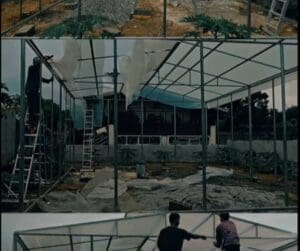 Castro’s journey into hydroponics began modestly with a ten-by-ten-foot DIY structure where he learned the fundamentals. This initial greenhouse served as his classroom, where he practiced and understood the necessities of hydroponic farming before scaling up. Once he gained confidence, he demolished that first attempt to make way for more ambitious projects.
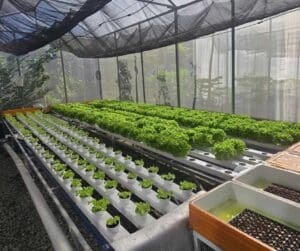
His first proper greenhouse measures 32 square meters—eight meters by four—with a height of three meters determined by standard net dimensions. The structure sits on his sibling’s property, though Castro has since purchased the adjacent 150-square-meter lot to accommodate his expanding operation. That second greenhouse, at 48 square meters (eight by six meters), represents his commitment to growth.
The investment wasn’t trivial. Castro spent approximately 30 truckloads of fill dirt raising the flood-prone land, with the fence and fill costs nearly matching his greenhouse expenses. The newer structure alone cost around 120,000 pesos, made more expensive by his insistence on bolted rather than welded construction—a practical decision allowing disassembly should he need to relocate.
Precision by Design
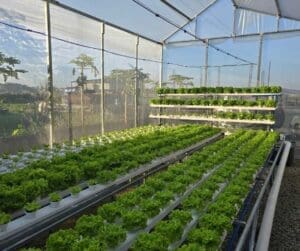 Castro’s engineering background shines through in every aspect of his operation. He researched designs online, consulted with his father and a sibling who know welding, and became the foreman of his own construction project. The greenhouse features six foundation points with posts buried about a foot deep, spaced four meters apart, providing adequate support without requiring extensive concrete footing.
Inside, tubular steel frames support the NFT (Nutrient Film Technique) channels—eleven channels with 24 holes each in the larger greenhouse, all connected through a sophisticated irrigation system using blue PVC pipes with threaded elbows and valves for precise flow control. A 10,000-liter-per-hour pump circulates nutrients throughout the system, operating 12.5 hours daily from 6:00 AM to 6:30 PM, though Castro plans to extend this to 24-hour operation after learning about the importance of nighttime respiration for plant growth.
His attention to detail extends to monitoring equipment. A prominently placed hygrometer tracks temperature and humidity, guiding decisions about net shade deployment and misting. When the indicator turns red during summer heat, Castro knows to extend the 50-percent shade nets. During humid conditions indicated by the blue zone, he ensures proper ventilation to prevent fungal growth.
Mastering the Grow Cycle
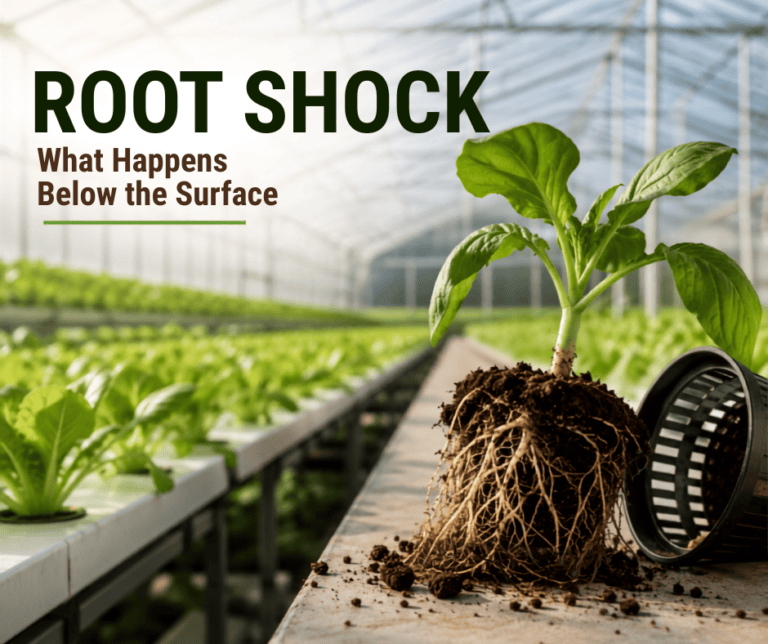
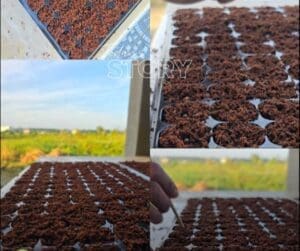 Castro attributes much of his success to the nursery stage. Inside his house, grow lights nurture seedlings in a controlled environment with stable temperatures, producing stronger plants than those started outdoors. After germination, seedlings move to an outdoor hardening area for three to five days, allowing roots to stabilize before transplanting to the NFT system. This hardening process significantly reduces transplant shock, a lesson learned from early failures when moving plants directly from indoor lights to the greenhouse caused stunting.
His alternating planting pattern—large plants interspersed with small ones—ensures adequate sunlight penetration and prevents the yellowing and weakness that comes from overcrowding. When spacing becomes tight, Castro doesn’t hesitate to relocate plants mid-growth, carefully extracting them despite their impressively long root systems.
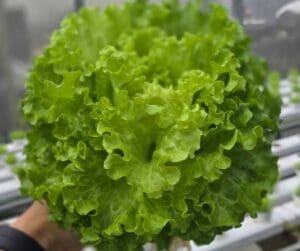
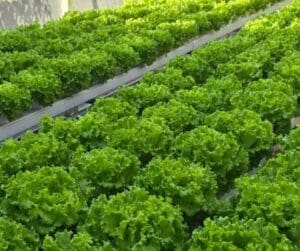
The results speak for themselves. Castro’s Olmetie lettuce reaches harvest size in approximately 37 days from seed, with thick, vibrant leaves and robust root development. He maintains TDS levels between 900-1000 ppm (accounting for 300 ppm baseline in tap water) and checks pH daily—a practice he emphasizes as critical for nutrient absorption.
Spreading the Risk
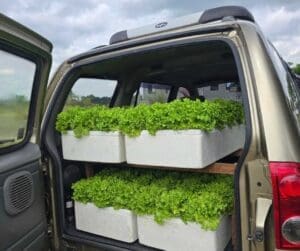
 Castro’s market approach reveals the same analytical thinking he applies to cultivation. While he prefers direct customers for their higher margins, he deliberately maintains relationships with resellers who purchase larger quantities at lower prices. This strategy spreads risk—ensuring he has outlets even if one channel falters. When demand exceeds supply, he allocates proportionally rather than favoring one customer type, recognizing that abandoned customers may not return.
His primary crop, Olmetie lettuce, was chosen strategically. Castro observed that its attractive appearance draws customers who hadn’t planned to buy lettuce, making it particularly popular with his resellers’ clients. At 35 pesos per cup or three for 100 pesos, his 600-head capacity generates approximately 20,000 pesos gross per harvest cycle.
Early Mornings and Evening Screens
 Balancing full-time IT work with farming requires discipline. Castro wakes at 5:30 AM, heading straight to the greenhouse to check parameters and perform maintenance before his 10 AM to 7 PM work schedule. He manages the entire operation alone, from sowing and transplanting to harvesting and packing—a workload most would consider impossible alongside full-time employment.
Pest management follows seasonal patterns. Summer brings whiteflies and leaf miners, which disappear with the rainy season. Castro’s proactive approach includes cutting grass around the greenhouse to eliminate insect habitats and joining online hydroponic groups where he learns from others’ problems before experiencing them himself.
Sanitation relies on hydrogen peroxide sprayed through channels and pipes, while Bio CalMag applications strengthen leaves and improve plant defense—though Castro has learned to time these carefully, avoiding application before rain and extreme heat to prevent leaf burn.
The Power of Shared Experience
 Castro’s willingness to learn stands out. He attended training sessions, actively participates in online hydroponic communities, and watches educational content, recently adjusting his irrigation schedule after learning about the importance of nighttime respiration.
His practice of reading about other growers’ problems, even those he hasn’t encountered, reflects a proactive approach to knowledge acquisition.
He credits much of his foundational understanding to the training and community support, consistently maintaining his nutrient solution and monitoring protocols. His greenhouse design incorporates lessons from experienced growers while adapting to local conditions and available materials.
The Vision Continues
 After one year of operation with the larger greenhouse, Castro is still working toward recovering his 120,000-peso investment. Yet his focus appears less on quick returns and more on sustainable growth and continuous improvement. He’s testing whether his pump can handle additional capacity, having already added about 100 heads to the system, pushing toward 700 total plants.
The surrounding papaya trees, cultivated by his father, provide unexpected benefits during summer, cooling the environment and preventing concrete surfaces from radiating excessive heat into the greenhouse—another example of working with rather than against the natural environment.
Castro’s story illustrates a growing trend of professionals bringing technical expertise to agriculture. His engineering mindset—systematic, data-driven, and iterative—combined with genuine enthusiasm for cultivation has produced results that rival commercial operations. As he continues refining his methods and possibly expanding to that adjacent lot, The Green Cup serves as both a productive farm and a model for others seeking to merge technical skills with agricultural pursuits.
For someone who calls it a “part-time hobby,” Aldrin Castro has built something remarkable—a thriving hydroponic operation that demonstrates how analytical thinking, continuous learning, and attention to detail can transform even limited space into highly productive agricultural enterprise.