
 “We didn’t build a group. We built a family.” – Rodger Coronado on the philosophy behind Nagcarlan Hydroponics Growers.
In a town known as the vegetable basket of Laguna, one man is rebuilding not just greenhouses but an entire community of growers who refuse to compete with each other. Instead, they’ve created something rare in agriculture—a collective that shares both harvests and hardships.
Rodger Coronado stands beside the skeletal frame of his new greenhouse, a structure that tells two stories at once. But more than that, they symbolize the resilience of Nagcarlan Hydroponics Growers, a cooperative he founded in 2022 that has transformed how local farmers approach both cultivation and commerce.
As operations officer Chris from NutriHydro tours the 75-percent-complete facility, the conversation reveals more than construction techniques. It unveils a philosophy that has made Nagcarlan Hydroponics Growers an anomaly in competitive agriculture—a group where members actively support each other’s success, share customers without rivalry, and screen potential members not for their capital but for their character.
Building Community Through Shared Struggle
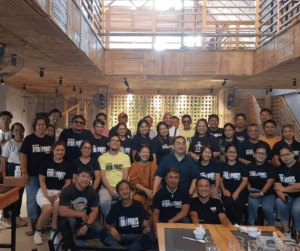 The group of Nagcarlan Hydroponics Growers emerged during the pandemic, born from necessity and mutual support among growers who found themselves isolated. What began as informal knowledge-sharing evolved into something more structured and profound. Rodger explains that the foundation of their success lies in a simple principle that proves difficult to maintain—they didn’t build a group, they built a family.
This familial approach manifests in practical ways that challenge conventional business wisdom. When one member runs out of stock, they don’t turn customers away. Instead, they source from other members, ensuring that no buyer goes unserved and no grower loses market access. The arrangement has earned them the affectionate nickname “the mafia” in local agricultural circles, though Rodger is quick to clarify it’s meant positively—their collective strength makes them nearly impossible to displace from their established markets.
The group’s structure includes a screening committee that evaluates potential members for character traits like selfishness and reliability. They require new members to demonstrate readiness to start operations, implementing what Rodger calls a “Know Your Customer” approach that ensures everyone understands the commitment involved. This careful curation has created a network of small greenhouses that function collectively as one large operation, giving individual farmers the market power they could never achieve alone.
Engineering Resilience After Typhoon Christine
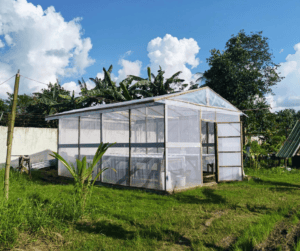 The greenhouse taking shape on Rodger’s property represents hard-won wisdom about building in typhoon country. After Typhoon Christine destroyed his bamboo structure, he committed to creating something that would outlast natural disasters. The design incorporates lessons learned from watching wind patterns during previous storms, observing weaknesses in various structures, and consulting with Engineer Roy Beating to validate his plans.
The technical specifications reveal an almost obsessive attention to durability. Schedule 40 galvanized iron pipes, two inches in diameter, serve as the main support posts. But Rodger didn’t stop there—he filled each post with a one-to-one cement-to-sand mixture, eliminating the wobble that plagued his previous structure. The trusses use one-by-two-inch materials in configurations that Chris describes as overkill, though Rodger views them as simply adequate for the challenges his location presents.
The greenhouse measures six by eight meters, with a shoulder height of twelve feet rising to fourteen feet at the peak. These dimensions aren’t arbitrary—they accommodate 300 to 400 lettuce heads in the current configuration, with plans for a second layer that will increase capacity. The elevated design, complete with a raised side wall, serves multiple purposes. It levels out sloping terrain, increases distance from soil-borne pests, and reduces the jumping range of grasshoppers and other insects that plague the mountainous lowland area.
Ventilation as Philosophy
 For Rodger and the Nagcarlan group, ventilation isn’t just a technical consideration—it’s the cornerstone of their growing methodology. The lowland location brings high humidity that creates perfect conditions for fungal diseases and compromises plant transpiration. Rodger designed his greenhouse with removable side panels that can open completely, prioritizing air movement over enclosed protection.
His focus on ventilation addresses a cascade of interconnected problems. High humidity doesn’t just encourage disease; it fundamentally alters how plants absorb nutrients. When water vapor saturates the air, transpiration slows, reducing the upward flow of nutrient-rich water from roots to leaves. This causes tip burn in lettuce as calcium, an immobile nutrient, fails to reach new growth. Rodger emphasizes this point to all group members, requiring each to install hygrometers in their greenhouses rather than relying on subjective assessments of comfort.
The ventilation strategy extends to considering evaporative cooling systems, a technique Rodger discovered through online research showing applications in chicken farms and commercial operations. He plans to implement a DIY version that circulates water through the system, cooling the greenhouse interior while maintaining air movement. This represents his broader philosophy of continuous learning and adaptation, refusing to accept conventional wisdom when observation and experimentation suggest better approaches.
Operating Room Protocols in the Greenhouse
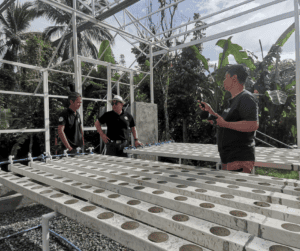 Rodger’s background as a nursing graduate informs an unexpected aspect of his hydroponic practice—his approach to cleanliness and contamination prevention. He applies operating room protocols to his greenhouse, particularly the principle that everything below waist level is considered unsterile. This medical perspective translates into elevated growing systems, hand-washing stations at the greenhouse entrance, and strict protocols about dropped tools.
The entrance design itself reflects this contamination awareness. Rather than a simple door, Rodger created a two-stage entry with a washing area between barriers. Visitors must navigate through this transition zone, cleaning hands and sanitizing before reaching the growing area. The precaution addresses a real concern in Nagcarlan, which serves as a vegetable hub where buyers frequently visit multiple farms. Anyone entering could carry pathogens from infected plants or produce purchased elsewhere.
The elevated floor, covered with netting over soil and topped with stones rather than concrete, serves multiple purposes in this sterility framework. The netting prevents weed growth and disrupts the life cycle of army worms by denying them access to soil for pupation. The stones avoid the heat retention of concrete while maintaining distance from ground-level contamination. These layered defenses reflect Rodger’s insistence that the sterility of coco peat growing medium and tools becomes worthless if human practices introduce contamination.
The Spring Water Advantage of Nagcarlan
 Nagcarlan’s agricultural viability rests partly on an almost unbelievable resource advantage—spring water that costs twenty pesos per month regardless of usage. The barangay maintains three springs, one developed as a resort and two serving drinking and household needs. For hydroponic operations that can easily consume one cubic meter of water daily when cultivation reaches 7,000 plants, this abundance represents a massive competitive advantage.
Rodger sources water from a well connected to these springs, and local growers confirm the water quality poses no problems for hydroponic cultivation. The mineral content and pH levels apparently fall within acceptable ranges without extensive treatment, another stroke of geographic fortune. Chris, visiting from NutriHydro, immediately recognizes the significance—in areas where water costs accumulate per cubic meter, this single factor makes Nagcarlan exceptionally attractive for hydroponic operations.
The water abundance shapes not just individual operations but the collective strategy of Nagcarlan Hydroponics Growers. Members can scale up production without water costs becoming prohibitive, and the group can maintain consistent supply to buyers because drought never threatens to limit their cultivation cycles. This natural advantage, combined with their cooperative market approach, creates a sustainable foundation that would be difficult to replicate elsewhere.
Beyond Set and Forget
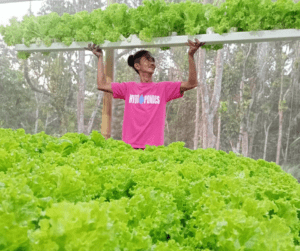 Rodger dismisses emphatically the notion that hydroponics is a “set and forget” operation, calling this outdated teaching inappropriate especially for commercial growers. His daily routine involves checking all parameters—nutrient levels, pH, temperature, humidity, and plant health indicators. He requires the same diligence from group members, emphasizing that professional cultivation demands professional attention regardless of the automation level.
This philosophy extends to continuous experimentation and system diversification. While his main greenhouse will focus on NFT (Nutrient Film Technique) systems, Rodger plans separate structures for RDWC (Recirculating Deep Water Culture), DWC, and Dutch bucket systems for fruiting vegetables. He describes this variety as necessary to avoid boredom, but it also serves as a showcase for different techniques and a laboratory for comparing approaches.
The experimental mindset includes plans to incorporate stingless bees for pollinating fruiting crops in the Dutch bucket greenhouse. Rodger views problems not as setbacks but as learning opportunities, whether they involve pest management, structural failures, or market challenges. This growth-oriented perspective, shared across the Nagcarlan group, creates an environment where knowledge accumulates and gets distributed rather than hoarded.
The Cooperative Journey
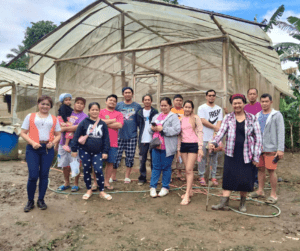 The group of Nagcarlan Hydroponics Growers is formalizing its structure by registering as a cooperative, a process that requires three years of demonstrated practice before official recognition. The group has been operating in cooperative mode for only four months, registered currently with the Department of Labor and Employment while preparing documentation for full cooperative status. Rodger emphasizes that they refuse to take shortcuts or copy-paste documents from other cooperatives, insisting their paperwork reflect their actual practices and governance.
The registration process involves municipal government approval beyond simple SEC filing, adding layers of validation that Rodger sees as appropriate. The group holds regular meetings, maintains centralized marketing, and operates with shared pricing that eliminates internal competition. When members encounter difficulties, whether from typhoon damage or personal circumstances, the collective absorbs the impact rather than leaving individuals to sink or swim.
This communal approach required finding “the right people” from the beginning—growers willing to share knowledge, resources, and market access without selfishness. Rodger acknowledges this screening process as critical to their success, noting that cooperative structures fail when members prioritize individual advantage over collective benefit. The group’s stability through challenges like Typhoon Christine demonstrates that their careful member selection has created genuine resilience.
The Road Ahead for Lettuce Hut
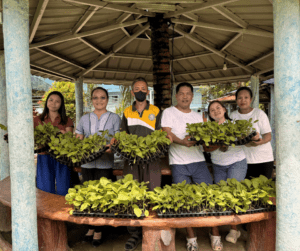 As Rodger’s greenhouse approaches completion, his plans already extend to expansion. He envisions two additional structures, each isolated from the others to prevent cross-contamination and allow distinct growing environments. The modular approach means typhoon damage to one unit won’t destroy the entire operation, another lesson encoded in steel and concrete.
The group’s third anniversary celebration in November will mark not just longevity but evolution. From informal pandemic-era cooperation to registered cooperative status, from bamboo structures to engineered steel frames, from struggling individual growers to a collective that controls significant market share—the transformation reflects both individual growth and community development. Rodger’s invitation to NutriHydro and others who supported the group’s journey acknowledges that success came through networks rather than isolation.
His parting advice to other growers emphasizes focus and continuous cultivation, refusing to give up despite setbacks. The message resonates differently coming from someone who lost his greenhouse to typhoons yet immediately began rebuilding with improvements. Rodger and Nagcarlan Hydroponics Growers demonstrate that modern agriculture can support both individual ambition and collective prosperity, that competition and cooperation aren’t mutually exclusive, and that sometimes the strongest structure isn’t built with steel alone but with the shared commitment of people who choose to grow together.