Articles

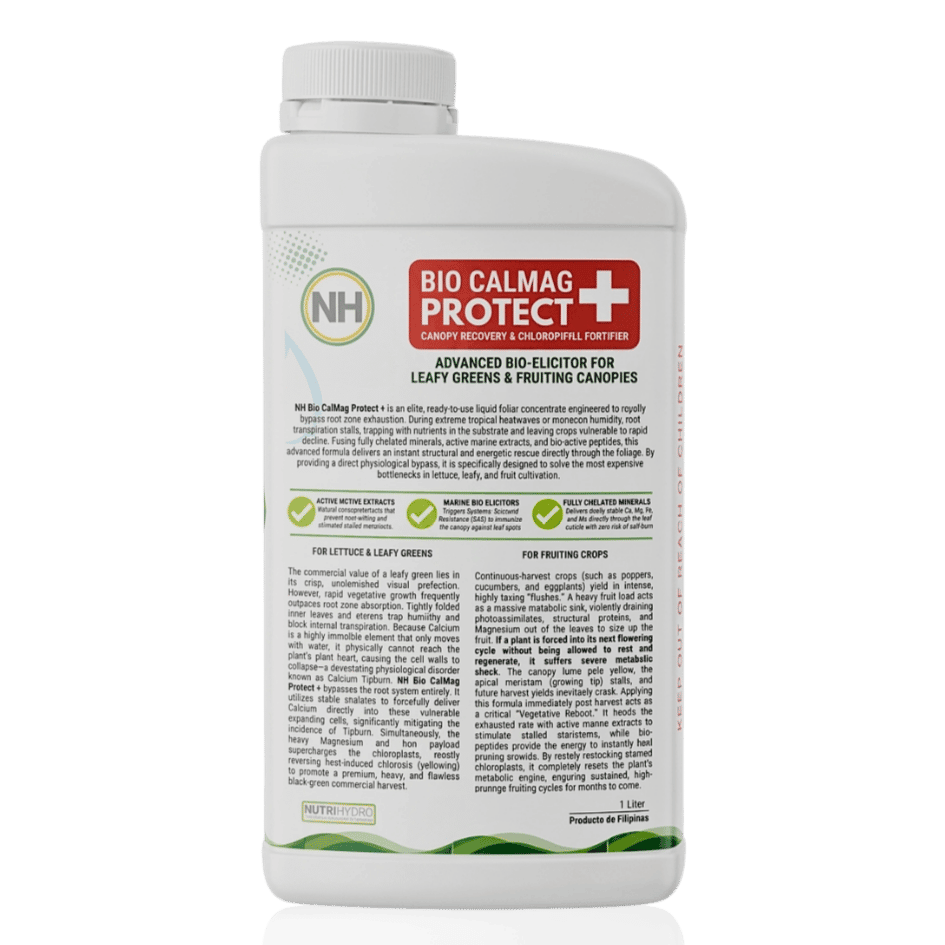
NH Bio CalMag Protect Plus | Premium Foliar Fertilizer for Tipburn, Stress, & Canopy Recovery

Stop Calcium Tipburn and canopy yellowing instantly! NH Bio CalMag Protect + is a premier foliar spray that bypasses exhausted roots to deliver chelated Calcium, Magnesium, and marine extracts directly to your leaves. Perfect for dark leafy greens and post-harvest fruiting canopies, it restores deep-green growth while immunizing your crop against destructive leaf spots.

NH Bio CalMag Protect Plus | Premium Foliar Fertilizer for Tipburn, Stress, & Canopy Recovery Read More »

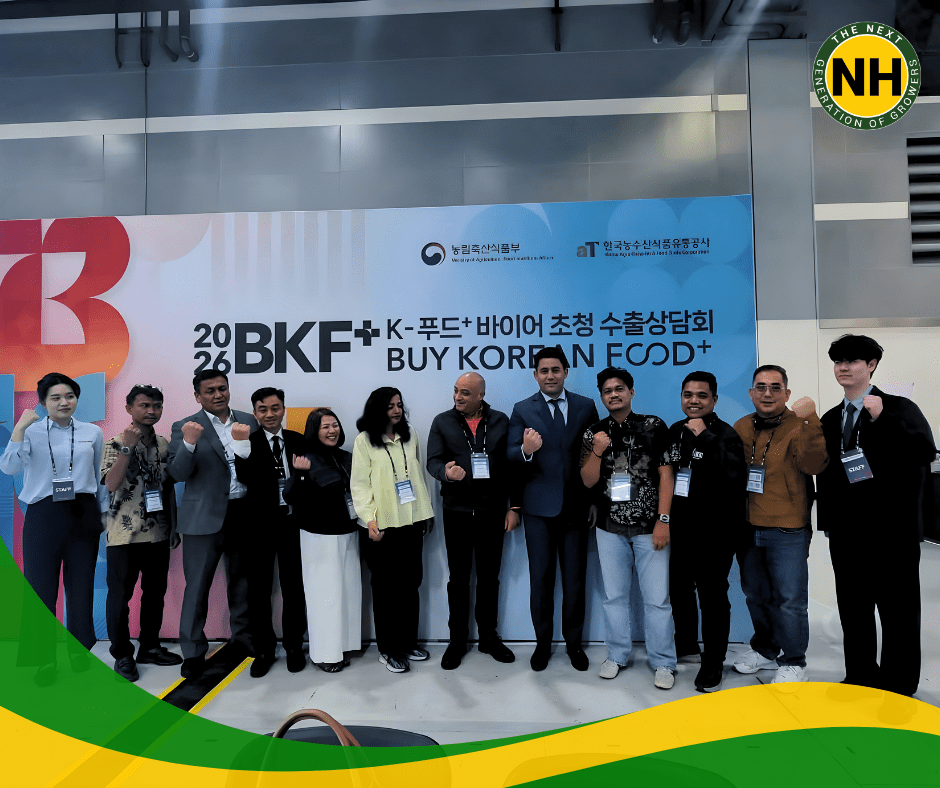
NutriHydro at the 2026 BKF Seoul

NutriHydro reflects on a landmark milestone at the 2026 BKF Seoul, where the team proudly represented Filipino agricultural excellence on the international stage. Amidst global challenges like fertilizer price hikes and supply chain volatility, the event served as a powerful testament to the spirit of unity among 45 nations. Discover how NutriHydro’s “Living Factory” standard and commitment to technical precision are contributing to the global conversation on food security and sustainable farming.

NutriHydro at the 2026 BKF Seoul Read More »

NH Modular Greenhouse Is Going Local

What started as a meeting became a movement. NutriHydro’s Nathan and Chris visited Precision Foundry Philippines and sat with Business Development Officer Arthur Petalver and their engineering team to bring a bold idea to life — the NH Modular Greenhouse, locally built and made for Filipino hands. Popular in Korea and now finding its home in Philippine soil, this modular, connector-secured greenhouse system is designed to grow with the farmer, the builder, and the nation.

NH Modular Greenhouse Is Going Local Read More »

NutriHydro Stands Behind House Bill No. 6964 and FPA’s Commitment to Excellent Agriculture

NutriHydro stands behind the Fertilizer & Pesticide Authority’s Public Consultation on House Bill No. 6964, held on February 19, 2026 via Zoom. This proposed law seeks to modernize the regulatory framework governing fertilizers and pesticides in the Philippines — and as a company built on precision and compliance, NutriHydro sees this as a landmark step toward a more accountable, productive, and forward-moving Philippine agriculture industry.

NutriHydro Stands Behind House Bill No. 6964 and FPA’s Commitment to Excellent Agriculture Read More »

The Talong & Ampalaya King of Bauan, Batangas

In Bauan, Batangas, Jezrel Palacio Carreon’s Talong & Ampalaya farm stands as proof that Philippine agriculture can thrive through innovation and dedication. With three decades of farming experience, Jezrel turned down opportunities in San Francisco and Bahrain to build a six-hectare operation that survived multiple typhoons while neighboring farms collapsed. His secret lies not just in galvanized wire trellises or strategic bed preparation, but in treating farming as both an art and a business. From producing five to seven tons of bitter gourd per harvest on just 1.2 hectares to generating 200 tons of eggplant over 17 months, Jezrel’s numbers tell a compelling story. But beyond the mathematics of agriculture, his journey from Zamboanga to Batangas during the pandemic, his innovative partnership with landowners, and his commitment to sharing knowledge on social media reveal a farmer who embodies what Philippine agriculture could become: professional, profitable, and proudly Filipino.

The Talong & Ampalaya King of Bauan, Batangas Read More »

How Dr. Bernard Kratky Made Hydroponics Accessible to Every Filipino

“If someone else in the world like the growers in the Philippines would benefit from this research, that would be a bonus—a big bonus!” When Dr. Bernard Kratky spoke these words, he never imagined his simple hydroponics method would spark a revolution across the Philippine archipelago. A retired University of Hawaii researcher, Dr. Kratky developed his suspended pot, non-circulating system to address Hawaii’s agricultural challenges—weeds, nematodes, soil diseases, and expensive farmland. He published his findings to share with local growers and academic institutions, never envisioning that his work would travel across the Pacific to transform food production in a nation facing remarkably similar tropical challenges.

Today, from Metro Manila rooftops to rural Visayan gardens, Filipino growers are discovering that producing fresh, nutritious vegetables doesn’t require expensive equipment, reliable electricity, or extensive agricultural training. The Kratky Method, as it’s now known worldwide, demands only a bucket, water, nutrients, and the willingness to try something new. This is the story of how one scientist’s generosity—freely sharing his expired patents and creating YouTube tutorials in retirement—empowered Filipinos to reclaim their food security, one container at a time. It’s a tale of viral social media, scientific humility, and the democratization of agriculture in a country where innovation has become necessity.

How Dr. Bernard Kratky Made Hydroponics Accessible to Every Filipino Read More »

Where the Beach Meets the Greenhouse

Where the Beach Meets the Greenhouse

When guests at Palm Beach Resort in Batangas order a salad, kitchen staff don’t reach for the phone to call a supplier. They walk outside. Twenty meters later, they’re standing in a greenhouse, harvesting lettuce that will be on a plate within minutes. This is farm-to-table at its purest—built during the pandemic when materials were scarce, sustained by determination when challenges arose, and now serving as one of the resort’s most compelling attractions.

But this hydroponic greenhouse, constructed in 2021 by managing head Ramil Mendoza and operations associate Rica De La Torre, faced a puzzling decline. The lettuce that once grew abundantly began to struggle. Heads shrank. Roots thickened. The team tried everything—switching methods, adjusting nutrients, removing pest-attracting plants—yet couldn’t recapture that initial success. The answer, it turned out, was invisible: dissolved oxygen levels had dropped, forcing plants into survival mode rather than thriving.

Along Batangas’ coastline, Palm Beach Resort is demonstrating that environmental stewardship and exceptional guest experiences aren’t just compatible—they’re inseparable.

Where the Beach Meets the Greenhouse Read More »

The Lettuce Hut and Nagcarlan’s Growing Family

In Nagcarlan, Laguna, Roger Coronado is rebuilding more than just his typhoon-damaged greenhouse. The Lettuce Hut represents the heart of Nagcarlan Hydroponics, a cooperative founded in 2022 where farmers refuse to compete with each other. Instead, they share customers, knowledge, and harvests. With engineered resilience built into every galvanized post and a philosophy borrowed from nursing school, Roger’s approach combines technical precision with community values. Here, members screen for character over capital, hygrometers are mandatory, and the collective strength has earned them the nickname ‘the mafia’—in the best possible way.”

The Lettuce Hut and Nagcarlan’s Growing Family Read More »

The Dragon Fruit King of Bulacan

https://youtu.be/egFpCVlh6qQ?si=dV4IyqJaxaMWi9fw “The quality of our dragon fruits here in the Philippines has yet to be seen in other countries.” – Kevin Eliscupides It’s a bold claim, but Kevin Eliscupides has the numbers to back it up. With Brix scores ranging from 18 to 22—far exceeding international standards—the dragon fruits growing in the rolling hills of

The Dragon Fruit King of Bulacan Read More »

How Molds Appear in Nutrient Solution and How to Prevent it

Molds in Solution B

Mold in nutrient solutions usually starts after opening or mixing, when environmental microbes find moisture, nutrients, warmth, and time. This guide explains why contamination happens, and the practical steps you can take to keep nutrient concentrates and stock solutions clean, stable, and safe for plant use.

How Molds Appear in Nutrient Solution and How to Prevent it Read More »

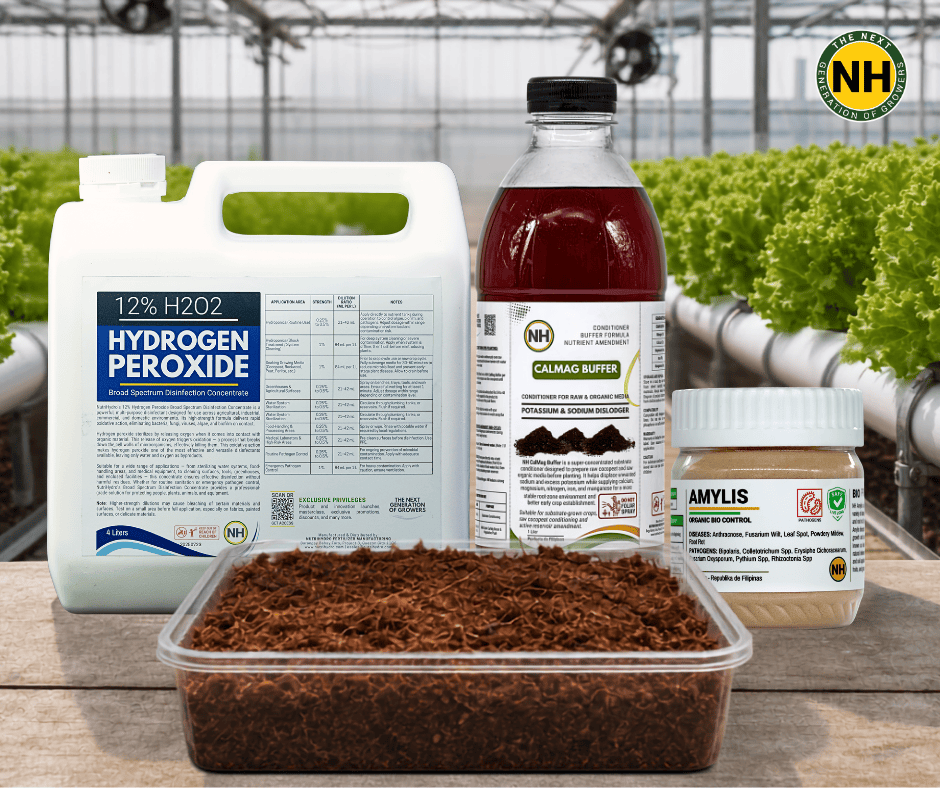
NH Lettuce Formula with Companion Products Application Guide

Why Your Lettuce Yellows Despite Perfect TDS

You’re using premium nutrients, following the mixing instructions perfectly, maintaining the correct TDS—yet your lettuce is still yellowing, stunted, or developing thick, brown roots. The problem? It’s almost never the nutrients.

Nutrihydro’s Lettuce Formula delivers complete nutrition when mixed properly. Growers using NH Lettuce Formula grow the biggest, healthiest, and heaviest lettuce across the country from Luzon to Mindanao. But while nutrients deliver yield and remain the biggest factor in productivity, proper results require managing three critical parameters most growers overlook.

Lettuce roots should be long, hair-like, and white. During farm visits, we consistently observe short, thick roots with dissolved oxygen below 4 g/L—hypoxic conditions that cause yellowing and stunted growth even when pH and TDS are correct. Install aerators and keep water temperature at 18–22°C for optimal oxygen levels.

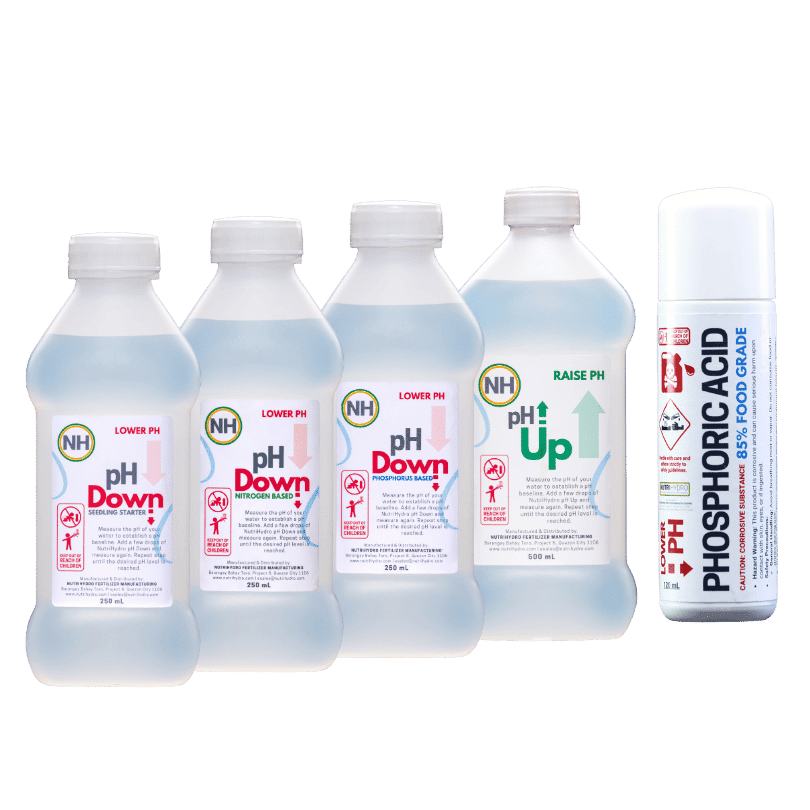
Many growers maintain correct TDS but skip pH management due to extra work and cost. Without pH between 5.5–6.0, even perfectly formulated nutrients cannot be absorbed. At pH above 6.2, iron, manganese, and zinc precipitate out and become unavailable despite adequate amounts in solution. Use NH Phosphoric Acid 85% to maintain precise pH control at 5.8.

In the Philippines, high humidity slows transpiration—the plant’s internal transport system that moves nutrients from roots to leaves. When transpiration slows, nutrient delivery drops and growth stalls even with correct EC and pH. Lettuce becomes vulnerable to tip burn as calcium cannot reach leaf margins. Increase airflow and use NH Bio-CalMag foliar spray at 1–2 mL per liter during humidity spikes.

Premium nutrients alone don’t guarantee premium results. NH Lettuce Formula provides the foundation, but harvest quality depends on managing dissolved oxygen, pH stability, and transpiration-driven nutrient transport in concert. Target EC of 0.6–0.7 for seedlings, 1.2–1.4 during vegetative growth, and 1.4–1.6 in the final stretch. Maintain pH at 5.5–6.0, dissolved oxygen at 4 g/L or above, humidity between 55–70%, and water temperature at 18–22°C.

Master these fundamentals—proper mixing protocol, adequate dissolved oxygen, precise pH management, and humidity control with NH Phosphoric Acid and NH Bio-CalMag—and you’ll achieve the productivity that separates profitable operations from struggling ones. Your investment in NH Lettuce Formula deserves full system optimization. Follow these protocols, measure consistently, and respond decisively to problems, and you’ll grow lettuce that reflects the true potential of both your nutrients and your skill as a grower.

NH Lettuce Formula with Companion Products Application Guide Read More »

Scroll to Top